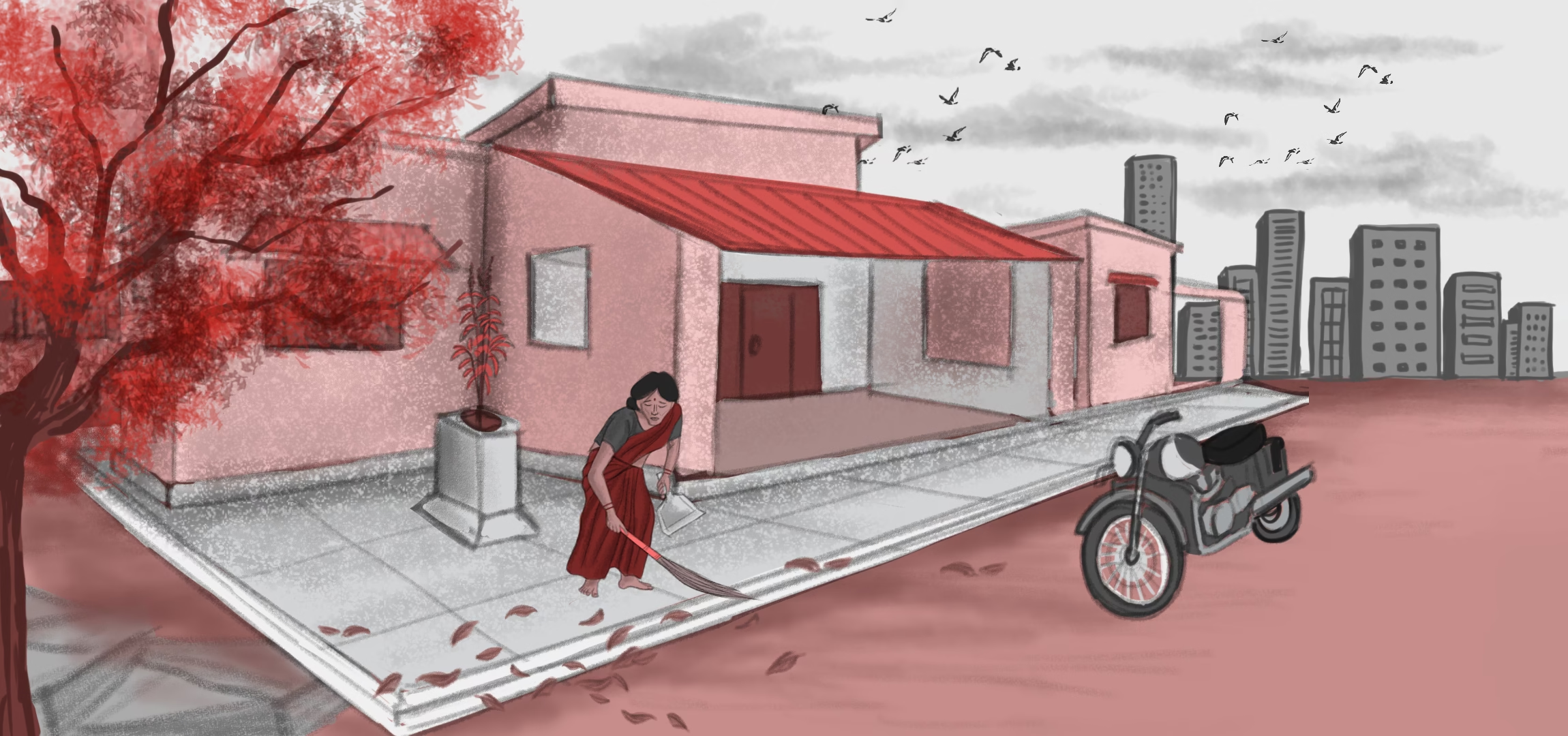
In a small rented room on the edge of a construction colony, a mother tries to finish her sweeping shift before sundown. Her son waits at home because the local anganwadi shuts at noon. One afternoon he wanders off and is found crying in a distant lane. This moment mirrors a very real fear migrant parents live with every day. Safety, schooling and childcare collide constantly in their lives and there is rarely a simple solution.
This is exactly why the work of Mobile Creches matters. They create the one place where a child can learn, rest, eat, play and stay safe while parents work. So, their story needed to show this reality with honesty and warmth.
And with this need in mind, Mobile Creches reached out to us. They wanted a short animated film that could help people understand the purpose of the Palna Scheme under Mission Shakti. We decided to build the film around a story inspired by the very real challenges faced by working families, and showcase it using the power of animation.
Why Animation
Filming live action would have meant entering sensitive spaces such as bastis, construction sites, and busy childcare rooms and it would place children and migrant families directly in front of the camera. We knew we had to tell the story without compromising anyone’s privacy or dignity. Hence, animation became the right choice, and it shaped the direction for the entire film.
Animation became the right choice because we had to tell the story without compromising anyone’s privacy or dignity.
Animation gave us the freedom to tell a truthful story without revealing the identity of families. It also helped us stay close to the lived rhythm of urban migrant life without needing to capture it physically on location. Moreover, it helped Mobile Creches communicate the essence of the Palna Scheme clearly, honestly, and with dignity.
Also read: Why Animation Works for Nonprofits
Our Design Approach
We began with the emotional truth that childcare is not an add-on. It is the foundation that enables women to work, children to learn, and families to stay afloat. Every design decision had to reinforce this seriousness.
Mobile Crèches carries strong reds and deep greys in its brand. We kept these colours as anchor points. But limiting a film to two dominant colours presented challenges. There are trees, roads, clothing, walls, utensils, and dust, none of which naturally fall into red or grey. The illustrator spent considerable time building an expanded palette that included muted browns, desaturated greys, and quiet ochres. These were all chosen as derivatives between the brand tones, enough to create a believable world without breaking consistency.
Early explorations moved between stylised and cartoon-like drawings. But the story’s subject, which involved fear, safety, labour, and early childhood, demanded honesty. A cartoon tone would soften realities that should not be softened. A semi realistic style felt right because it could remain expressive, human, grounded, and respectful of the families whose experiences inspired the film.
Also read: Transforming Nonprofit Communications: Video Annual Reports’ Impact
The illustration process involved patient research. Clothing was studied carefully. The team looked at what women in bastis typically wear during domestic work, how municipal schoolteachers dress, and how construction workers tie cloth around their heads or feet. The class markers, textures, and materials were drawn deliberately and sensitively so the world felt lived in.
The illustrator made a conscious decision to avoid polished environments. Slum lanes were drawn with rough strokes. Shadows were scratchy rather than smooth. Buildings looked worn, not stylised. Even in indoor scenes, walls were intentionally imperfect. This was important for two reasons. It avoided sanitising the environment. It also helped the viewer feel the weight of Baha’s daily reality without sensationalism. We leaned on small details. A broken tile here, a cracked vessel there, an uneven wall in the corner. Those were the things that quietly carried the emotional context.
Animating Lives That Rarely Pause
We stayed away from abrupt zooms. Instead, the camera drifted through scenes. There was a slow push forward in the tense moments, a sideways glide through the basti, and a gentle shift across the crèche room. The movement followed the mood of the story. It stayed steady, cautious and thoughtful.
In the early cuts, everything looked a bit too clean. That did not sit well with the weight of the story. To change this, the animator added a soft old-film style overlay with a little grain, a faint flicker and uneven texture. It worked well with the rough shading in the illustrations and together they gave the film a quiet, almost documentary feel.
The characters hardly moved. Children breathed, blinked and shifted in their seats, but nothing more. It was just enough for them to feel human without slipping into exaggeration. Because the theme is serious, the scenes needed a lot of stillness, not big animation tricks. That restraint was deliberate and it shaped the tone of the final film.
Designing With Empathy
At every stage, our intention was the same. We wanted to honour the life behind the story. We did not beautify poverty; we did not dramatise fear; we did not distract with colour or spectacle. Instead, we used honest textures, grounded pacing, respectful realism, careful illustration, and a palette that carried both brand identity and emotional weight. These decisions allowed the story to speak in its own tone.
Working on this film reminded us that childcare is infrastructure. Without it, no mother can work with dignity. No child can learn consistently. No family can rise without fear shadowing them. Design, when approached with care, can reveal this truth. It can translate policy into lived emotion. It can make a national scheme feel intimate, urgent, and deeply human.
If this film spoke to you, and your organisation carries a story that deserves to be told just as thoughtfully, animation can hold it beautifully. Get in touch with us, and we’ll help you bring that story to life.