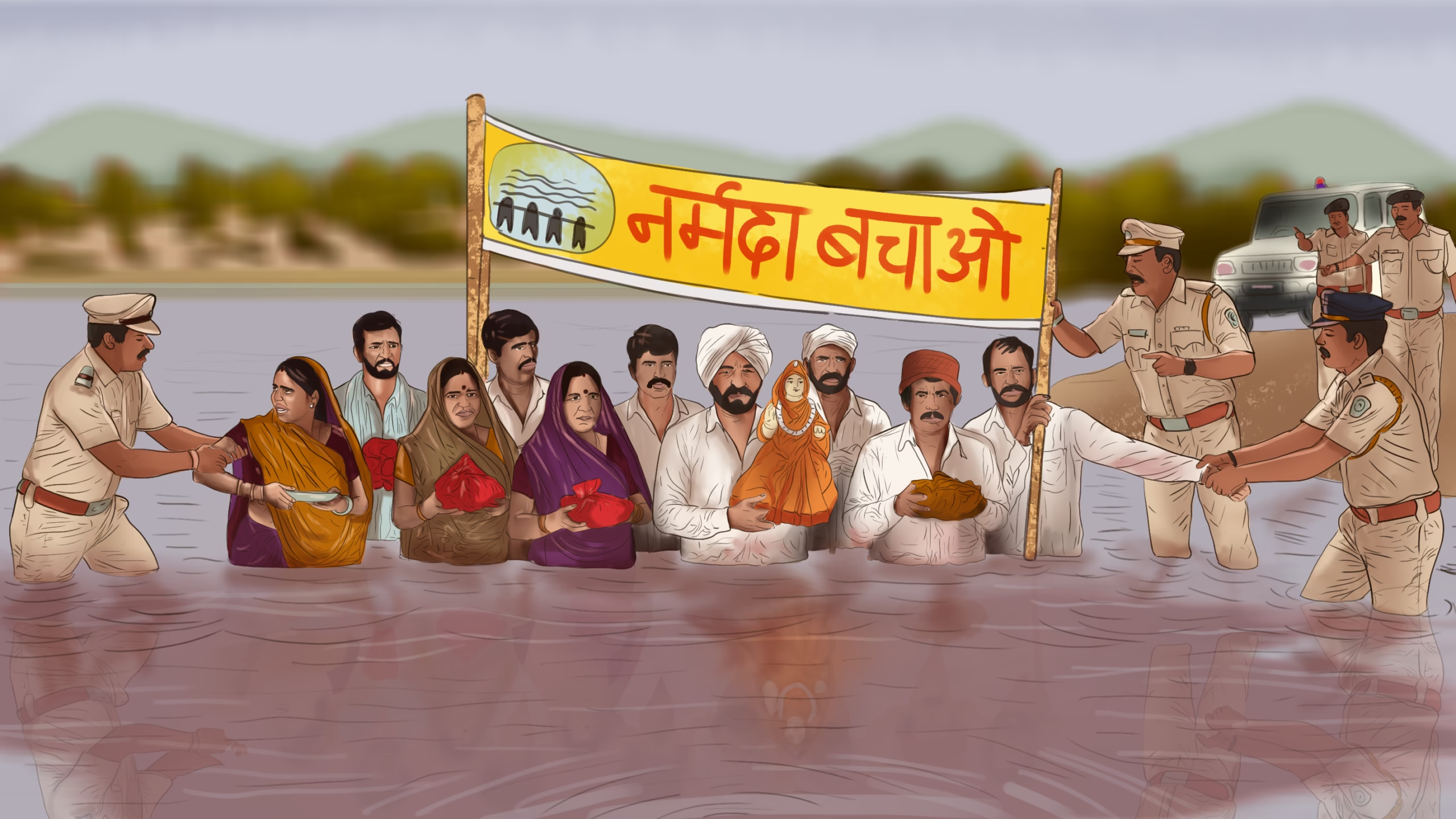
In September 2012, fifty-one villagers in Madhya Pradesh’s Khandwa district waded into the swelling waters of the Omkareshwar dam. They didn’t carry placards or microphones; they didn’t chant from a stage. They simply stood there, neck-deep, day after day, while fish nipped at their skin and rain lashed their shoulders. This act of jal satyagraha, a vow to drown rather than abandon their land without justice, lasted fourteen days.
The sight of farmers and labourers standing inside the very river that threatened to erase their homes travelled across newspapers and television screens. For many watching, it felt as if decades of resistance along the Narmada had been gathered into a single frame. But that moment wasn’t only about defiance. It was communication, carried by songs from submerged courtyards, by slogans that rolled through rallies, by photographs that crossed borders, and by alliances that reached all the way to the World Bank’s boardroom in Washington.
The Narmada Bachao Andolan was never only an argument against a dam. It became a language of resistance, a way to carry the pain of displacement and the demand for dignity far beyond the valley. As organisations everywhere grapple with water scarcity, climate shifts, and fragile livelihoods, the Andolan’s story still shows how struggles can be told, remembered, and kept alive. So, let’s look at what the Narmada Bachao Andolan teaches us, and how its methods can inform today’s water-related nonprofit campaigns.
When Photographs Become Archives
In 2018, activists installed a bust of Gandhi in Chikhalda to mark the site of resistance. When the village was submerged, they retrieved the statue from the waters and reinstalled it on a pillar in the reservoir, leaving it visible above the surface as both memory and defiance. That photograph, Gandhi rising from floodwater, spoke more clearly than reports or petitions ever could.
That photograph, Gandhi rising from floodwater, spoke more clearly than reports or petitions ever could.
Across the Andolan, images carried the story forward. Women stood waist-deep in jal satyagrahas. Farmers marched with banners. Families held up papers for claims that had not yet been fulfilled. Pictures like these turned protest into something people could see and carry with them, something that would still speak long after the moment had passed.
We carried a similar belief into our work with the International Rice Research Institute, creating an illustrated story on women and water governance in Bangladesh. You can read more about its impact here.
When Words Become Oaths
In the late 1980s, as dam construction advanced, rallies in towns like Harsud carried banners that read, “Koi nahi hatega, bandh nahi banega,” which means we will not move, the dam will not be built. It was more than a line to shout together. Villagers tied their hands to show they would not raise them, even when lathis came down. Nonviolence wasn’t a pose. It was a promise.
Over the years, other chants travelled through valleys and city streets. “Vikas chahiye, vinash nahin,” (we want development, not destruction), echoed in marches and village meetings. And the vow of jal samarpan, to drown rather than leave land without justice, gave the struggle its most haunting refrain.
From a protest site in Barwani to a headline in Delhi, words moved like rhythm. They became memory. They became a promise people made to each other and to the river.
These words turned complex demands into something a person could hold in a breath. From a protest site in Barwani to a headline in Delhi, they moved like rhythm. They became memory. They became a promise people made to each other and to the river.
When Songs and Rituals Carry a Struggle
Along the Narmada, resistance often began with a melody before it became a speech. Folk tunes found new words, verses that named drowned fields and vanished homes, and reminded neighbours of the strength that comes from standing together. Sung in courtyards or at protest sites, they set the pace for marches and steadied nerves on long nights.
Songs kept the movement alive not only as politics but as culture, something people could remember, sing, and pass on even when the village itself had slipped beneath the surface.
Rituals became part of the Andolan’s language. Communities held prayers and farewell ceremonies at temples as the waters rose, refusing to let faith and culture vanish without witness. Songs gave rhythm to marches and carried memory across generations. They kept the movement alive not only as politics but as culture, something people could remember, sing, and pass on even when the village itself had slipped beneath the surface.
When the Body Becomes the Message
Some of the Andolan’s strongest sentences were written without ink. In the early 1990s, villagers in Manibeli declared a jal samarpan, a vow to accept death by drowning rather than abandon their homes. Police dragged families from rising water, yet the image of people refusing to move stayed with those who saw it and those who heard about it later.
Years on, in 2012, fifty-one people in Khandwa stood immersed for fourteen days in the waters of the Omkareshwar dam. Fish bit at their legs. Rain beat down. Skin softened and cracked. Still they stayed until demands for land and compensation were heard.
Hunger strikes, sit-ins, and long marches turned the body into testimony. These acts left marks that no official report could erase.
Hunger strikes, sit-ins, and long marches turned the body into testimony. These acts left marks that no official report could erase. They reminded governments, courts, and distant allies that what was at stake was not only land or water, but life shaped by both.
When Stories Travel Beyond Borders
By the early 1990s, the struggle along the Narmada was no longer contained by geography. Testimonies from the valley travelled through films such as Narmada Diary, A Valley Rises by Ali Kazmi, and A Valley Refuses to Die by K. P. Sasi. Networks of activists carried voices to global forums and turned local meetings into part of a wider conversation.
At the centre of that conversation was the campaign to hold the World Bank to account for funding the Sardar Sarovar dam. In 1992, the Bank’s own independent review, the Morse Report, acknowledged serious flaws in rehabilitation and environmental planning. After one year, the loan was withdrawn. It was a rare moment when local resistance altered the course of global finance.
A story that started in one river valley changed people’s ideas about progress in places far away from its banks
These alliances helped people from different countries hear each other’s cries against being submerged. A story that started in one river valley changed people’s ideas about progress in places far away from its banks. It showed how a local voice, carried with care, can change the way the world listens.
Holding On to Stories
The Narmada Bachao Andolan wasn’t only a fight against concrete and turbines. It was a weaving together of forms. Photographs became archives. Slogans settled into oaths. Songs and rituals carried memory. Bodies stood as testimony. Alliances carried stories beyond borders. Together, they made a language that outlasted court orders, police crackdowns, and even the river’s rise.
For anyone working on water and justice, the Andolan offers a simple remembrance. Movements endure not just because of their demands, but because of the ways those demands are told and retold. A photograph, a chant, a ritual, a march, a network, each can be a vessel for meaning. Set them in motion and they travel farther than the river itself.
Subscribe to our newsletter for practical communication insights, grounded case studies, and storytelling strategies that connect mission with measurable change. Whether you’re building a pitch, a partnership, or a movement, consider this your creative field kit.