Human trafficking is one of those issues that is often right in front of you, in plain sight. It exists across cities, villages, worksites, homes and borders, yet many people only encounter it through scattered headlines or distant statistics. With Silent Victims: The Tragic Reality of Human Trafficking in India, we wanted to create an illustrated story that could bring the scale, forms and human cost of the issue into one accessible visual narrative.
This was an in-house project, created to explore how illustration can help communicate urgent social realities without making the material feel too heavy to engage with. The subject was difficult, so the challenge was not only to inform people, but to make them pause, look closely and understand that the problem is grounded in real data and lived vulnerability.
Starting With the Problem, Not Just the Topic
The first step was to understand what the story needed to do. Human trafficking is often discussed through broad terms, but broad language can sometimes make an issue feel distant. We wanted the story to show that trafficking in India is not a vague concern. It is connected to missing persons, underreporting, gendered vulnerability, child labour, sexual exploitation, debt bondage, organ trade, low conviction rates and overloaded court systems.
The purpose was to make the story readable even for someone scrolling quickly, but meaningful enough for someone who stops and spends time with it.
Using Numbers to Ground the Story in Reality
For a subject like human trafficking, emotion alone is not enough. The story needed numbers because data gives weight to what is being said. For instance, one page highlights that 2.69 lakh persons were reported missing in Madhya Pradesh, India between 2016 and 2023. Another page looks at missing children in 2023, using a map of India to show state-wise figures.
However, we did not want the data pages to feel like standard infographics. On the missing persons page, the bars are illustrated as chains, with colours indicating missing males and females. This choice allowed the statistic to remain visible while also connecting visually to captivity and control. Similarly, the state-wise child data is placed on a map, helping the viewer understand that the issue is not isolated to one region.
Constructing a visual language of fear, control, and silence
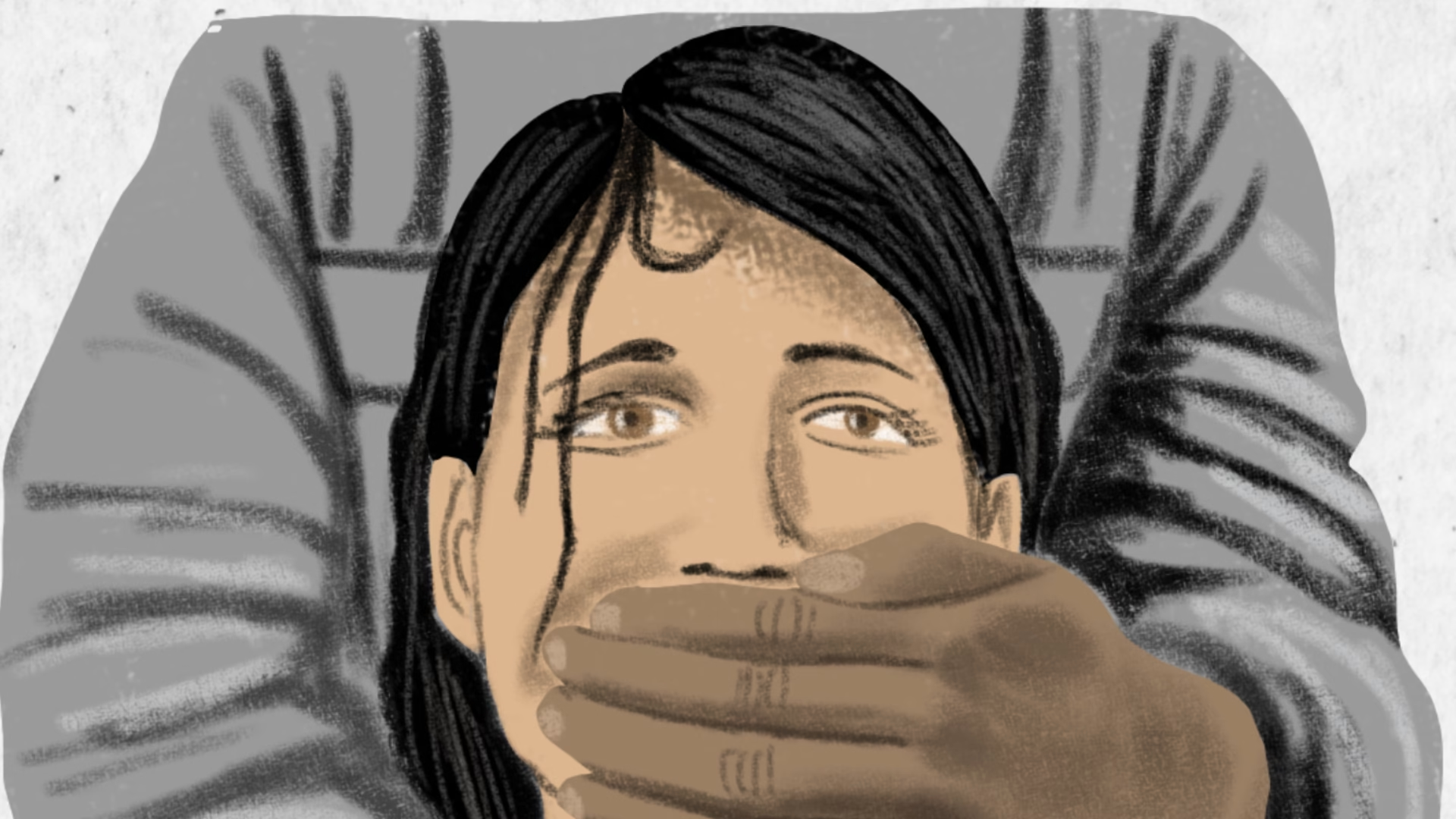
The illustration style is based on textured brush strokes, muted colours and hand-drawn forms. This lends a rough, human feel to the story. It isn’t too polished or decorative, which suits the subject. The visuals employ repeated symbols like chains, cages, handcuffs, missing posters, money, price tags and covered mouths. Together, these images create a visual language around silence, exploitation and restricted freedom.
With Silent Victims, we wanted to show how illustrated storytelling can help social issues become more visible. The format allowed us to combine data, symbolism, research and emotional communication in a way that felt direct but not overwhelming.
This illustrated story was our attempt to make a difficult reality easier to see, harder to ignore and more thoughtfully communicated.
If your organisation works with people facing vulnerable, unsafe or overlooked realities, your story deserves to be told with care, clarity and sensitivity. Reach out to us to explore how illustrated storytelling can help bring that work to life.