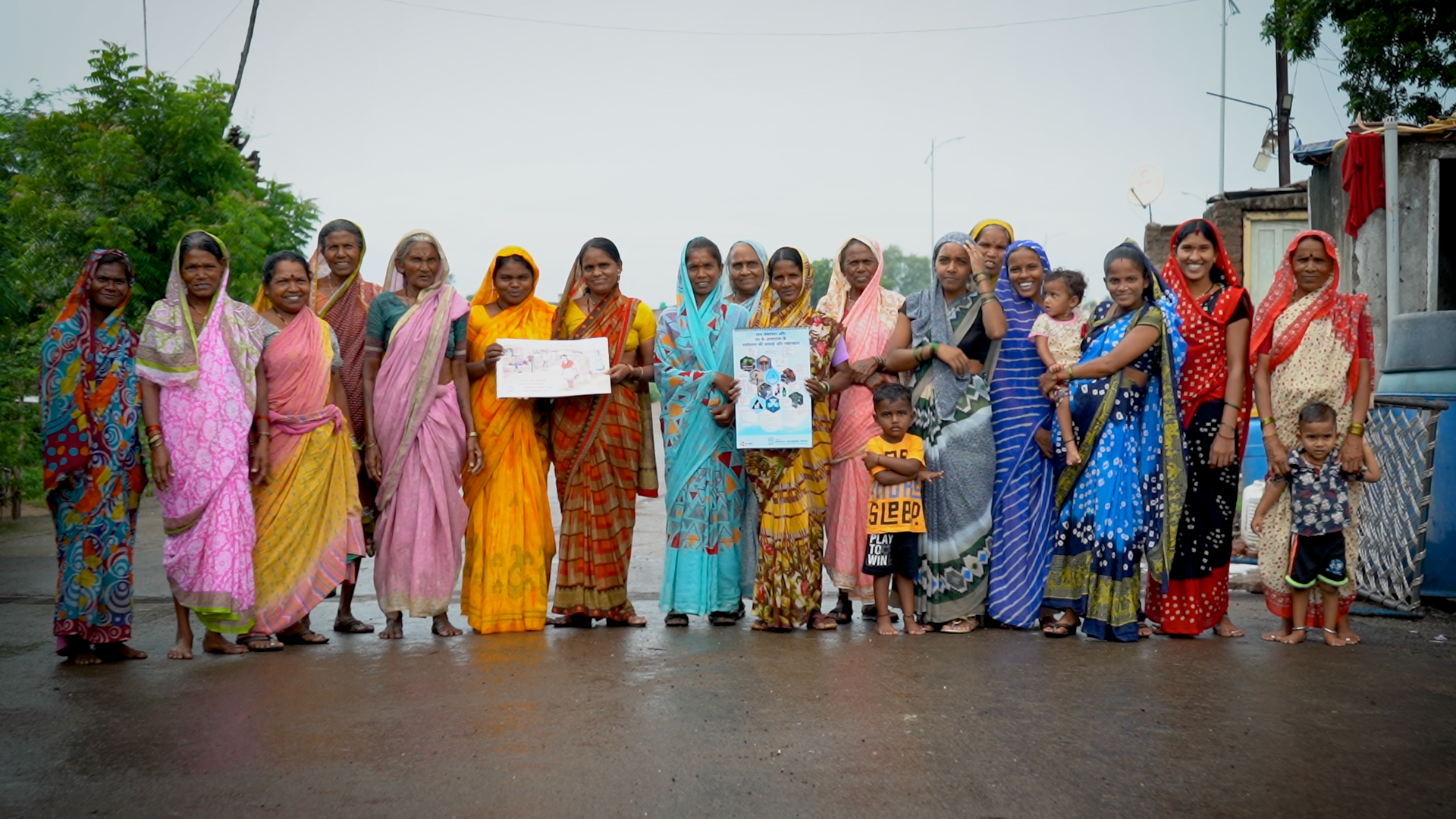
In Amalner, a small town in Maharashtra, Manda fills water for her family in about half an hour now. In the film, she remembers when it took much longer, when water came unpredictably and daily life began with waiting. That simple contrast sets the stakes. In smaller towns, water, toilets, and safe public infrastructure are not “civic issues” in the abstract. They decide health, time, income, and dignity.
Mahila Housing Trust (MHT) is a Gujarat-based nonprofit organisation that aims to empower women in India. They bring people together to improve housing and basic services in underprivileged areas across nine states. In Amalner, they stand with women’s collectives and work on better sanitation, water and hygiene facilities, while also building long-term sustainability and resilience.
When they approached us, they wanted a short documentary that could do two things at once: show what changed in Amalner and show how it changed, so the approach could be understood as a scalable model. Our production window was three months, so we needed a process that stayed tight, factual, and respectful.
Pre-Production: Keeping the Story Practical
We began by developing and refining treatment options, then building a draft script. The script juxtaposed Amalner’s historical challenges, including water disparity and open toilet issues, with the present-day improvements supported through MHT’s initiatives. We stayed away from dramatic language. The aim was clarity, not spectacle.
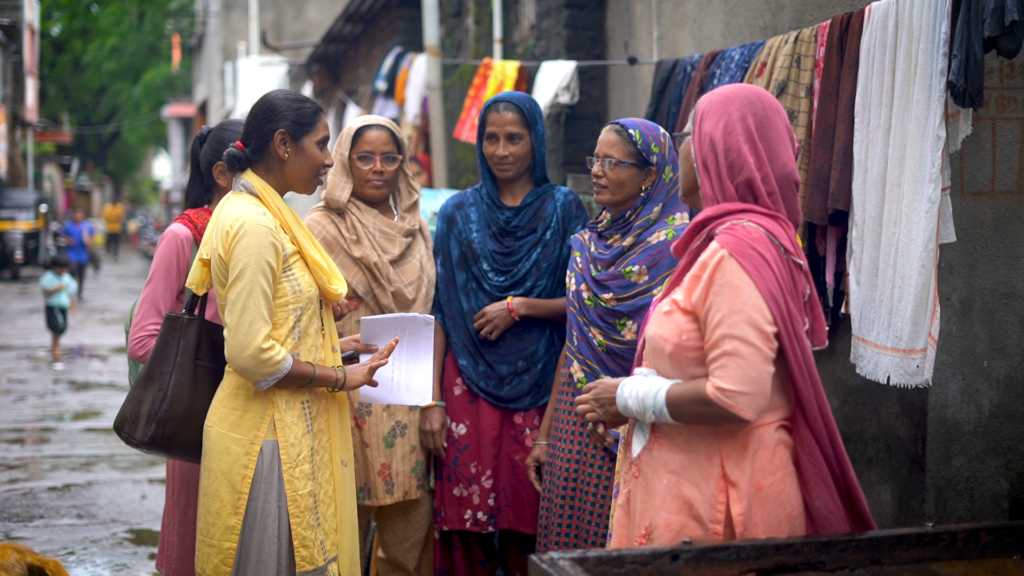
We planned the shoot with the local MHT team, so interviews, locations, and walk-throughs were led by people who knew the community and the work best.
Because MHT’s success in Amalner depends on grassroots community workers and on-ground coordination, pre-production was also about alignment. We planned the shoot with the local MHT team, so interviews, locations, and walk-throughs were led by people who knew the community and the work best. That helped us avoid staged moments and focus on what mattered.
Production: Letting Residents Carry the Film
We filmed in Amalner over three days. Interviews with community members formed the spine of the documentary, supported by on-ground footage that showed the work in context. We kept the filming style simple: steady shots, clean sound, and space for people to speak in their own rhythm.
Heavy rain made things hard for both audio and logistics. We changed our schedule to protect the important things instead of pushing through and risking unusable material. The most important thing was always to get usable footage and be respectful, not to tick off a shot list.
Post-Production: Clarity Through Editing, Graphics, and Sound
In post-production, the editorial job was to turn raw material into a coherent arc that stakeholders could follow easily. We based the story on real-life improvements and the steps that led to them.
For sanitation, the film speaks about a structured approach that includes accessing subsidy pathways, encouraging the use of community toilets, and facilitating toilet construction. It also reflects the role of awareness efforts such as street plays, community training, and wall paintings. Outcomes are expressed in concrete terms in the film, including over 900 households gaining access to toilets and Amalner becoming 97% open defecation free.
We designed motion graphics using MHT’s colour palette so the film stayed visually connected to their identity, while keeping graphics restrained and functional.
When it comes to water, the film follows the journey from assessment to everyday care. It shows the baseline work, the mapping of local sources and training of water managers, along with efforts to revive wells and improve storage. It also highlights a crucial sustainability decision: the solarisation of the water treatment plant, described in the film as reducing costs substantially, including a drop from about 57,000 rupees to 16,000 rupees and a saving of roughly 73% on the electricity bill.
We designed motion graphics using MHT’s colour palette so the film stayed visually connected to their identity, while keeping graphics restrained and functional. Sound design followed the same principle. Voiceovers and on-location sound were edited for clarity, and background music was used lightly to support pacing without overpowering the voices.
What This Film Offers Other Organisations
Amalner: A Town Reimagined now helps MHT speak to stakeholders and donors, and it also supports training and public education. More broadly, it shows how a community-led approach can improve sanitation and water outcomes in a smaller town context, while building systems that can be sustained.
If your organisation is looking to document a project with the same sensitivity and purpose, we would be glad to help you create a film that carries your work with dignity and depth.
Client: Mahila Housing Trust (MHT)
Discipline: Films and Photography
Creative Director: Simit Bhagat
Director and Scriptwriter: Divya Shree Cinematographer: Sachin Panigrahi
Editor: Divya Shree and Rohan Krishnan
Motion Editor: Rohan Krishnan
Voice Over: Simona Terron