It started in small, quiet ways. In a dusty schoolyard in rural Rajasthan, a young girl clutched a new textbook, the first in her family to ever go to school. In a village outside Mysuru, children sat cross-legged on the floor, spelling words aloud with quiet determination. And in a packed training centre in Bengaluru, fresh graduates practised soft skills and shook hands with recruiters, their nervous smiles betraying a cautious hope.
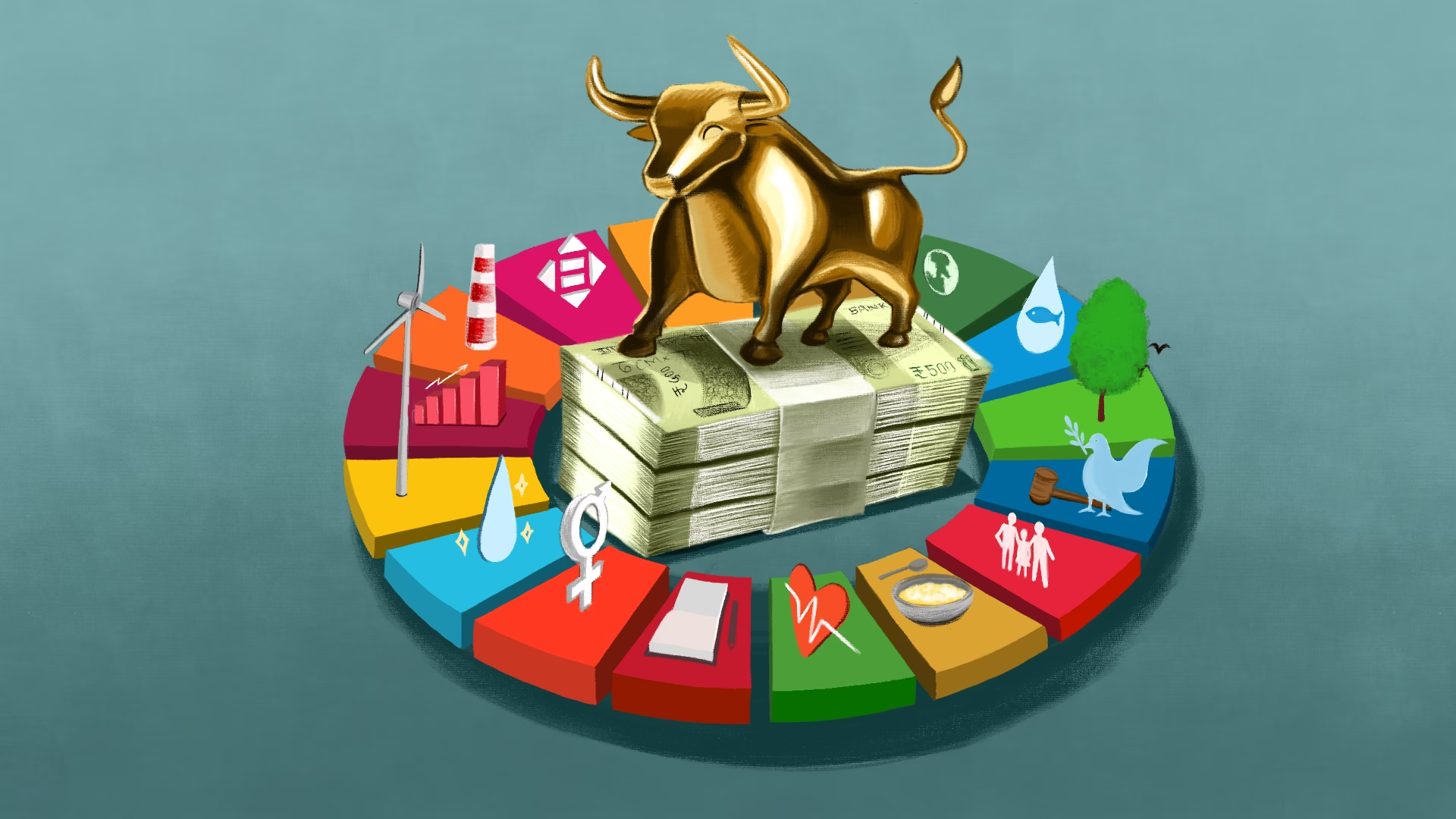
What made these moments possible wasn’t just goodwill; it was finance. But not the kind we usually think of. This time, the money came through something quite new, India’s Social Stock Exchange (SSE).
By December 2024, more than 120 non-profits had already registered across the NSE and BSE Social Stock Exchange platforms. Among them, 10 organisations raised a total of ₹22 crore, using an innovative tool called the Zero Coupon Zero Principal (ZCZP) instrument. These aren’t loans. They’re regulated donations; investors contribute funds with no expectation of repayment, but with the trust that they’re fuelling genuine social impact.
So, how does this model work in real life? More importantly, how are some non-profits using it not just to raise funds but to scale their work, deepen their credibility, and prove their impact?
How the SSE Is Opening New Avenues for Funding and Accountability
1. Earn trust through radical transparency
Raising money today is not just about telling a good story. It’s about backing that story with data, impact reports, governance practices, financial disclosures, and clear goals for where every rupee will be spent.
That’s exactly how the Swami Vivekananda Youth Movement (SVYM) built confidence. What began as a tiny health initiative in 1984 is now a large-scale development organisation. When they listed on the SSE, they raised ₹48.06 crore, not by being the flashiest, but by being crystal clear about their work. Their Viveka Tribal Centre for Learning in Mysuru is providing quality education to tribal children, and the SSE funding is helping them take that work further.
SVYM’s story shows that when you’re willing to share openly, what’s working, what’s not, you earn not just donors, but long-term believers.
2. Let your impact do the talking
Many funders today want more than good intentions. They want results. What actually changed because of the work? Who felt the difference, and in what way?
Educate Girls understood that. As the first NGO focused on girls’ education to get listed on the SSE, they came in prepared. With over 1.8 million girls enrolled in school and 2.2 million students supported through remedial learning, their numbers speak volumes. They raised ₹1.30 crore and are using it to drive enrollment and retention in the country’s most educationally backward districts.
Their approach wasn’t just emotionally compelling; it was also backed by consistent, measurable outcomes. And that’s what set them apart.
3. Pick the funding tool that fits your vision
The SSE offers several fundraising options. For non-profits, the ZCZP instrument has proven especially effective. There’s no financial return involved, but the social return is clear. However, knowing how to position your ask and for what purpose is what makes the difference.
Transforming Rural India Foundation (TRIF) showed how this can work. With an annual income of ₹71.30 crore, they raised ₹2 crore through the SSE. The funds were used to support youth microbusinesses, skill development, and the development of ecosystems for rural entrepreneurs. What helped was how clearly TRIF mapped the journey from donation to outcome, from money in to lives changed.
Their clarity wasn’t just in reports, but in how they framed their purpose: helping rural youth stand on their own feet.
4. You don’t have to be big, you just have to be focused
Many smaller organisations assume the SSE listing is only for the well-established. That’s not the case. In fact, the SSE is designed to help early-stage and mid-sized NGOs grow.
SGBS Unnati Foundation is proof. It was among the first non-profits in India to be listed on the Social Stock Exchange, setting a precedent for transparent, impact-driven fundraising through innovative instruments such as ZCZP bonds. With a total income of just under ₹12 crore, they raised ₹2 crore via the SSE. Those funds now support their UNXT Programme, which is training 10,000 graduates for entry-level jobs across sectors.
What worked for Unnati wasn’t scale, it was focus. They knew exactly who they were helping, how they were doing it, and what results they could deliver.
5. Link your work to larger development goals
It helps if your mission connects with broader agendas, national policies, global goals, and government schemes. It gives your story more relevance, and funders usually feel more confident backing work that clearly fits into a bigger picture.
The Ekalavya Foundation really leaned into this. With an annual income of just ₹0.57 crore, it still raised ₹1.10 crore through the SSE, money now being used to train 100 tribal families in Telangana. As only the second NPO listed on the SSE, Ekalavya showed how clear alignment with goals like decent work and sustainable livelihoods can unlock funding, no matter how small you are.
6. Use the Social Stock Exchange listing to amplify your voice
For most organisations, the SSE is not only a place to raise funds. It also works as a public marker of trust. A listing tells people that an organisation follows the rules, is open about its work, and is serious about the change it wants to create. This kind of visibility can bring in new donors, new partners and even new team members.
Mukti, one of the first five NPOs listed on the NSE SSE, used this visibility to deepen and scale its work in the Sundarbans. With an annual income of nearly ₹6 crore, it raised ₹1.70 crore through the SSE for its Swavlamban Accelerator, which supports women and marginalised groups with livelihood training. The listing has expanded Mukti’s reach and strengthened its standing with donors, partners and the communities it serves.
A new chapter for non-profit finance
This isn’t just about raising more money. It’s about changing how money flows in the social sector. It’s about giving donors the tools to give more confidently, and giving non-profits the platforms to grow with integrity.
The examples Educate Girls, SVYM, TRIF, Unnati, Ekalavya Foundation, and Mukti show that this isn’t just theory. It’s already working. These organisations, among more than 120 that registered with the SSE, have embraced transparency, built clear outcomes, chosen the right instruments, and tied their work to national priorities.
If you’re a non-profit, this moment is yours to shape. The SSE won’t solve every funding problem overnight, but it offers a clear, structured way forward. It rewards clarity, values impact. It also levels the field for organisations that may have the will, but not yet the wallet, to scale.
Want to learn how to tell your story better?
At Simit Bhagat Studios, we help non-profits like yours unlock growth through storytelling and design. Our newsletter brings you the latest trends, case studies, and creative tools to help you reach the right donors and move hearts while you do it.
Sign up now and join a community building the future of impact communications.