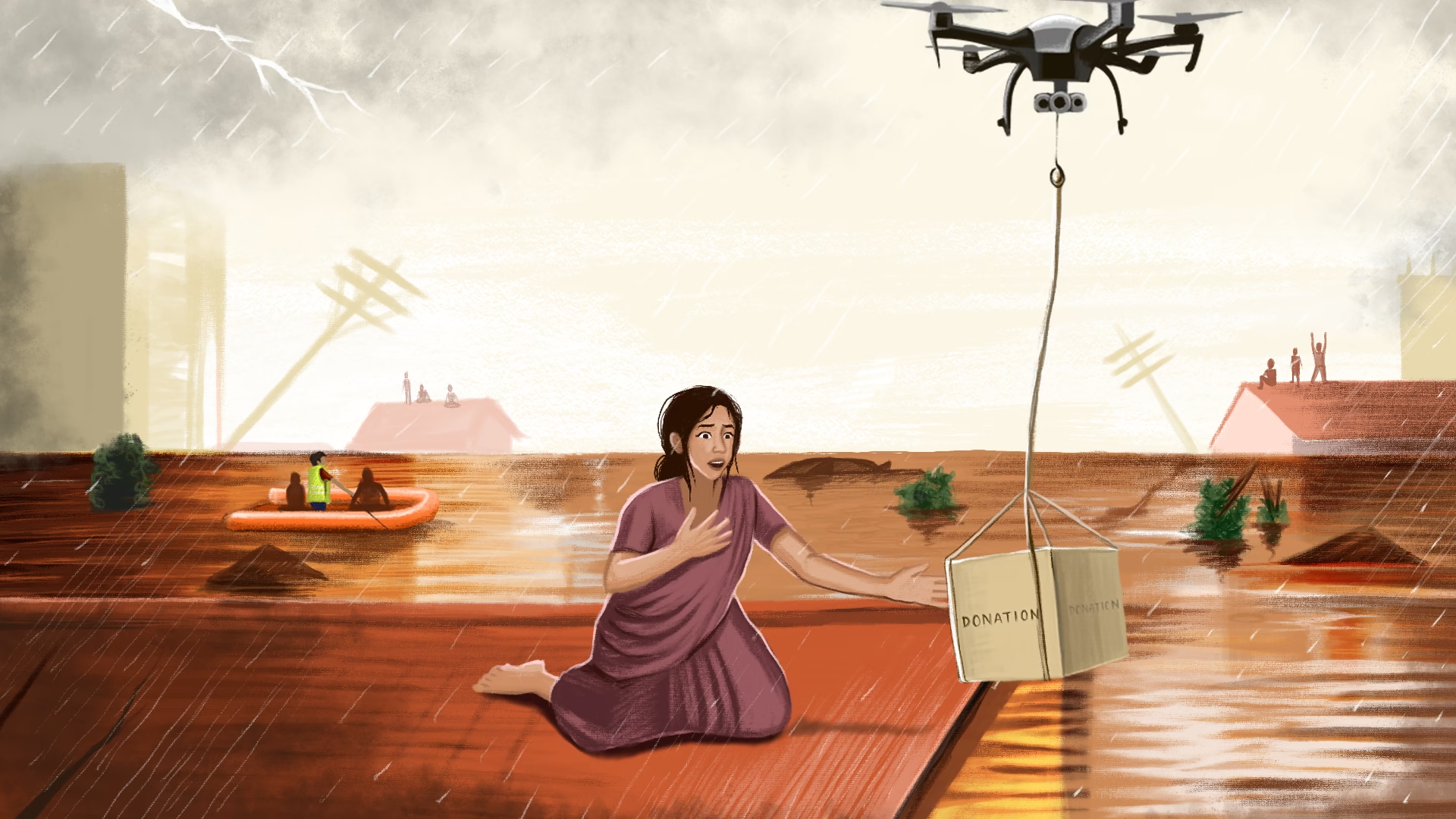
The flood came in the dark.
Villagers in Assam woke to the sound of water gushing through their courtyards. Tin roofs trembled. Beds floated. By sunrise, fields had disappeared, and so had phone signals. Children clung to cooking vessels, families to one another.
There were no rescue boats. No media vans. Just silence and rising water.
But somewhere far away, a volunteer received a single voice note: “Please help. We have no food. The road is gone.”
That message travelled fast. It reached an NGO worker, then an Instagram story, then a stranger in Mumbai who sent a donation without hesitation. Relief didn’t arrive by miracle. It arrived by mobilisation, by digital networks that moved faster than the disaster itself.
This is what humanitarian response looks like now. Real-time. Community-driven. Powered by storytelling and signal strength. NGOs are no longer waiting for headlines. They push action through digital campaigns that do more than inform; they intervene.
Now let’s walk through five stories of action, impact and the digital tools that make them real.
1. Goonj – Weaving Dignity into Disaster Relief
When the monsoon floods moved through Assam and Kerala, Goonj stepped in with more than regular aid. They responded with empathy.
Their Rahat campaign wasn’t built in a boardroom. It was shaped by stories. They used social media to share community needs in real time. They made it easy to donate with Amazon wishlists and digital payment links.
Goonj’s Rahat campaign used social media to share community needs in real time.
But the heart of Rahat was dignity. Through their ‘Cloth for Work’ initiative, communities rebuilt what mattered to them, roads, classrooms, homes, and received materials in return. It wasn’t charity. It was a collaboration. And it resonated.
One campaign under the Rahat banner raised over ₹20 lakh. Another one, focused on responding to floods, raised ₹16 lakh, mostly from digital donors.
In a world flooded with noise, Goonj’s quiet, truthful storytelling broke through.
2. UNHCR – Giving Refugees the Mic with ‘Hope Away from Home’
In times of conflict, it’s easy to speak about refugees. UNHCR chose to speak with them.
Their campaign Hope Away from Home turned displaced people into narrators of their own stories. Through digital art exhibits, Instagram Reels, YouTube videos, and co-created community content, UNHCR built empathy across screens and borders.
In times of conflict, it’s easy to speak about refugees. UNHCR chose to speak with them.
Moreover, the campaign featured artists from Ukraine, Sudan, and Afghanistan, giving voice to stories usually lost in headlines. The result was global solidarity, yes, but also meaningful impact.
In Sweden alone, donors raised $8.5 million for the campaign. The Akelius Foundation matched that with another $5.4 million, bringing the total to a remarkable $13.9 million (₹115 crore).
These weren’t just donations. They were declarations: We see you. We believe you.
3. IFRC – Training the TikTok Generation to Respond
The International Federation of Red Cross (IFRC) looked at the world’s most online generation, and saw potential.
Through its Youth Engagement Strategy, it turned young people into first responders. They weren’t just watching floods on their phones; they were coordinating relief through WhatsApp groups, attending Zoom workshops, and launching TikTok awareness campaigns.
Besides quick wins, IFRC invested in long-term digital resilience. They provided toolkits and training for community-based disaster response led entirely by youth.
These efforts also carried real weight. In 2023, donors from IFRC’s National Societies contributed over 352 million Swiss Francs (₹3,200 crore), of which part went into digital work and youth engagement.
The numbers are big. But the stories are bigger. Like the teenage girls in Indonesia who mapped evacuation routes in their village, using nothing but a phone and a YouTube tutorial.
4. GiveIndia – When a Dashboard became a Lifeline
In the terrifying summer of 2021, India’s healthcare system collapsed under the second wave of COVID-19.
Beds were unavailable. Oxygen ran out. Entire families queued outside hospitals, begging for help.
Into this chaos stepped GiveIndia, with a dashboard that changed everything. Their India COVID Response Fund (ICRF-2) wasn’t just a fundraiser. It was an emergency room built on the internet.
A dashboard that changed everything.
In two weeks, they raised over ₹70 crore (USD 9.5 million). Campaigns like #IBreatheForIndia and #TogetherForIndia contributed ₹20.3 crore and ₹25.5 crore, respectively. Moreover, they didn’t work alone. Over 270 NGOs, six state governments, and even the Indian Army joined forces.
Digital updates told donors exactly where aid was going, every oxygen cylinder, every ICU bed. And every rupee meant a life touched.
5. American Red Cross – Where Tweets Turn into Coordinates
When Hurricane Sandy hit, the American Red Cross didn’t wait for damage reports. They read tweets. One post said, “Trapped with my grandma. Please send help.” They did. This marked the beginning of digital humanitarian coordination at scale.
Red Cross created an operations centre to monitor social media for real-time needs. But they didn’t stop there.
When Hurricane Sandy hit, the American Red Cross didn’t wait for damage reports. They read tweets.
With partners like Doctors Without Borders and the Humanitarian OpenStreetMap Team, they launched Missing Maps. This project invites global volunteers to map unmapped villages before disaster strikes. Besides mapping, the Red Cross also pioneered mobile fundraising.
After the Haiti earthquake, one SMS, “HAITI” to 90999, helped raise $43 million. That’s the power of one message, multiplied by millions of hearts.
What Do These Campaigns Have in Common?
They move fast, but never shallow. Use tech, but never lose touch. They don’t broadcast suffering. They build solidarity.
Moreover, they show us that in every disaster lies a moment to reimagine how we care. Whether through a map, a reel, a wishlist, or a text, these campaigns turn digital acts into human connections.
Every disaster lies a moment to reimagine how we care.
Why does it matter now more than ever? Because natural disasters are intensifying. Conflicts are spreading. Pandemics may return. Meanwhile, attention is fragmenting. Empathy is fleeting.
That’s why storytelling matters. Not for decoration, but for direction. Besides raising money, these digital campaigns raise urgency. They inspire action. They help people not just survive, but feel seen.
Want to Learn How Stories Like These Are Made?
At Simit Bhagat Studios, we work with nonprofits to shape stories that touch people first, and numbers later.
If you care about communication that genuinely leads to change, subscribe to our newsletter. We share practical insights, working strategies and real stories that show how digital storytelling is shaping the future of humanitarian response, one campaign at a time.