On a humid evening in Hyderabad, a younger Vamsi Krishna, now 25-years old, was packing crates of bottled water into the back of a van. His Rotaract Club had a vaccination drive planned for the next morning, and the supplies needed to be ready. He’d been doing this for three years; sometimes blood donation camps, sometimes serving meals at shelters.
Vamsi never had much to give financially while at college. But the work gave him a sense of purpose.
“Anything I could do to make a small change was really important to me,” he says now from Chicago, where he’s studying. “If I’m putting money in, I want to feel like it’s being invested in making the world better, not patching a hole in a wall full of problems.”
If I’m putting money in, I want to feel like it’s being invested in making the world better.
For many in Gen Z (born between 1997 and 2012), giving is less about the size of the donation and more about the meaning behind it. They don’t just want to hand over money, they want to see where it goes, who it helps, and how it fits into a bigger plan.
Proof Before Passion
Surveys in the United States show that 70% of Gen Z donors want to see the impact of their gift before giving. Another 70% say regular impact reporting would make them more likely to keep donating. They value transparency as much as empathy.
Gayatri Aich, a 25-year-old Instagram influencer from Kolkata with 47,000 followers, puts it plainly: “I’d want to look at their impact reports and keep an eye out on their social media. I don’t trust stories that don’t have verifiable data or sources.”
Gen Z donors value transparency as much as empathy.
Many, like Gayatri, start with small amounts, building up over time as trust grows. Some volunteer first, as a way to see the process up close. They’re drawn to causes that match their values, social justice, climate change and equity. For many, donating feels not just financially right, but morally necessary.
The Digital Frontline
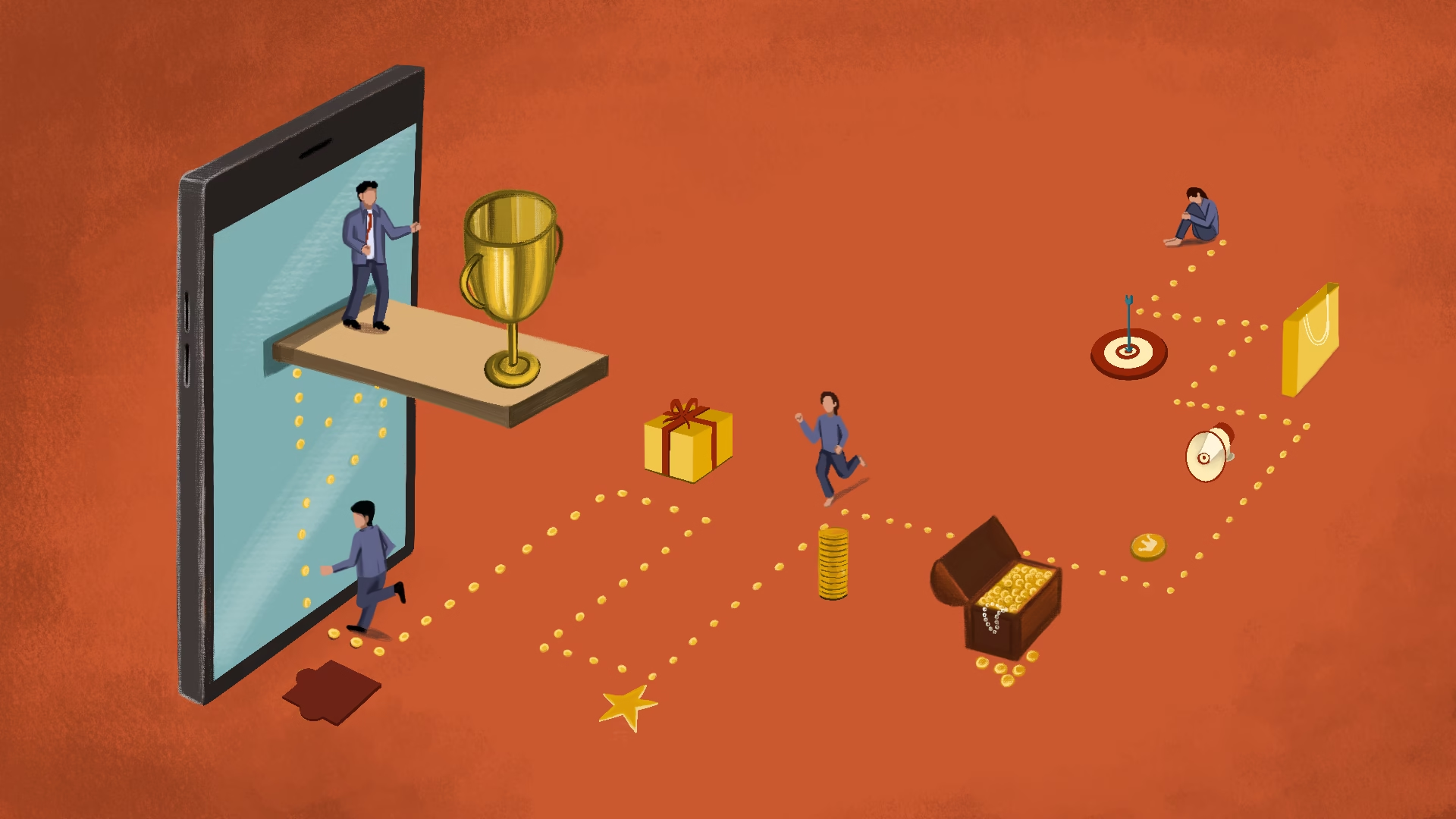
This is a generation raised on speed and interactivity. As per HelpYouSponsor, 76% donate online; 13% give via text. Many prefer smaller, regular contributions over occasional large sums.
They live where causes now live: on social media. Seventy-nine percent find causes there, and 41% say social media posts motivated them to research or donate. The messenger matters; Gen Z trusts peer influence, user-generated content, and ambassador storytelling far more than glossy, institutional campaigns.
Gen Z trusts peer influence, user-generated content, and ambassador storytelling far more than glossy, institutional campaigns.
And they’re not confined to traditional donation models. In November 2023, TikTok creator Jourdan Johnson launched the “watermelon filter,” a simple Augmented Reality (AR) game where users trace a watermelon along a squiggly line to collect seeds. With every use, the filter generates funds for charities supporting civilians in Gaza, no cash required from the user.
“Because of the ease of using a filter quickly (and for free)… using TikTok effects to donate abroad is the best way to do your part,” one young user told The Daily Dot.
Within a week, it had been used in over 6.5 million videos and hit TikTok’s $14,000 revenue cap for effects. The watermelon became more than a digital trend. It was a low-effort, high-impact way for millions to participate in a cause without opening their wallets.
TikTok may be banned in India, but the idea behind Johnson’s success is portable. The filter worked because it combined symbolism, interactivity, and transparency; three things that speak directly to Gen Z’s giving habits.
Can Indian NGOs adapt this model to platforms that are popular locally, like Instagram Reels, YouTube Shorts, and Snapchat? A custom AR effect, challenge, or interactive sticker, linked to a campaign symbol that resonates culturally, can encourage participation and, with the right partnerships, trigger donations from corporate sponsors or matched funds.
The key is to gamify the action (make it fun and easy to join), make it socially shareable (encourage tagging and hashtag use), and update supporters regularly on impact (just as Johnson posted daily totals). This turns a fleeting piece of content into an ongoing story that builds momentum, trust, and community ownership. These are exactly the conditions in which Gen Z thrives as donors.
When Influencers Become Impact Makers
Gen Z’s trust often lies with people, not platforms. One in four say they’ve been motivated to donate by an influencer they follow, and half would trust that influencer to donate on their behalf. Ajey Nagar, more commonly known as CarryMinati, is a great example of this currently in India.
He has become one of the best known YouTubers and gaming influencers in Asia. Over time, he created a channel capable of hosting trusted charity livestreams, often providing funding in response to disasters and other emergencies across India.
Gen Z’s trust often lies with people, not platforms.
In June of 2023, a train accident killed 288 individuals and injured over 700 in Odisha, India. CarryMinati hosted a four-hour livestream on his gaming channel, CarryisLive. By the end of the stream, viewers contributed ₹11,87,611.64, which they donated to the Chief Minister’s Relief Fund, Government of Odisha.
“It’s just heartbreaking to see these upsetting visuals,” he said after the accident. “In times like these, we all need to come together and work towards the common goal of being there for one another on a humanitarian level. I hereby appeal to everyone to unite in these trying times and extend a helping hand in whatever way you can.”
This kind of real-time, high-visibility giving, combined with personal contributions from the influencer, creates a multiplier effect. It builds trust, encourages immediate action, and connects audiences emotionally to the cause.
Beyond Money: Hands-On Change
For some, like Poulami Chakraborty (28, Bangalore), donations are part of a broader relationship with trusted organisations. She gives to UNICEF India annually but says: “Transparency definitely helps. Storytelling helps, if kept brief. I rarely give to people on the street, it depends if they’re with a known organisation.”
I rarely give to people on the street, it depends if they’re with a known organisation.
Others lean towards doing, not just donating. Studies show that Gen Z wants to volunteer, do small volunteer jobs, and even be on campaign advisory boards. They like online outreach better than in-person requests because it fits their lifestyle and lets them choose when and how they get involved.
Economic Reality
Not all barriers are about trust. Many in Gen Z have expressed that living in a gig economy, coupled with rising costs of living, leaves them without any financial stability.
Even so, 44% have visited a charity website in the past six months, and 33% have volunteered. A Gen Z–driven study shows why they stay engaged even when they can’t give financially. 42% share fundraisers to feel directly connected to the solution, 36% to build community, and 32% to influence others to give.
Translating Gen Z Values into Strategy
To reach Gen Z effectively, nonprofits should consider the following things:
- Show the receipts. Publish impact reports, use verifiable data, and keep storytelling brief but credible.
- Meet them where they are. Integrate donation tools into social media, livestreams, and mobile-first experiences.
- Offer more than a donation button. Make it easy for Gen-Zers to volunteer and micro-contribute.
- Promote authenticity. Peer voices and real-life ambassadors carry more weight than polished branding.
- Acknowledge their reality. Flexible giving options and low-barrier engagement matter in a generation navigating economic uncertainty.
The Future of Giving Is Here and It’s Personal
Donating for Gen Z may look different from how it did in the past. But the spirit of giving is still very strong. They give when they trust, act when they connect, and stay when they see results.
Gen Z donors give when they trust, act when they connect, and stay when they see results.
For nonprofits, the challenge isn’t just to get people’s trust. They also have to keep it by being open, creative, and genuinely involved. In a landscape where every cause competes for attention, the organisations that listen, adapt, and invite Gen Z into the heart of the work will find not just donors, but lifelong partners in change.
As Vamsi says, “We’d like organisations to do things we cannot, and show us how they do it.”
Get Stories and Tools That Make a Difference
Want more real-world examples like these, plus practical ideas on how your NGO can craft campaigns that move hearts, build trust, and deepen donor engagement?
Subscribe to our newsletter. Each edition is packed with lessons on powerful storytelling, ethical communications, and ways to turn your mission into real, measurable change.