It begins with a slow-motion shot. A child walks barefoot on a dirt road, eyes wide, ribs visible. A woman in the background struggles to balance jugs of water on her head, one slipping as the soundtrack swells. The next frame cuts to a crying celebrity. She crouches beside the boy, asking simple questions, only to burst into sobs as he replies, “I was born.” It’s satire but uncomfortably familiar. And that’s the problem.
This scene isn’t from a real fundraising campaign; it’s from Let’s Save Africa!, Gone Wrong, a satirical video created by SAIH Norway in 2013.
In this short film, the iconic Lion King theme plays, an ironic nod to how Africa is so often reduced to a jungle stereotype in Western media. The video parodies the clichés of poverty-focused NGO ads: tragic children, swelling music, and white celebrities “saving” the day. What made it hit home wasn’t just the humour, it was the uncomfortable truth behind the mockery.
The final message lingers on screen: stereotypes harm dignity; challenge the perceptions, which is a biting reminder that, even with the best intentions, dehumanising stories can do more harm than good.
So, why do so many campaigns still rely on these tropes?
The Cost of a Click: When Fundraising Crosses a Line
The answer may lie in what fundraising often prioritises: donations over dignity. Poverty porn, which refers to the emotionally manipulative and exploitative content that treats people as mere objects of pity, is obviously still around and rather alarmingly so. And not only is it unethical, but it can also blow up in your face.
A study by Duncan, Levine and Small (2024) found that when people watch charity ads, they worry more about being misled than about whether the story is emotional. As they put it, “The bigger moral red flag for viewers isn’t that someone’s story was emotional, it’s that it may have been twisted for effect.” People do not mind feeling moved. They do mind feeling played, and when that happens, they pull away.
The bigger moral red flag for viewers isn’t that someone’s story was emotional; it’s that it may have been twisted for effect.
In a 2024 study, researcher Mahmoud Abdulai Mahmoud warned that this kind of portrayal can take away a community’s sense of agency. Instead of showing people as active in their own development, these campaigns often present them as passive, nameless and stuck in suffering. Mahmoud notes that this shapes how the public sees them and keeps a sharp power gap between those who give and those who receive.
From Stereotype to Suspicion: When Stories Invite Scrutiny
Beyond being morally questionable, poverty porn can also cast doubt on an organisation’s legitimacy. A CNN investigation found that St. Joseph’s Indian School sent out letters from made-up Native American children to ask donors for money. The money did go into school operations, but the method worried people, especially when they saw the school held over $122 million in assets and spent half the donations on fundraising. The story triggered wide concern. If one group can fake a need for profit, can others be trusted?
Beyond being morally questionable, poverty porn can also cast doubt on an organisation’s legitimacy.
This is where perception becomes reality. When one bad actor uses poverty porn to commit fraud, it creates a climate of suspicion around all nonprofits using similar tactics, even the ones doing genuine work. The damage isn’t just reputational; it erodes donor trust across the sector.
Challenging the Lens: The Stories We Choose to Tell
In a SEA Today interview titled Poverty Porn – Commodification of Poverty in Media, Dr Dian Arymami explains how certain portrayals of poverty objectify people in their most vulnerable moments. “We are putting people… in their most humiliating moment shared across the globe,” she says, adding that such content often serves engagement over impact.
This aligns with a powerful piece by Jennifer Lentfer, director of communications at Thousand Currents, published in The Guardian. Lentfer argues that the real challenge for nonprofits isn’t just raising money; it’s shifting public thinking. As she puts it, we must move beyond pity-driven messaging and trust audiences with nuance, complexity, and the truth that lasting change often comes from slow, local, citizen-led work, not dramatic, feel-good fixes.
The real challenge for nonprofits isn’t just raising money; it’s shifting public thinking.
Instead of really looking at systemic issues, this kind of media leans on “myths” and harmful stereotypes, painting some people as “saviours” and others as “dependents.”
That concern runs through our podcast Stories of Change, where nonprofit professionals discuss how storytelling can either perpetuate harm or open space for real connection.
In Episode 8, Larry Johnson, a veteran fundraising coach, reminded us that ethical storytelling is not about drawing out pity; it is about building real connection. Too often, he said, nonprofits focus on their own narratives instead of understanding what truly moves a donor. “It’s not about you,” he stressed. “Donors give because it fulfils something in them.” For Larry, dignity in storytelling begins with respect for both the person in need and the person giving.
What Happens When We Listen Instead
So, what does ethical storytelling look like? It’s slower. It requires effort. Even though it may not go viral in the same way, it builds something that poverty porn never can: respect.
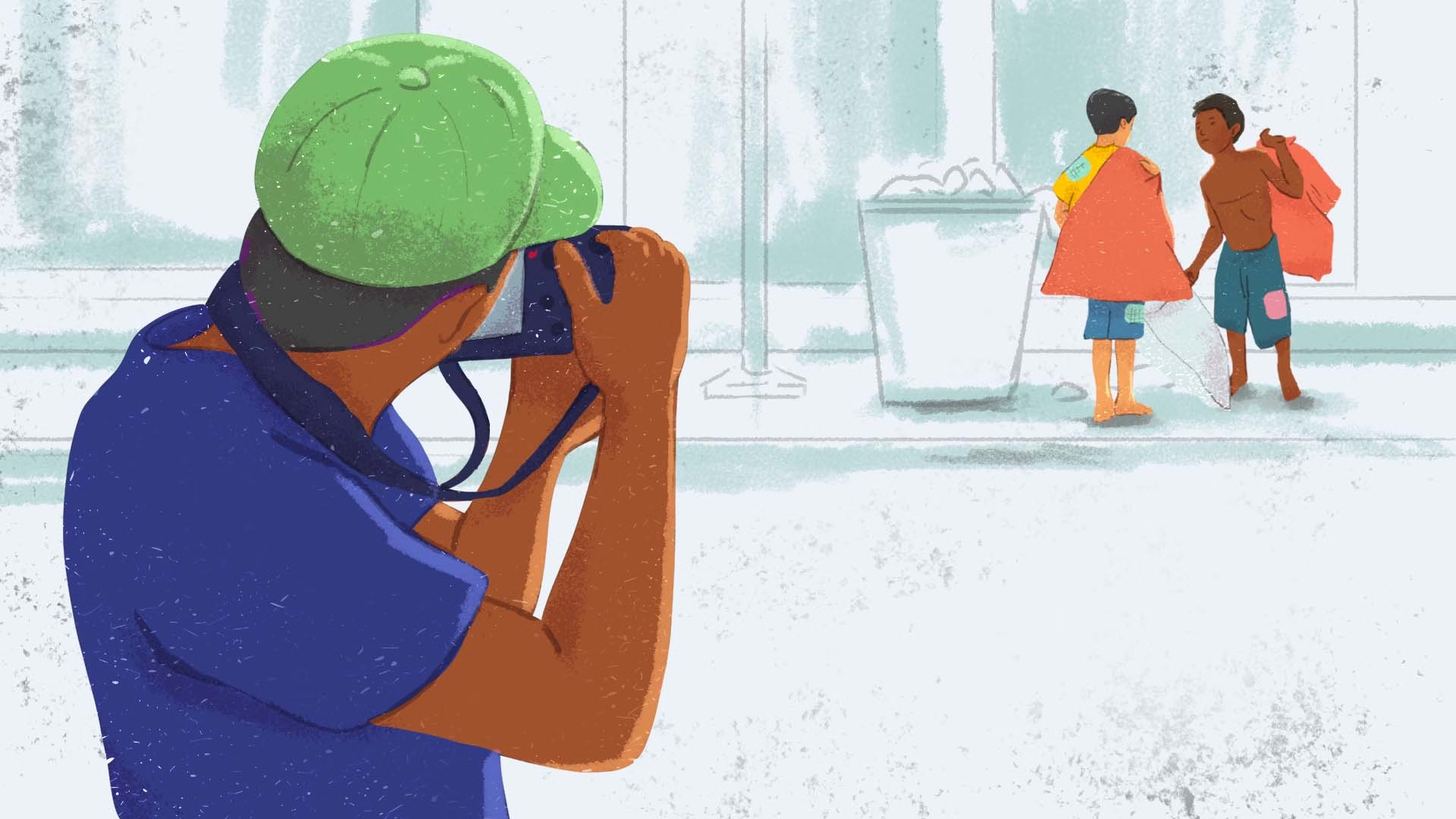
It means getting consent. Means showing the person behind the image as a full human being, not just a symbol of tragedy. It means using your platform not to speak for someone, but to amplify their voice.
Ethical storytelling means showing the person behind the image as a full human being, not just a symbol of tragedy.
And audiences respond to that. They crave stories that feel real. Stories that honour, not flatten. As Dr Arymami said in her interview, commodifying poverty may win short-term attention, but it strips away something far more valuable: shared humanity.
Final Thought: From Compassion to Collaboration
Poverty porn tries to shock people into giving. But maybe the goal isn’t to shock, it’s to connect.
We don’t need more close-ups of tears. We need close-ups of the agency. Of resilience. Of a mother laughing with her child, not just holding them in grief and of a teacher at the chalkboard, not just a crumbling classroom.
The real power of storytelling doesn’t lie in how sad it makes us feel. It lies in how truthfully it reflects the people we claim to serve.
Subscribe to our newsletter for honest insights, visual stories, and tools to build ethical communication in the nonprofit sector.est insights, visual stories, and tools to build ethical communication in the nonprofit sector.