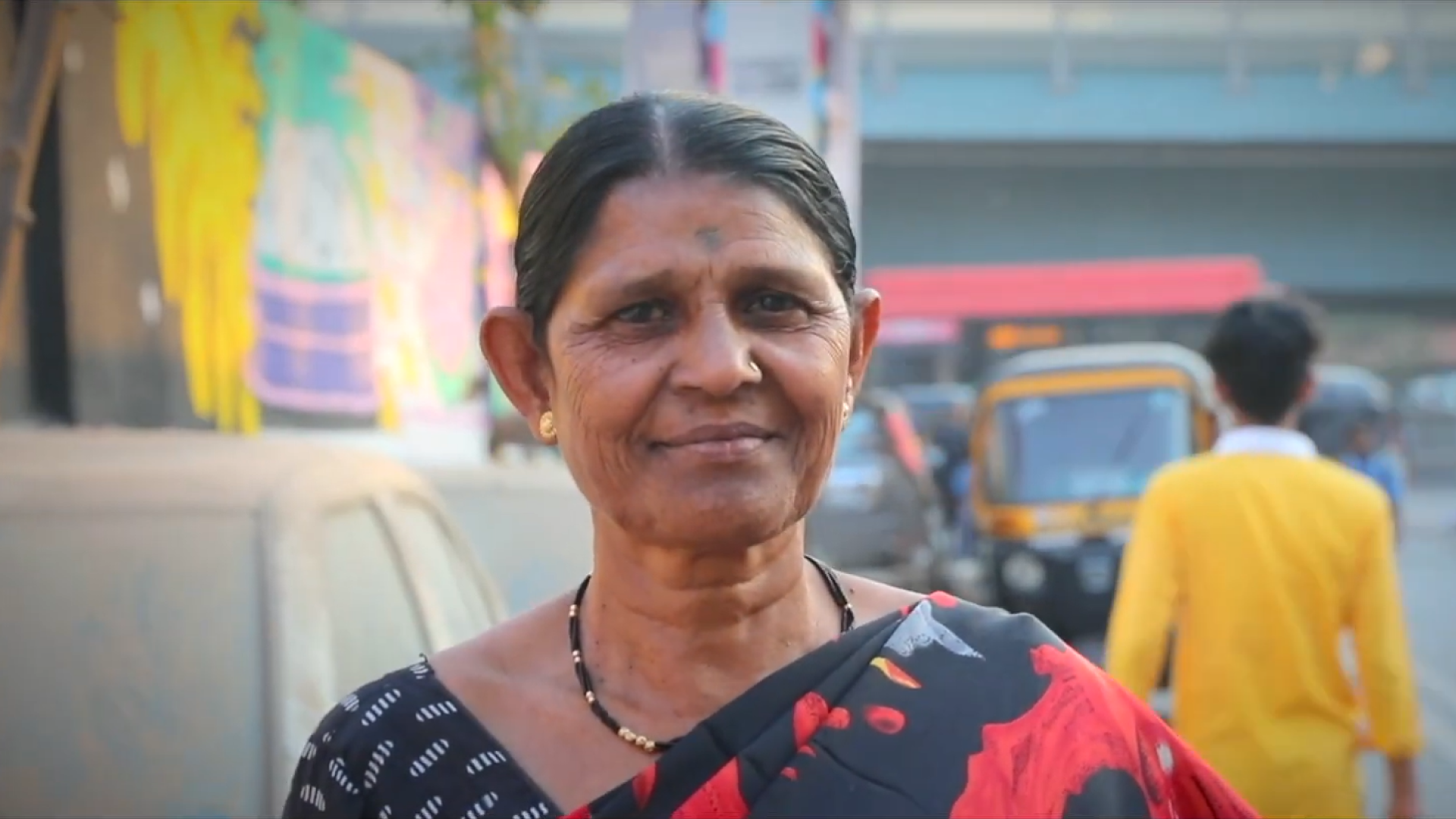
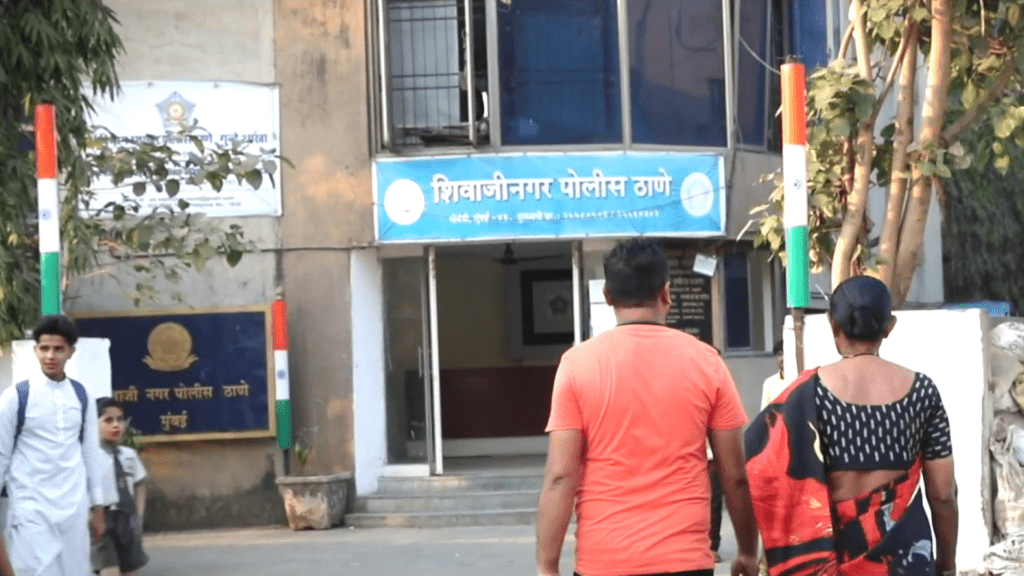
In one of Mumbai’s bastis, a woman walks into a police station to report violence. She already knows what might happen next. The complaint may not be taken seriously. The paperwork may get pushed aside. The silence around the case may feel louder than the incident itself.
Indu Tai has seen that silence too many times. And that is exactly why she refuses to sit quietly.
When SNEHA brought us into this project, the brief was simple and serious. They wanted a testimonial film that could show what Sanginis actually do on the ground, how community volunteers step in when systems fail, and why this work matters in neighbourhoods where gender-based violence is often normalised or brushed away.
So we built the video around one person’s voice, because one honest voice can sometimes cut through what a hundred posters cannot.
Setting the scene: letting Indu Tai lead
During our visit to Mankhurd, we interviewed Indu Tai. She lives in Govandi, Mumbai, and works alongside SNEHA to support women facing atrocities. What makes her story hit harder is that she speaks as someone who has lived it herself. She shares that she has been a victim of gender-based violence, and that SNEHA supported her then, helped her get back on her feet, and made her feel strong again.
That personal arc is not a side detail. It is the reason she can now say, without showing off, that she goes to the police station, speaks to senior officials, and no longer feels frightened in those spaces. She reports instances of violence when she sees them, including rape, fights, and domestic abuse, and she knows how to navigate the next steps because she has had support, training, and a network behind her. Our job was to keep the film clear, grounded, and centred on her words.
Why we chose a testimonial format
For stories like this, a testimonial film does something important. It does not “explain” a community to the outside world. It lets the community speak for itself.
A testimonial film does not “explain” a community to the outside world. It lets the community speak for itself.
Sanginis are volunteers working across the city under SNEHA’s prevention of violence against women and children programme. They challenge patriarchy and social norms daily, often without being celebrated for it. A testimonial format lets that reality come through without adding noise, drama, or an overly polished campaign feel.
It also helps organisations like SNEHA speak to two audiences at once. The film can educate communities on gender-based violence intervention, while also encouraging volunteerism by showing what real courage looks like in everyday life.
Filming choices: staying respectful, not sensational
We kept the shoot grounded in real places and real pacing. Indu Tai’s story carries enough intensity on its own. It did not need dramatic music cues or heavy-handed editing.
Instead, the intention was to create space for her to speak plainly. She talks about what it felt like to be afraid earlier, and what changed after joining SNEHA. She describes how she and other women often visit families in a group of four, because a group is taken more seriously, and also because it is safer. She does not sugar-coat the risk. She says there is always a chance of being assaulted or misbehaved with, but the group reduces that risk. That detail matters because it shows how volunteer work is shaped by real safety concerns, not idealistic slogans.
We also made sure the film did not turn violence into spectacle. The focus stayed on action, solidarity, and real problem-solving.
A real incident, told in a way that teaches
One moment in her testimony captures the role of a Sangini very clearly. She describes a case in Satya Nagar, Wadala, where a girl was screaming on the second floor because she was being beaten. Neighbours watched, but no one stepped in. Indu Tai asked what was happening, learnt the girl was regularly tortured by her in-laws, and understood the girl had no parents and was dependent on her husband, which made her vulnerable to exploitation.
Her response was practical. She spoke to the girl, brought her to SNEHA’s office, and called her sisters, asking why they were not helping. Later, the husband and in-laws came to the SNEHA office and apologised to her.
We kept this section in the film because it shows what intervention looks like in real life. Not heroic lines, but a chain of steps taken by someone who refuses to look away.
Indu Tai’s voice remains the spine. Her message to women who stay at home out of fear is direct: she stepped out, and she wants others to try too. She also shares something that changes how viewers read the entire story. She receives no financial incentives for this work. She does it because she wants to support women in distress while she is still alive.
The closing message from SNEHA gives the film its wider frame. It tells viewers that Sanginis are part of a city-wide network, and that the aim is to empower women and develop grassroots leaders to prevent and address gender-based violence.
That structure matters. It keeps the film from becoming just one person’s story. It becomes a window into a model.
What this kind of film can do for other organisations
If you work in sensitive spaces, testimonial films are a powerful way to show impact without speaking over the people you serve. They are also a strong tool for volunteer mobilisation, because they show the work as it is: difficult, real, and still worth doing.
For us, documenting Indu Tai’s story was a reminder that change often begins with one person deciding, “I will not stay quiet.”
If your organisation wants to capture community leadership with honesty and care, we would love to help you build a film that lets those voices be heard.
Client: Sneha Mumbai
Discipline: Film and Photography
Director: Simit Bhagat