Avijit Halder was 11 when a stranger put a camera in his hands.
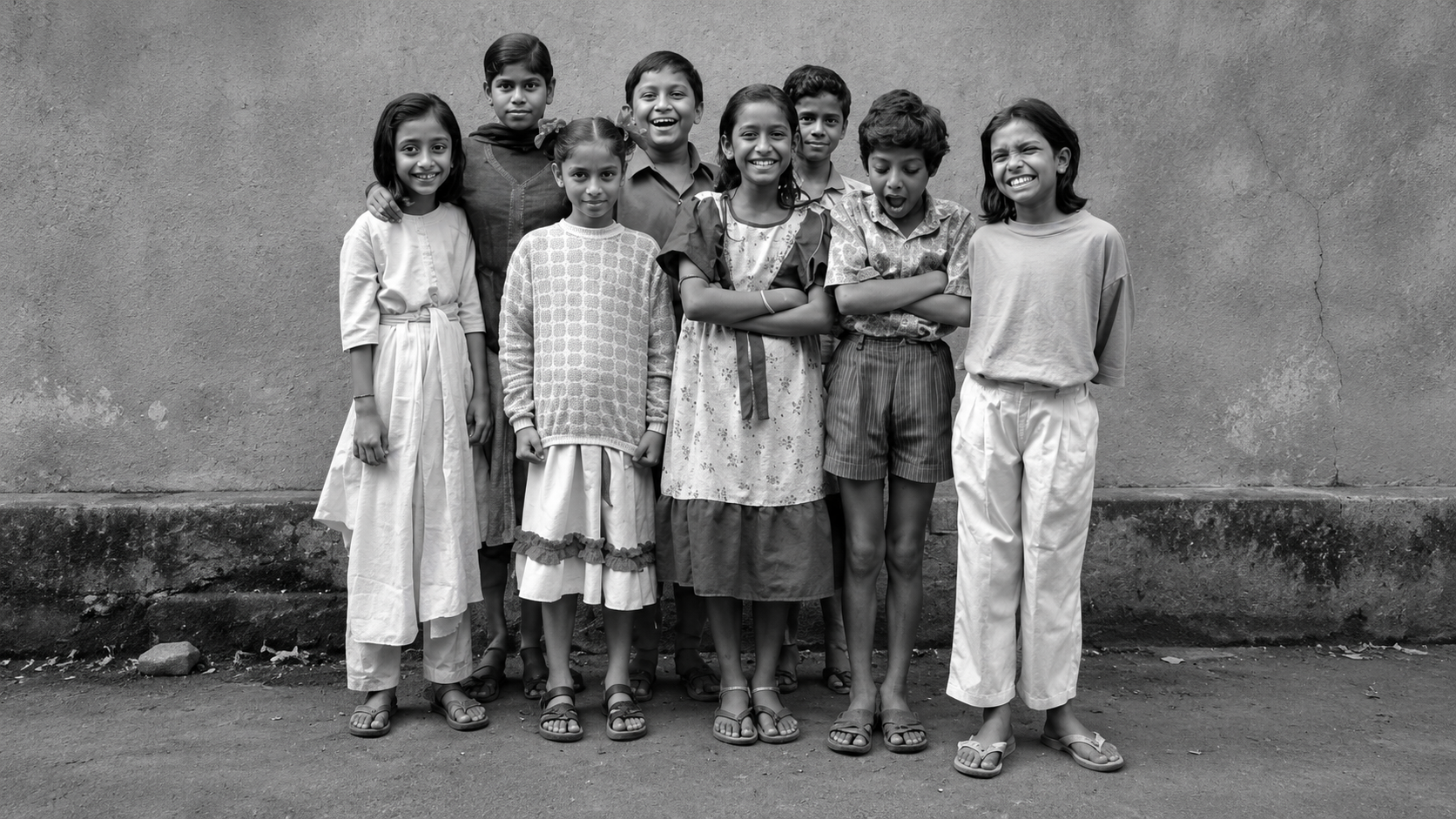
He was growing up in Sonagachi, Kolkata’s red-light district, the son of a sex worker. The stranger was Zana Briski, a British photographer who had moved into the district in the late 1990s to photograph the women who worked there. She kept noticing their children instead, so she started teaching them photography.
Avijit turned out to be the star of the class. His self-portraits and street scenes were good enough that he was selected for the World Press Photo children’s event in Amsterdam, and Briski fought through a maze of red tape to get him a passport. That happened in the middle of tragedy: during filming, his mother was killed.
Briski and co-director Ross Kauffman turned those years into Born Into Brothels, which won the Oscar for Best Documentary Feature in 2005. The children’s photographs became the fundraiser. Kids with Cameras, the nonprofit Briski founded, raised $100,000 selling prints of their work to pay for their education.
Avijit left Kolkata for the United States in 2005. A few years later, he was studying film at New York University’s Tisch School of the Arts. In 2019, he finished a Master of Fine Arts in photography.
That, in a nutshell, is what a documentary can do for a cause. It does not just describe a problem. It puts a specific person in front of the audience, and then gives that audience something to do.
The film raised $100,000 (₹4.5 million) through global exhibitions and a book. That money funded the children’s education and helped launch Kids with Cameras, a nonprofit that empowered marginalised children through photography.
Born Into Brothels wasn’t just a film. It made people care. It made them act. That’s what visual storytelling does. It doesn’t just describe a cause, it humanises it. It turns understanding into empathy, and empathy into action.
Visual storytelling doesn’t just describe a cause, it humanises it.
So, how do films like these actually inspire donations?
Let’s explore four ways documentaries help nonprofits build trust, visibility, and support, each backed by real stories and results.
1. They spotlight the human story behind the mission
Donors rarely connect with numbers. They connect with people. The best documentaries let us meet someone specific, and that personal lens makes a mission feel real.
Samarth Mahajan grew up in Dinanagar, a small Punjab town about 10 miles from the India-Pakistan border, so borders were never abstract to him. His documentary Borderlands follows six people whose lives are shaped by the subcontinent’s frontiers, including survivors of trafficking and migrants. They speak five languages and come from four countries. One of them is his own mother, who lives near the Wagah border.
The best documentaries let us meet someone specific, not just a statistic.
The film was funded the way documentaries about ordinary people often have to be: by ordinary people. The team ran an all-or-nothing crowdfunding campaign on Wishberry with a target of ₹25 lakh; if it fell short by a single rupee, they promised to return every contribution. It worked. 557 people contributed, and Mahajan says the campaign raised about ₹30 lakh in 45 days.
Borderlands went on to win Best Editing at the 68th National Film Awards. More importantly, it showed hundreds of backers that a film about invisible lives was worth paying for before a single frame had been shot.
2. They build trust by showing real-time action
In a crisis, donors want to know two things: who is helping, and how quickly. Seeing help arrive builds trust faster than any appeal letter.
We Feed People, directed by Ron Howard, follows chef José Andrés and his nonprofit World Central Kitchen over 12 years, as it grew from a scrappy band of volunteers into one of the most respected names in disaster relief. It streamed on Disney+ from 27 May 2022.
It is tempting to draw a straight line from the film to the money, and the numbers are striking. World Central Kitchen’s contributions were around $28.5 million in 2019. In 2022, its consolidated contributions and grants topped $546 million.
In emergencies, when donors see quick, meaningful action, they’re more likely to trust and support it.
But the honest reading is more interesting. Contributions had already jumped to about $250 million in 2020, during the pandemic, two years before the film came out. And 2022 was the year of the war in Ukraine, where WCK served more than 185 million meals.
The film did not create World Central Kitchen’s growth. It arrived at the moment the world was already watching, and gave millions of people a reason to trust the organisation they were seeing on the news. That is the realistic job of a documentary in a crisis: not to start the fire, but to make sure people know who is carrying the water.
3. They prove that change is possible
Hope moves people to give, but only when it is backed by evidence. Donors want to see that their money can change something. Documentaries that show real results give them that confidence.
The Price of Free, directed by Derek Doneen and produced by Davis Guggenheim, follows Nobel Peace Laureate Kailash Satyarthi and his team on secret raids to rescue children from forced labour and trafficking. It won the Grand Jury Prize for US Documentary at the 2018 Sundance Film Festival and was later nominated for an Emmy.
The film did not just educate people. It handed them a donate button and a movement to join.
The release was designed for action. YouTube made the film free to watch on 27 November 2018, timed to GivingTuesday, and attached a fundraiser through YouTube Giving with a goal of $200,000. Creators Jay Shetty and Kati Morton posted videos urging their audiences to donate, and within days the campaign had raised $112,000.
The film’s life went well beyond the fundraiser. Its release was tied to the 100 Million Campaign, a youth-led movement for children’s rights, and the Kailash Satyarthi Children’s Foundation set out to take the film to tens of thousands of schools and colleges across India. The film did not just educate people. It handed them a donate button and a movement to join.
4. They build credibility through consistent, honest storytelling
Not every documentary needs a festival premiere. Sometimes change comes from steady effort, and an organisation that tells its story consistently and with care builds trust over years.
That is what Smile Foundation has done. Its film Meenu’s Smile follows a girl named Meenu as Smile Foundation’s integrated education and health project changes her community in a cluster of villages in Guna district, Madhya Pradesh. Through one child, the film captures the organisation’s whole approach: education, healthcare, livelihoods and women’s empowerment, delivered together.
When an organisation tells stories consistently and with care, it builds long-term trust.
Smile Foundation treats film as a core part of its work rather than an afterthought. It produced the award-winning feature I Am Kalam in 2010 and runs the Smile International Film Festival for Children and Youth, now in its 12th edition.
The trust shows in the numbers. In the financial year ending March 2024, Smile Foundation received ₹116.28 crore in voluntary contributions, of which ₹102.42 crore went directly into programmes. Many things drive that, but consistent storytelling is one of them. It makes impact feel real and the mission feel human.
When Stories Speak, Support Follows
Line these four films up and a pattern emerges. Each one starts with a person: a boy with a camera, a mother near the Wagah border, a chef in a disaster zone, a child freed from a factory, a girl named Meenu. Each one then gives the audience a role, whether that is buying a print, backing a crowdfunding campaign, trusting a relief organisation or clicking donate.
And each one carries a responsibility. The people on screen are not props. The films that last are the ones that treat them with dignity and tell the truth about what changed, and what did not.
Documentaries do not just tell stories. They build trust, spark belief and move people to stand with you.
At Simit Bhagat Studios, we don’t just film projects. We help bring missions to life.
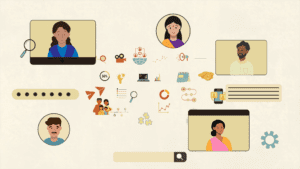
We partnered with Sakhi for Girls Education, a Mumbai-based nonprofit working to keep girls in school. When the pandemic disrupted their classes, many couldn’t continue learning because they didn’t own phones.
We created a heartfelt crowdfunding video with Sakhi, AVISI, and students from the University of Berkeley. In just one month, the campaign raised $2,259, enough to buy tablets for girls who had been left behind.
That’s the power of storytelling: it connects the need with people who care.
So, if you’re a nonprofit looking to raise funds, build trust, or share your story, let’s work together.
And for more insights, tools, and behind-the-scenes lessons on how storytelling drives impact, subscribe to our newsletter.