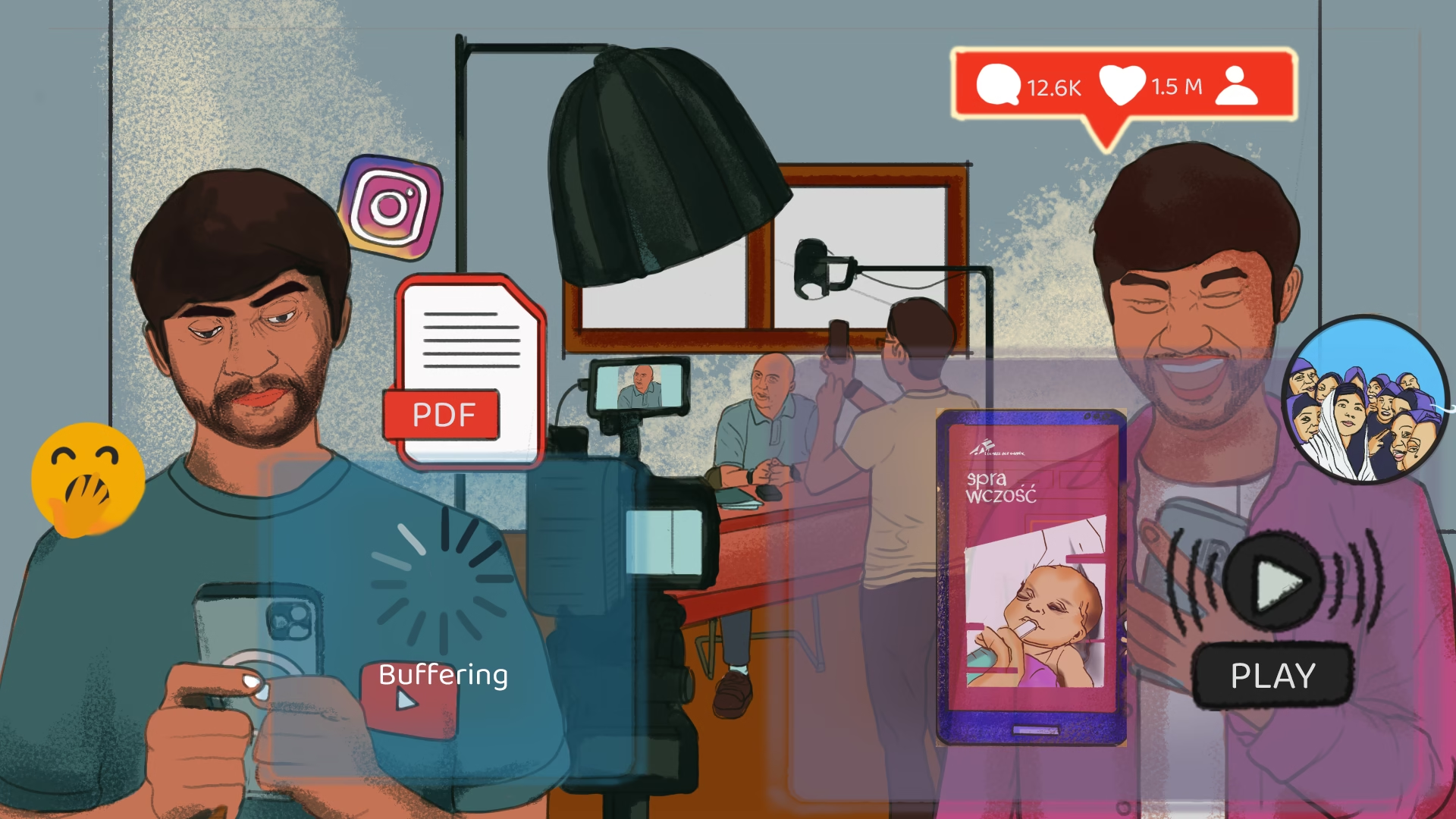
Just outside the glow of a bustling city, there’s often a small town or village where progress still feels distant. There are not many healthcare facilities, schools receive inadequate funding and opportunities are still scarce. Many NGOs step into these gaps, bringing clinics, training and hope. Their work is transformative. Yet too often, the story of that impact ends up buried in a hundred-page PDF, a document that almost no one outside the donor community ever reads.
And that’s the tragedy: the soul of the work gets lost in static reports. The commitment of health workers, the stories of communities, and the evidence that change occurs… all trapped in text-heavy pages that settle in digital dust. But it doesn’t have to be like this.
In a time when attention spans are getting shorter and shorter, people consume knowledge differently. Videos, audio, and interactive formats are populating their feeds and shaping how they engage. Statista reported that in 2023, more than three billion people worldwide engaged with video content at least once per month. As we noted in a previous piece, Transforming Nonprofit Communications: Video Annual Reports’ Impact, this statistic is as true for NGOs as it is for brands. This means that people now prefer to watch and listen, not just read.
The lesson is clear: knowledge products still matter, but PDFs alone are no longer sufficient.
Why Knowledge Products Still Matter
Reports are not going away. Donors, partners, and policymakers rely on them for accountability, evidence, and learning. Communities also benefit from documentation of what worked and what didn’t. But the real question is not whether we produce reports, but in what format.
The real question is not whether we produce reports, but in what format.
A Taylor & Francis study analysing audio, text and video tweets found that audio posts often had higher engagement per follower than either text or video. Meanwhile, a Public Relations Review study confirmed that 91% of consumers now prefer visual content over text-based media. Add to that a Journal of Radio & Audio Media study, which revealed that although 91% of tweets contained images and videos, fewer than 1% included alt-text, and we see a more nuanced truth: audiences crave multimedia formats, but accessibility and intentional design still determine impact.
The Rise of Video Reports
The shift to video is impossible to ignore. UNICEF Uganda’s 2023 video annual report was barely three minutes long, yet it drew more than 48,000 YouTube views. Its 2024 follow-up, narrated in what sounded like the voice of a Ugandan teenage girl, resonated deeply because the choice of voice aligned with UNICEF’s child-centred mission. The narration, paired with still photographs, concise text overlays, and subtle animation, created a sense of authenticity and intimacy, without the need to spend too much funding.
Rather than relying on an elaborate production, the report used thoughtful, accessible techniques that kept it both engaging and resource-friendly. In the end, UNICEF produced a report that felt personal and memorable. As of August 2025, it has earned more than 33,000 likes.
Closer to home, SNEHA (Society for Nutrition, Education and Health Action) has invested in video reporting to ensure audiences engage.
“We have been investing in creating a video annual report to ensure that people read about our work quickly. We have seen that the Click-to-Open Rate (CTR) was 50–60% for a video annual report compared to 20–25% for a print annual report,” said Vanessa D’Souza, CEO of SNEHA, Mumbai, at the panel discussion on the power of storytelling in the social impact sector.
This comparison alone highlights why video is now a serious contender to the traditional annual report.
Mobile-First Storytelling
For NGOs, the phone is the new field camera. Flying production teams across states or countries is costly, but every staff member and beneficiary already has a device in their pocket. Asking people to capture short testimonies, reflections, or day-in-the-life clips transforms distributed communities into co-creators.
Doctors Without Borders proved this with their film What is MSF?, which stitched together self-shot clips from staff in over 70 countries. The authenticity of ordinary voices, combined with simple editing, created a powerful global narrative; one that has attracted nearly 50,000 views without blockbuster budgets.
The authenticity of ordinary voices, combined with simple editing, created a powerful global narrative; one that has attracted nearly 50,000 views without blockbuster budgets.
Furthermore, free and low-cost editing apps can polish these clips into professional-looking reels. Add a thoughtful narration, animation, or a layer of infographics, and what emerges is not just documentation but a compelling story. Field workers, volunteers, or even beneficiaries become storytellers in their own right.
This mobile-first approach democratises storytelling. It ensures reports are not locked behind institutional tone, but are carried in the voices of those who live the work daily.
Podcasts and Audio Stories
In addition to all mentioned above, podcasts and audio stories are an equally powerful, often inexpensive medium of storytelling. They bring intimacy, portability, and reflection.
Take Decoding Impact, hosted by Rathish Balakrishnan of Sattva Knowledge Institute. Across several seasons, the podcast has explored systemic change through candid interviews with sector leaders. It enjoys a 4.9-star rating on Spotify, underscoring how audiences value listening deeply.
We explored more examples of this in our blog, Voices for Impact: Must-Listen Podcasts Driving Social Good.
At Simit Bhagat Studios, we also host Stories of Change, available on YouTube, where we bring in practitioners and experts from the social sector. Through their experiences, listeners gain practical insights into storytelling, organisational practices, and safeguarding impact. It’s a space designed for nonprofits to learn, reflect, and strengthen the way they communicate their work.
Overall, audio storytelling can also take hybrid forms. When working with SNEHA, we produced an audio story of a gender-based violence survivor. Her account was deeply personal, yet anonymity was vital. By pairing her voice with hand-drawn animated illustrations and stirring music, we created a short piece that honoured her story while protecting her identity. What began as an unplanned by-product of a longer documentary became one of the most moving knowledge products SNEHA has ever shared.
With podcasts and audio stories, the barrier to entry is low. Even a phone recording app can open the door to highly engaging knowledge products.
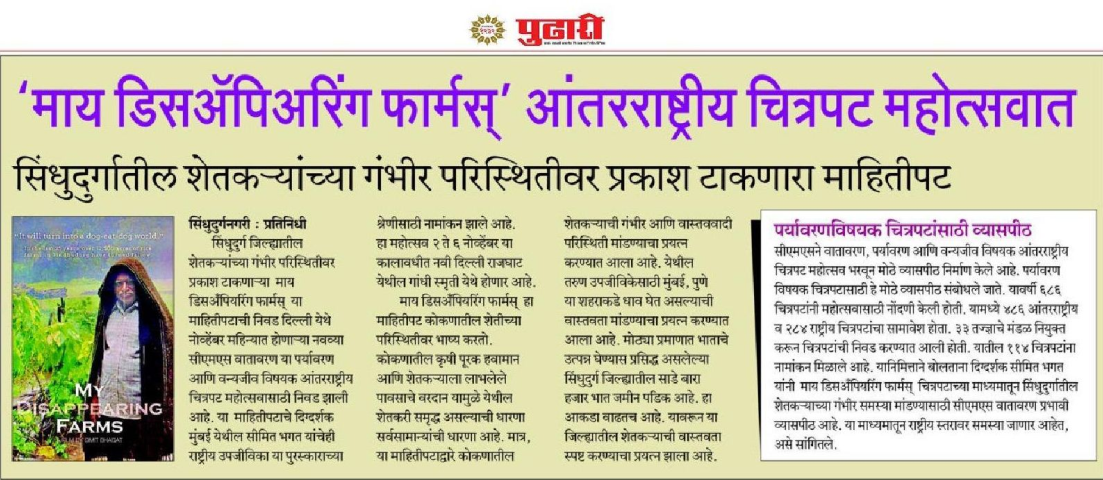
However, not every audio story requires animation. For the Lupin Human Welfare & Research Foundation, we recorded farmers’ voices and paired them with still portraits and light background music. As farmers described moving from subsistence to stable income, their words carried the kind of weight no text-heavy report could replicate. This is a great and inexpensive way to tell your organisation’s story effectively. The point is simple: with podcasts and audio stories, the barrier to entry is low. Even a phone recording app can open the door to highly engaging knowledge products.
Beyond Stories: Dashboards and Data
Reports also need to communicate data. And here, static tables are increasingly giving way to interactive dashboards.
Consider charity: water’s Projects Map, which publicly displays GPS-tagged wells, complete with photos and real-time status updates. The Water Project maintains a dashboard that shows water point conditions (flowing, under maintenance) alongside metrics like communities reached and people impacted.
On a larger scale, the International Budget Partnership hosts its Open Budget Survey Explorer: a country-by-country tool that not only visualises data but allows users to run budget transparency calculations themselves. These dashboards transform accountability from a one-way PDF into an ongoing dialogue. They allow donors, policymakers, and the public to “play” with the data and see the work for themselves.
Dashboards transform accountability from a one-way PDF into an ongoing dialogue. They allow donors, policymakers, and the public to “play” with the data and see the work for themselves.
Final Thoughts
A village health worker, a farmer speaking into a phone camera, a dashboard showing a water point flowing in real time, these are not just formats. They are living knowledge products. They preserve the essence of NGO work while making it accessible to the very people it is meant to serve, and to the wider world that supports it.
The challenge for nonprofits is no longer about producing more reports but about ensuring that the stories, data, and voices within them are not lost in unread pages. By reimagining reports as videos, podcasts, audio stories, or dashboards, organisations can keep the integrity of their work while finding formats that resonate with today’s audiences.
The challenge for nonprofits is no longer about producing more reports but about ensuring that the stories, data, and voices within them are not lost in unread pages.
Budget-friendly tools exist. Audiences are ready. What remains is the willingness to let go of the old template and embrace formats that breathe life into impact. Because in the end, the measure of a report is not in the number of pages it carries, but in the number of people it reaches.
Want more real-world examples like these, plus practical ideas on how your NGO can design campaigns that inspire trust and move people.
Subscribe to our newsletter; each edition is packed with insights on storytelling, ethical communications, and turning your mission into visible change.