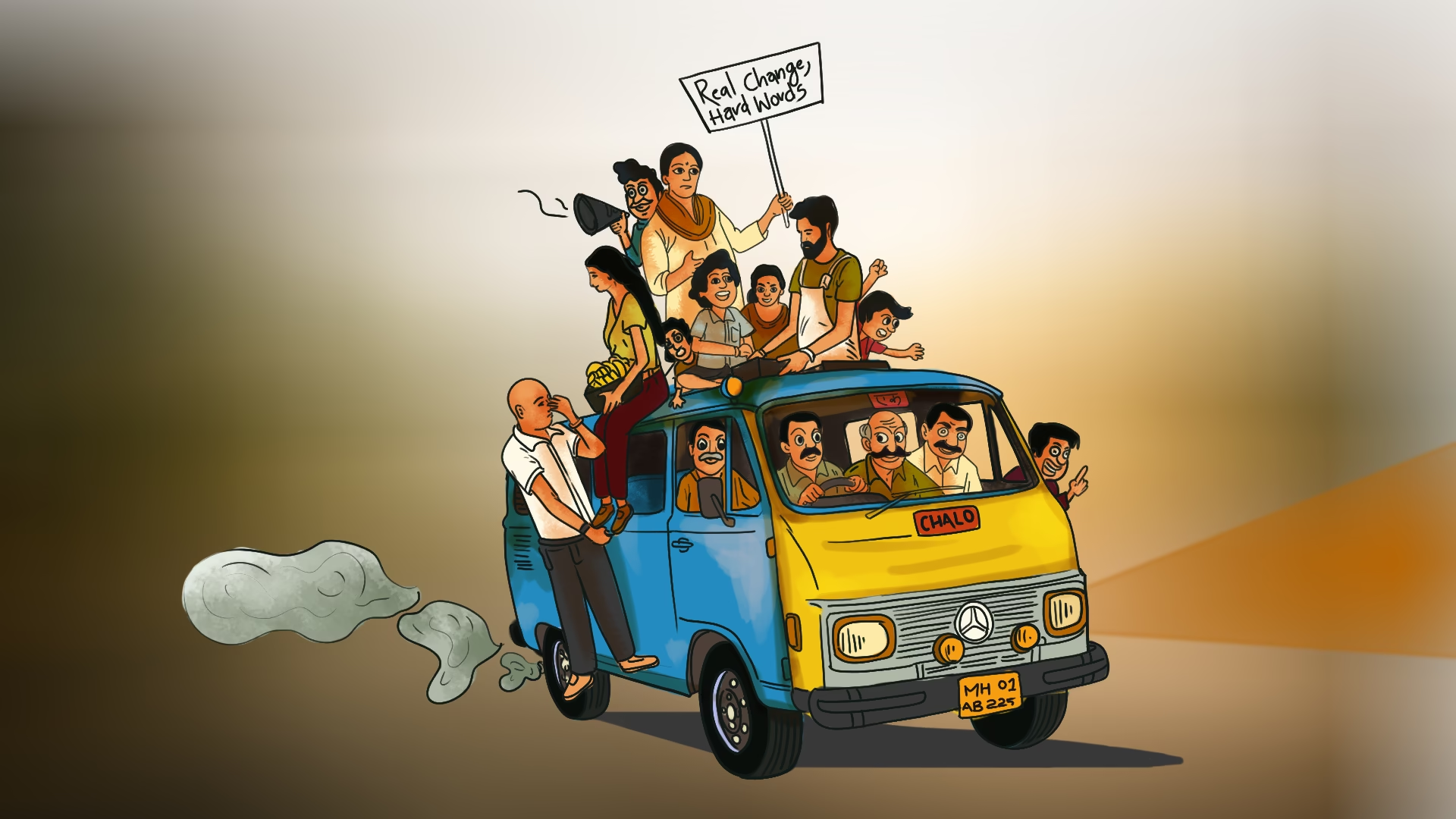
Across small organisations, a quiet frustration shows up again and again. Teams know their work is meaningful, communities trust them, and real change happens in small, steady ways. Yet when they try to explain that work to someone outside the field, the words often fall short.
The University of Miami’s “Storytelling for NGOs” project noticed the same thing while studying communication patterns. And a moment from a gathering in West Africa captured it simply. A woman shared what had shifted in her life because of a local programme. Nothing dramatic. Just her reality. Before she finished speaking, people stepped forward wanting to help. One story did what a stack of reports rarely manages to do.
Many NGOs face this gap not because their work lacks depth but because the pace of the field leaves little room to document what is unfolding. Storytelling becomes something to think about only when a proposal is due or a donor visit appears on the calendar. By then, months of small but powerful details have gone unrecorded. Field staff may notice a parent asking a new kind of question, or a teenager finding confidence in a training, but these moments vanish unless someone has the time and habit to hold onto them. The issue is not evidence, but the absence of a steady way to express it.
The issue is not evidence, but the absence of a steady way to express it.
Across the sector, communication frameworks point to a similar idea. A strong narrative grows out of three strands: why the work matters personally, what it means for the community, and what makes this moment important. Most small NGOs already live inside these strands. They talk about them in project cars, over evening calls and in weekly reflections. What they often lack is a simple structure that turns everyday insight into a voice the outside world can recognise.
A strong narrative grows out of three strands: why the work matters personally, what it means for the community, and what makes this moment important.
The conversation around budgets comes up often. Many organisations assume that compelling storytelling requires big campaigns or expensive content. Experience across diverse NGOs shows something different. Teams that know what they want to say, who they want to reach and how they want to show progress generally build visibility even with limited resources. Much of this comes down to how people respond.
Audiences usually connect more strongly with one real person than with pages of consolidated numbers. And stories that carry both struggle and possibility tend to resonate more deeply than messages built only around hardship. These patterns appear across contexts, and they make storytelling far more accessible for small organisations than it may seem.
The experience of The Sandcastle Trust offers one example. With just two part-time staff and limited resources, the UK charity built its 2023 Christmas appeal around a film co-created with a family it supported. Much of the footage was recorded by the family themselves on their phones, and the charity spent only £50 on paid Facebook promotion. The appeal had set out to raise £500. It eventually brought in more than £1,400, with 22 of its 41 donations coming from new donors. The campaign showed how a clear, human story could help a small organisation reach beyond its existing circle without requiring a large production or advertising budget.
Practitioners worldwide have drawn similar conclusions. Storytelling has become one of the most relied-upon tools for nonprofits trying to build trust, attract partners and make their work understandable. Alongside this, the conversation on ethical storytelling has grown. Many organisations now place greater emphasis on consent, on avoiding narratives that reduce people to symbols, and on ensuring that community members have a say in how their stories are shared. When dignity is protected, stories travel with more honesty and far more impact.
Hear Me Out took this principle further with its More Than A Label campaign. Rather than simply collecting stories from people who had experienced the UK immigration system, the small charity invited five people with lived experience into the campaign team, gave them paid roles and training, and involved them in deciding how the stories would be told. Within its first two months, the campaign brought in new regular and one-time donors, while its films reached more than 187,000 views across Facebook and Instagram. Website traffic also nearly tripled. The case showed that giving people greater agency over their own stories need not come at the expense of reach. It can become part of what makes the communication meaningful.
When dignity is protected, stories travel with more honesty and far more impact.
Another challenge sits beneath all of this. Visibility in the social sector is uneven. Larger organisations often have dedicated communication teams, professional materials and consistent messaging. This creates a cycle in which visibility brings in resources, and resources create more visibility. Smaller organisations, meanwhile, work closest to the ground but rarely have the time to maintain a regular public voice. As a result, assumptions fill the silence around them.
For organisations trying to find a clearer narrative, three types of stories tend to help.
An origin story offers a simple anchor. It explains the problem that first caught the organisation’s attention and why that issue mattered enough to act.
Everyday stories show what the work looks like in real time. A changed routine, a new habit, a conversation that didn’t happen last year. These moments allow others to see the actual texture of the work.
And feedback stories, honest reflections from community members, help the organisation understand what is landing well and where the gaps still lie. These stories deepen accountability while strengthening trust.
Responsible storytelling requires careful attention to power, clear consent and a commitment to portraying people as participants in their own lives.
Ethics weaves through all three. Responsible storytelling requires careful attention to power, clear consent and a commitment to portraying people as participants in their own lives. When organisations do this well, the stories become more grounded, and the people within them feel respected.
There is also an internal shift that happens quietly. When teams begin articulating their work more regularly, they start seeing patterns in their own practice. Founders reconnect with early motivations. Field teams recognise the value of what they observe each day. Donors and partners finally understand not only the activities but the meaning behind them. In many organisations, storytelling slowly becomes less of an afterthought and more of a guide.
When stories from small NGOs are gathered with care, shaped with intention and shared consistently, they can make an organisation visible in ways that budgets alone cannot.
The idea at the heart of all this is simple. Small NGOs may not have the platforms that larger institutions do, but they hold stories that carry real force. When these stories are gathered with care, shaped with intention and shared consistently, they can make an organisation visible in ways that budgets alone cannot. What small NGOs need is not a louder stage. They need stories strong enough to reach the other side of the room.
If you want more insights like these, along with practical ideas on how small NGOs can strengthen their public voice, consider subscribing to our newsletter. Each edition offers tools and examples to help organisations turn everyday work into stories that inspire understanding and action.