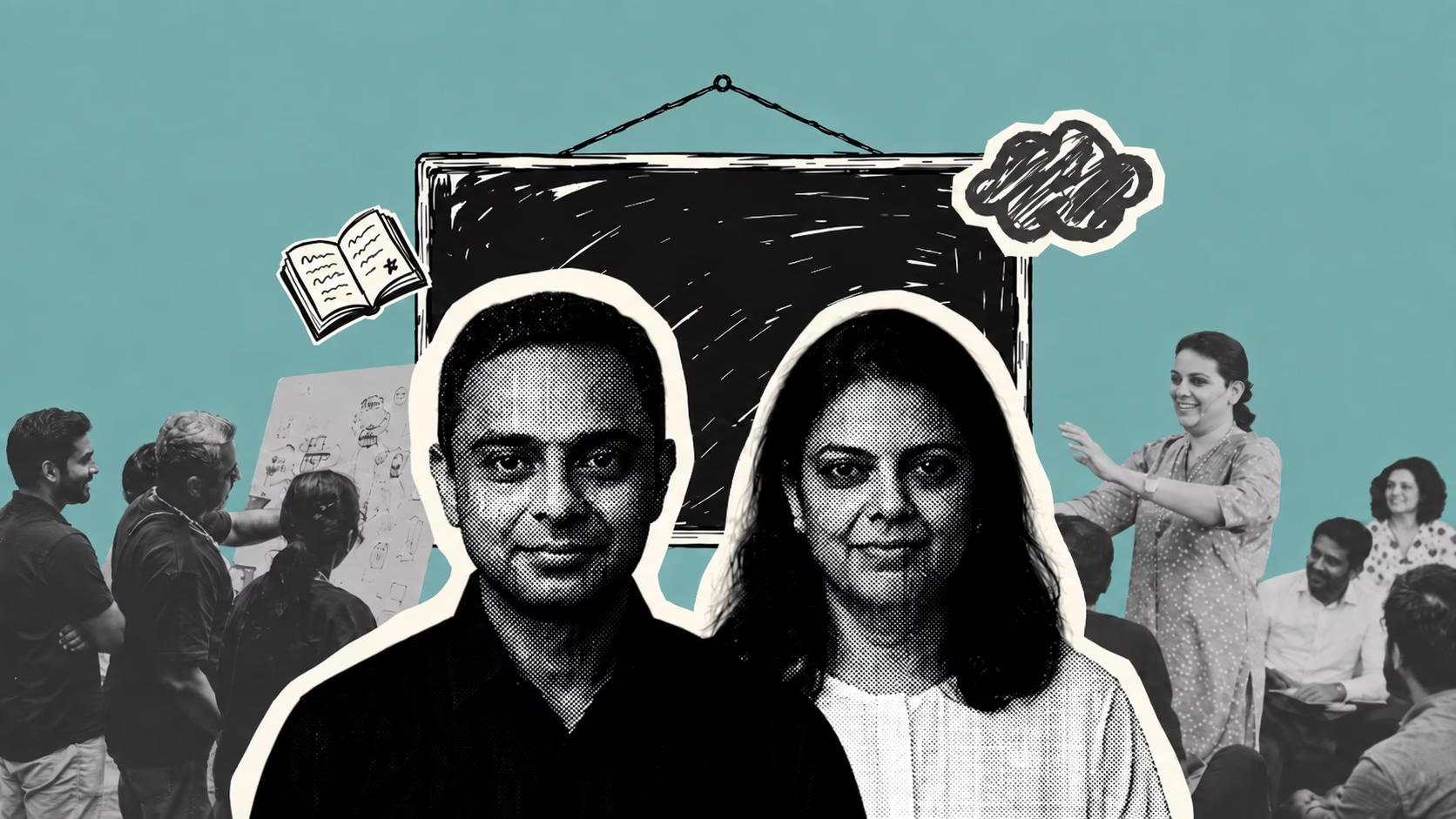
Vishal Talreja co-founded Dream a Dream in 2000 after a student exchange programme in Finland reshaped his understanding of dignity and pushed him to leave a career in investment banking. Suchetha Bhat joined the organisation as a volunteer in 2007 while working at IBM and moved into the social sector full time in 2010, later becoming CEO in 2018.
The conversation traces Vishal’s difficult exit from his family’s expectations, the organisation’s shift from working directly with children to changing school systems and government policy and the toxic internal culture that forced a complete organisational rebuild. It also covers fundraising, the limits of scale and the personal cost of burnout.
For leaders navigating founder transitions, organisational trust and long-term government partnerships, the interview offers a candid account of what it takes to rebuild an organisation from the inside.
Vishal Talreja is a co-founder of Dream a Dream, a nonprofit that helps children from vulnerable backgrounds build life skills and works with school systems across seven Indian states. Suchetha joined as a volunteer in 2007 and has served as CEO since 2018, leading the organisation’s shift towards systemic change in education. Under their leadership, Dream a Dream has developed a peer-reviewed life skills assessment scale used by organisations in multiple countries and has partnered with state governments including Delhi and Uttarakhand.
For leaders in the social sector and beyond, this conversation offers practical lessons on organisational trust, founder burnout, working with government and stepping back from a hero identity.
Transcript of the interview
Early Life and the Decision to Switch Sectors
Simit: How did the two of you meet?
Vishal: We met at work. I am one of the co-founders of Dream a Dream, which started in 2000, and Suchetha joined us as a volunteer in 2007. She came on board full-time around 2009 or 2010, and that is how we met.
Simit: You started the organisation with 11 people?
Vishal: That’s right, yes.
Simit: You worked in a fairly typical corporate track before this. Walk me through what took you from that path into the social sector.
Vishal: The social sector was not in my purview at all. I grew up in a typical middle-class family where parents put all the focus on academics, so I did well through school and university and was all set to work in the corporate sector, do my master’s, and eventually help the family become financially secure.
It was post-college that I got a chance to go to Finland on a student exchange programme, which is where I had my first brush with understanding how different cultures live. Finland works on a strong welfare economy and has a very high dignity of labour. It did not matter whether you were a security guard, a server at a restaurant, a software engineer or an immigrant; there was a high level of respect and dignity attached to being human. That idea struck me deeply. I decided I wanted to go back to India and change the way we look at dignity within the Indian ecosystem, not realising at 21 that Finland is a largely homogeneous society of 5 million people while India has more than a billion, with far greater complexity.
I decided I wanted to go back to India and change the way we look at dignity within the Indian ecosystem, not realising at 21 that Finland is a largely homogeneous society of 5 million people while India has more than a billion, with far greater complexity.
So I came back, started talking to friends, and 12 of us got together to start something, more as a weekend volunteering initiative. We began working with HIV positive children and children affected by cancer. None of us thought this would become a career. We assumed we would build our corporate careers and do this on the side as volunteers on weekends.
But I got hooked. I went deeper into understanding the complex challenges children face, the discrimination and the stigma, and started asking more fundamental questions about inequity and dignity. At some point, I reached a place where I could not lead a dual life, spending my days in investment banking talking about India’s growth story and then confronting the reality of hundreds of thousands of children living in poverty. So I made a choice and moved into the social sector to learn about the issues, go deeper and build something that could help solve some of these problems.
Simit: I heard that your father did not speak to you for a few years after you decided to switch sectors. Is that true?
Vishal: That is true, for about six years. I lived with my parents when I came back because the organisation was small and could not pay me enough to live independently. My father wanted me to become a lawyer like him, or at least work in the corporate sector and earn a good income. When I chose this path instead, he was disappointed. Partly this was the patriarchal expectation that the son should provide for the family, and partly it was that I had gone against what he wanted me to be. He was not happy about it.
Simit: How did that affect you personally? Were you conflicted about it?
Vishal: At the time, it was more youthful certainty that I had to make this choice. There was nothing else that interested me anymore. I had to work with children and be with them, so it did not matter what reaction I got from my parents, my friends or my wider peer network. It was only many years later, reflecting, that I realised I could have taken people along, communicated better and listened more. But that is only in hindsight. At the time I was simply driven to do this work.
Simit: Were you rebellious growing up?
Vishal: Not at all. I was what people would call the good boy in a typical Indian middle-class family. Other parents would say they wanted their child to be like me. I was quiet and introverted, always in my books, focused on education and academics. I was given the message from childhood that you listen to your elders and follow what they say, and my father would be disappointed if I ever said anything he did not want to hear. So no, there was no rebellious trait in me.
Simit: Do you wish you had been?
Vishal: I wish I had been, because then I would not have carried so much guilt over some of the choices I made.
Simit: What was it like for you, Suchetha? When you joined as a volunteer, did you want to change the world?
Suchetha: My story is similar in some ways to Vishal’s but also very different. I chose to be an engineer, joined the corporate sector and worked there for nearly nine years. I was with IBM when I started volunteering with Dream a Dream, and it was about three to four years into that experience that I discovered this was really what I wanted to do.
These were things I had never explored growing up, whether it was psychology, social-emotional learning or the social sector itself. I had not even encountered these concepts before. The more I explored them, the more I realised they were aligned with who I am, what I wanted to be and what I felt passionate about. That discovery over four years of volunteering is what led me to move full-time into Dream a Dream in 2010, changing careers from the corporate sector to the social sector.
Simit: A lot of people, even in their 50s or 60s, struggle to work out their purpose, and even when they do, they often find reasons not to act on it. What was it like for you, trying to make that switch?
Suchetha: It took me a long time to make the transition, almost a year after I had decided, partly because of my EMIs and my own narratives about what my future should look like.
During that time, I also finished a postgraduate diploma, testing whether this was really what I wanted. What kept the passion alive was the volunteering itself. Every time I engaged with young people, and through conversations with Vishal, I came to know Dream a Dream more closely. I ran marathons and did a bit of fundraising for them. The more time I spent, the more it felt aligned with who I am, and that finally gave me the impetus to make the change.
Reflecting on Impact and the Founder’s Restlessness
Simit: Do you remember the first time you volunteered for Dream a Dream? Were you thinking you were going to change the world?
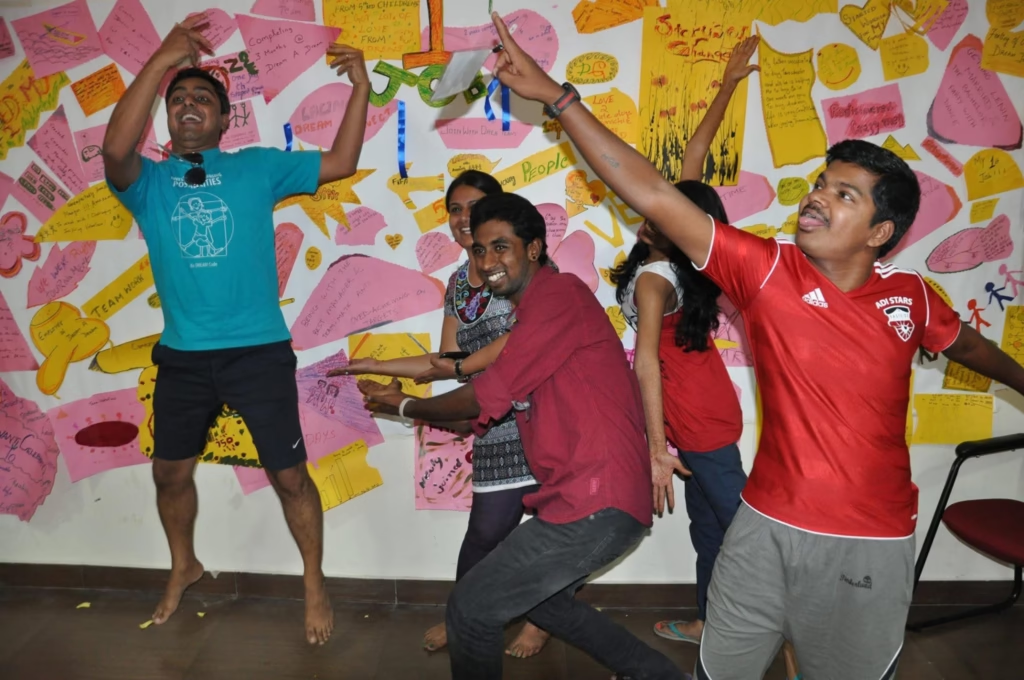
Suchetha: Not at all. My first memory of Dream a Dream was a volunteer induction with Vishal in Cubbon Park. I remember our group sitting in a circle while Vishal got us doing fun activities before telling us about Dream a Dream and how we could contribute. At that point, it was not really about me. It was about realising that this whole space existed.
It was the first time I had come across someone like Vishal who saw this as a career, and organisations doing this kind of work. A chance Google search had brought me to Dream a Dream, but the idea of life skills and young people was completely new to me. I did not think about changing the world so much as discovering that this world existed at all.
The next four years were about exploring that new world. I think the hubris of changing the world arrived two or three years after I joined, when I was certain I would change the world within ten years. It has been 16 years now, and that is a story in itself.
Simit: Do you think you have changed the world in some way?
Suchetha: Maybe, maybe not. I choose not to judge it or evaluate it in that way; I know I have changed; I am content with the choices I made and with who I have become through this process. It felt like I grew up alongside Dream a Dream, from youth into middle age. That is where my sense of contentment comes from. Along the way, I am sure some young people have been affected, and some changes have happened in the ecosystem, but I could not tell you whether it has changed the world.
Simit: What about you, Vishal?
Vishal: It is a difficult question to answer, because as Suchetha said, some lives have been transformed for good. Whether we contributed to that, I do not know. These young people had their own agency, resilience and grit, and we simply nudged them towards success and thriving.
But we have also lost young people to suicide, drugs, substance abuse, alcohol and gangs. So it is a difficult question for me, because I am more the kind of person who looks at what we did not manage to do. Every loss becomes personal for me; success much less so.
That is how I look at this work. It is a lifetime commitment, and we will get as far as we can before someone else takes it on. You pass on the baton, and the fight continues.
Simit: Do you think that restlessness is a problem, especially for founders who set themselves high expectations and are never quite content with what they have achieved?
Vishal: If you ask my team, they will agree with you. Someone once explained it to me quite beautifully: it is like climbing a mountain. The minute you reach a summit, many people will turn back, look at how far they have come and celebrate. I am already looking at the next summit, saying we still have far to go.
It is like climbing a mountain. The minute you reach a summit, many people will turn back, look at how far they have come and celebrate. I am already looking at the next summit, saying we still have far to go.
Simit: Suchetha, do you see that as a problem?
Suchetha: No, I think it is not a problem; it is the nature of the beast. That very trait is what convinces someone to give up a potentially more comfortable career, because somewhere deep down you know you will only ever reach so far. You are not the hero of the story. There is always more work to do, and you simply come in, do what you can and try to be happy with that.
So I do not see it as a problem so much as the nature of the game, or the nature of the person who chooses to work this way. The two cannot really be separated. A person who did not think of themselves this way would do a very different kind of work.
For me, it is a little different from Vishal, since I came in later and my personality is separate from his. But to answer your question, I think it is a personality trait. It is not good or bad, right or wrong. Part of that trait is never feeling content, never feeling like you can stop and celebrate. It is the essence of the same empathetic instinct that makes you choose this work in the first place, and I would rather celebrate that than frame it as a problem.
Why Children: The Roots of Dream a Dream
Simit: There are so many social issues in the world. Why children specifically? Was there a personal instance that led you to this work, Vishal?
Vishal: One of our founders, Brinda Jacob, had this idea of how ordinary people just out of college could give their time and skills to the marginalised. That is really where it started. When some of us came in wanting to volunteer, we chose children because we thought it would be fun and easy. There was not much thought put into it.
We ended up working with a complex group of HIV positive and cancer-affected children, at a time when there was enormous stigma and ignorance around the issue, including our own. I remember the first time we went to meet HIV positive children in a care home, we were asking whether we could touch them or play with them, or whether it was safe to eat the same food. That was the level of ignorance we started with.
As we grew, we learned that this problem is layered, like an onion, and every few years we peel back a new layer. Initially it was about simply spending time with children, since we noticed that many people gave donations to care homes but never spent time with the kids themselves, who felt disregarded as a result.
When I moved in full time, I began understanding the complexities of children living in institutional care. The law says that at 18 they must step away and become independent. Care homes take care of food, clothing, shelter and education, but they do not prepare children for life outside. How do you make decisions, prepare for an interview, choose between college and a job, or find a partner? These are skills we take for granted because we have supportive environments, but many of these children lacked them and ended up back in poverty. That is when we arrived at the idea of life skills, the set of skills, attitudes and behaviours every child needs to deal with daily life.
Success has many dimensions, and it is not constant. You might feel unsuccessful during a personal crisis even while financially stable, and thriving again once that crisis passes.
Then the question became what success actually means. The education system defines it narrowly, as academic achievement leading to a job or financial freedom, but life is much larger than that. You could have all the wealth you need and still not be happy, or be poor but have a strong support system and a sense of purpose. Success has many dimensions, and it is not constant. You might feel unsuccessful during a personal crisis even while financially stable, and thriving again once that crisis passes.
So the next layer we found is that life skills help young people define their own pathway to success, with a broader definition of what success means. We are now at a different layer of the problem, which Suchetha can speak to better. When you are running a non-profit trying to solve a real problem, you have to spend more time understanding the problem than rushing to a solution, or you risk creating a new one.
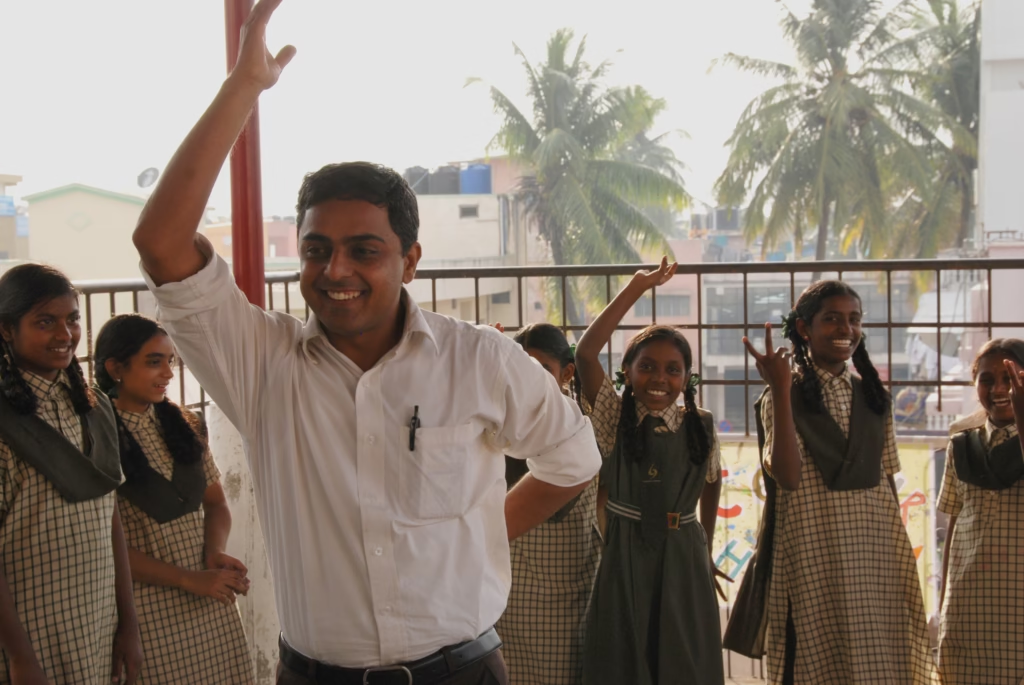
Suchetha: Building on what Vishal said, while we started by looking at what life skills young people need to overcome the challenges they face, we have since reached a point of understanding how the systems around them also contribute to young people lacking agency, resilience and confidence. So alongside developing life skills in young people, we have to account for the systemic barriers that stand in their way.
The onus of change is not only on the young person. We as adults, as influencers and as people with positional power, must hold ourselves accountable for changing the systems around young people, so that they become more equitable, more inclusive and offer greater dignity. This can happen through many roles, as educators, non-profit leaders, policymakers or bureaucrats. Dream a Dream’s own work is focused on the education system itself: can it become more equitable and inclusive, so that as we build life skills in young people, the system around them also enables them to thrive?
The onus of change is not only on the young person. We as adults, as influencers and as people with positional power, must hold ourselves accountable for changing the systems around young people, so that they become more equitable, more inclusive and offer greater dignity.
So on one hand, young people focus on their own well-being and on finding their passion and purpose. On the other hand, the systems around them are also becoming more equitable and inclusive, offering different avenues to success rather than narrowing children down to one definition of it, so that all young people can thrive, not just some of them.
Bias, Privilege and Stories from the Ground
Simit: Do parents from underprivileged backgrounds ever push back against this focus on life skills, insisting instead on academic subjects because they simply want their children to get a job? Is this seen as an elitist approach?
Suchetha: That’s a complex question, because parents are such a varied group. Some may well think that way. But there is a specific difference in what’s happening with children from underprivileged backgrounds. Parents want them to study well and get good marks because the ultimate goal is a job, but they are realising that the current education system is not actually delivering on that promise.
We have had parents whose child, after two years of pre-university, is suddenly told they are not ready for graduation, after 16 years and all their savings went into that education. Then after graduation, they are told their child cannot get a job. So while we are still telling parents that academic outcomes matter, we are also seeing that this promise is not always being fulfilled.
I sense that there is a growing awareness, even if not yet mainstream, that academic outcomes alone are not enough, and that parents need to understand there are other options for their children rather than accepting that there is only one path. This matters especially for children from vulnerable backgrounds, because the promise that education alone will lift you out of poverty may have been true a few decades ago, but it clearly is not true today, given the pace of change in the world and the complexity of the job market.
Simit: Would you add anything to that, Vishal?
Vishal: When we started Dream a Dream, I remember in 2002 running an art workshop and inviting children from all backgrounds, since we had some of the best artists and sportspeople in Bangalore volunteering their time. One parent told me they could not seriously expect their child to spend a day with children from the local slums. Another time, while raising funds for a hockey programme, a senior executive told me he did not even send his own children to an after-school sports programme, so why would he sponsor children from slum communities to attend one?
That is the deep lens of bias, prejudice and preconceived notions about communities based on caste, class, religion, gender and race that Suchetha is referring to. These biases might not show up in our daily conversations, but they sit within us, in the choices we make and the way we show up in society, and that is what creates inequity.
I remember a 17-year-old boy I was mentoring who would call me on a Saturday morning to meet, say he would be there in an hour, and then arrive three hours later. I used to get upset, assuming he was undisciplined and would never hold down a job. One day I told him to tell me where he was so I could come to him. I realised he lived very far away: he had to walk a kilometre to the nearest bus stop, change three buses, then walk another kilometre, and the whole journey took three hours.
What I had missed was that he did not have the life skill to understand time, to work out how long it would take to get from one place to another. He was making enormous effort to reach me, and I had already judged him for not simply being on time. Now imagine that same young man starting a job. If his manager does not understand this, he will lose the job and feel like a failure, without anyone ever teaching him that he had simply never learned to manage time.
We saw this again during COVID, when schools moved online, and thousands of children could not get online because their parents could not afford a smartphone or an internet pack. We lost a bright young girl in this way, academically strong, who could not access classes because her family could not afford data, and who felt like a complete failure as a result. It is a difficult story, but it is one of the clearest reminders of how unequal access to a single life skill, understanding and navigating a system, can determine a child’s fate.
So we have to build structures that work for every child, rather than a single solution that everyone has to fit into. We now work across seven states, including Nagaland, where the climate crisis closes schools for three to four months a year because of flooding or landslides. Children there still have to finish the same syllabus and sit the same examinations as children in Bangalore, who have far greater access to support. That does not make sense, so we try to design for the local context. That is where we are trying to shift the whole idea of what education is for and what success from education looks like.
Simit: I had a similar experience in college. A group of us volunteered at a YMCA centre with children who had lost their parents. I played chess with one boy who loved the game, and after a few weeks we simply stopped showing up because other things came up. It did not feel like a big deal to us, but the centre told us how heartbroken and depressed the children had been, waiting for us. It felt almost like abandonment to them, even though for us it had felt like skipping a class. That is when I realised how critical these skills you are describing really are, especially for children from vulnerable backgrounds.
Vishal: Thank you for sharing that. It is such a beautiful reminder of how we set expectations and how we hold responsibility when we commit to something.
Simit: Would you say this approach is more relevant to children who have faced extreme vulnerability compared with children in general? I understand you would not want to differentiate, but what has your experience shown you?
Suchetha: All children need life skills, whether they are growing up in a mainstream background or a vulnerable one. But if you grow up with love, care and a supportive adult around you, you will typically develop those skills anyway. Children in mainstream backgrounds usually build life skills naturally, through after-school activities, travel and everyday experiences, whether or not there is a specific intervention.
If you are growing up in poverty, acting as a caretaker for your family and sitting in a classroom of 60 children, life offers you far fewer opportunities to develop life skills, so you typically need an intervention to catch up.
If you are growing up in poverty, acting as a caretaker for your family and sitting in a classroom of 60 children, life offers you far fewer opportunities to develop those same skills, so you typically need an intervention to catch up. What we might not fully appreciate is how much more valuable this is for a child growing up in adversity, who has to overcome far greater shocks and challenges while carrying the weight of family expectations and their own aspirations. So while all children need life skills, the cost of lacking them is not the same. A child in adversity pays a much higher price, often staying in poverty and continuing a generational cycle they cannot break. A child from a more mainstream background might misbehave, be corrected and still find a better path.
So while all children need life skills, the lack of them is not experienced equally, and children from marginalised backgrounds experience that lack far more severely.
Simit: Thank you for putting that so clearly, Suchetha. Vishal, did you want to add anything?
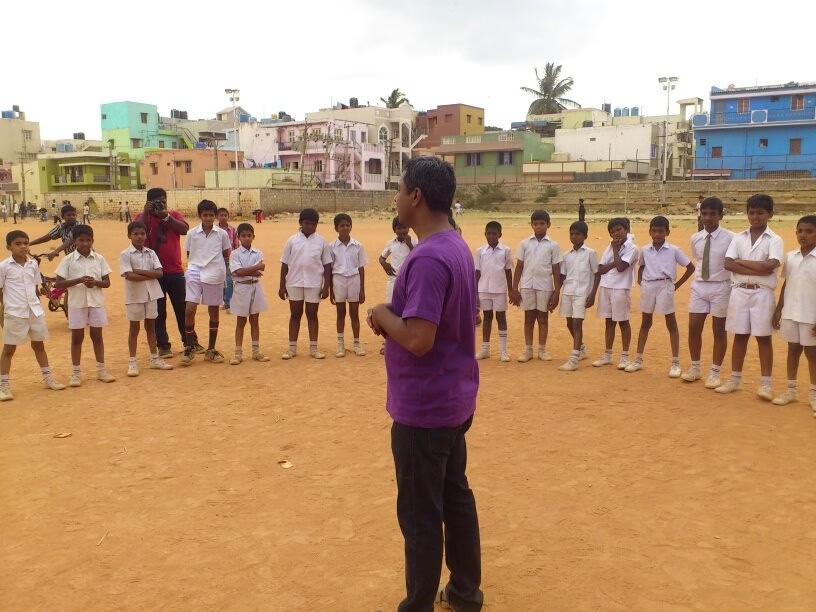
Vishal: No, I would say the same thing. Let me add a story instead. Very early on, when we started our field hockey programme, we had a young man who would turn violent whenever he got into a fight with a peer. One time he got so angry that he took a hockey stick and broke another child’s head. I was young and scared, and wanted to remove him from the programme, but our deeply empathetic coach said that would not help. Instead, he made the boy accountable, giving him 30 minutes of extra practice each day, feeding him 25 to 30 balls to hit as hard as he could into the goal, and having him pack away the equipment himself afterwards.
What the coach understood, and I did not at the time, was that this child was carrying a great deal of anger, and the best way to channel it was through the sport. Within six months, he had not only learned to channel his anger but had become one of our best hockey players.
A few months later, he disappeared from his care home and his school. A volunteer and I went looking for him one Sunday and found him playing cards with local boys in a neighbourhood in K.R. Puram. The moment he saw us, his face changed completely. He could not believe that someone had come looking for him. It turned out his father, who struggled with alcohol, had asked him to come home and start earning, and he had been breaking stones at a quarry, aged 14.
Something shifted in him that day: if someone cared enough to look for him, he must matter. He fought his family, returned to the residential school, completed his education, went on to university, and continues to play football and hockey. He is now married with a daughter, works with Dream a Dream’s communications team, trains teachers and works with state governments. If that moment had not happened, the anger and violence he had learned at home might have defined the rest of his life.
In that moment, the coach showed him a different way to manage his anger, and it changed everything. That is the kind of life skill that children from marginalised backgrounds often never get the chance to learn.
Simit: Thank you for sharing that. Do you think storytelling is essential to this work, since it is what moves people and donors?
Vishal: It is a skill that helps, but for me these are not just stories. These are the real lives of children I know and have watched grow, from the age of eight to now being in their late twenties or thirties. Even today, working with young people aged 14 to 16 who are making real choices and living through real crises, this is what keeps us grounded. It reminds us that this work matters, and that we need to show up every day, for these young people, for teachers and in the rooms where decisions about children are made, so that people understand the real context of their lives. For me, these stories are simply a representation of the work itself.
Simit: Suchetha, how do you see this? Does connecting people to a real individual move them more deeply than talking about the issue in the abstract, and how have you brought that into your own work?
Suchetha: Yes, absolutely. My own entry into Dream a Dream came through a story like this. I was mentoring a young girl while still working in the corporate sector, my first real experience with young people. The first time we met, she was completely quiet, would not make eye contact and just wanted to go home. I thought it would be a disaster, but we spent a year and a half building a relationship, meeting every Saturday, and I watched her grow more confident and better able to build a mature relationship.
Then one day her mother called to say she had run away from home. I was devastated. I later learned she had failed her tenth standard exam without telling me, and was planning to take a job as a parking attendant. Her parents suspected it was about a relationship, but there were many circumstances behind it, and I still do not know to this day where she is. My own trainer helped me realise that she was likely to run away whether I had been there or not, given how difficult her circumstances were, but that because I had been there, she had built some confidence, learned what healthy relationships feel like and found her voice.
It is not for us to judge what young people choose. My role is to help them build the skills to make choices and then live with the consequences, whatever they are. It reframed for me what the role of an adult is in a young person’s life: not to decide the right path for them, but to give them the agency to choose their own.
That became one of the philosophies I carry into this work. It is not for us to judge what young people choose. My role is to help them build the skills to make choices and then live with the consequences, whatever they are. It reframed for me what the role of an adult is in a young person’s life: not to decide the right path for them, but to give them the agency to choose their own.
So yes, these stories are all around us, and they shape the big choices we make. I recently wrote about a girl who grew up without any real awareness of her own caste identity, until she noticed friendships falling away in college, without explanation, once people found out. For a long time she thought something was wrong with her, until she realised what was happening and learned to hide her identity instead. It is a reminder of the pressure we put on young people to be a certain way, without accounting for the real challenges they carry. These stories are humbling, and they are why we do this work.
Measuring Impact, Fundraising and Scale
Simit: These are moving stories, but how do you translate that into fundraising, especially in the early days? Donors often want data and measurable impact alongside stories. How has that evolved?
Vishal: That’s a great question. About five years into the journey, we started asking ourselves how we would know whether our work was actually shifting young people’s lives, especially since we were running 16 different programmes at one point. We invested in finding those answers for ourselves before using them to inform donors, working with child psychologists, clinical psychologists, academics and researchers to build evidence.
We are one of the few organisations in the world to have developed a peer-reviewed, statistically validated life skills assessment scale, designed specifically to measure improvements in life skills among underprivileged children. It is now used by organisations in multiple countries, and we have been using it for almost 15 years to map every young person’s journey through our programme.
We are one of the few organisations in the world to have developed a peer-reviewed, statistically validated life skills assessment scale, designed specifically to measure improvements in life skills among underprivileged children.
We are also one of the few practitioner organisations with a fairly large research team, studying which interventions help develop life skills or improve well-being over the long term. The team publishes papers and policy briefs so that other organisations can learn from our evidence too, since Dream a Dream cannot and does not intend to reach every child in the country. We publish a rigorous impact report every year, which we also use to keep our donors informed.
Simit: Has fundraising changed as the organisation has grown and become more established?
Suchetha: Yes, there has been an evolution, and it looks different depending on the type of donor. One big shift was the CSR law mandating companies to give 2% of profits to philanthropy. Earlier, we raised more CSR money, but now we raise less of it because of constraints on how that money can be used.
Among institutional and philanthropic donors, typically set up by high net worth individuals with a clear strategy, there has been real maturity in understanding that education is not just about numeracy, literacy or employability, but needs a more holistic approach with multiple measures of success for young people.
On the individual donor side, we have not seen the same evolution. Individuals still tend to want to give towards something tangible, whether it’s flood relief or something equally concrete, and life skills as a conceptual idea can be harder to support. So our funding model has shifted over time from individual and CSR donors towards institutional donors offering longer-term commitments, which suits us better since we need at least three years of commitment to a strategy. We have lost some of our individual fundraising along the way, but it has grown in tandem with the organisation. I would say the key to sustainable fundraising is to keep evolving your strategy so it stays aligned with where you are in your organisational journey.
Simit: How do you think about scale versus depth? I understand there was a target early on of reaching 240,000 children within three years. Did you ever disagree about that?
Suchetha: I don’t think so. Vishal, would you agree? There was a notion of scale, but not necessarily a desire for it in itself.
Vishal: We are very aligned on our idea of scale. It is the idea we bring to the ecosystem that has to scale, not necessarily the organisation itself. The organisation should eventually reach a point where it becomes redundant, either because we have solved the problem or because we have built a thriving ecosystem, which could include the government that is solving it. So our approach to scale has always been similar, even if our strategies have differed.
The figure of 240,000 children you are quoting, from around 2007 or 2008, honestly just came out of my head. I had no strategy behind it. I simply said Dream a Dream should reach 240,000 children within three years. When Suchetha joined and asked me to show her the plan for getting there, I had none; I just said we would use a lot of passion. I have evolved a great deal since then, because I had no work experience beyond two years in the corporate sector and did not know how to build organisations or strategies. Everything I have learned has happened at Dream a Dream, so it was invaluable to have people like Suchetha come in and help with the parts I was not good at.
Suchetha: It was the same for me in reverse. Initially, there was a phase where I was catching up, since Vishal had already been in the sector and had a clear understanding of what needed to be done. Later, once I took on the CEO role and brought in a lens of systems change, focused on the education system and not only on young people, there were a few years where Vishal had to catch up instead. Other than finding our rhythm, though, we have never really been at odds about what we believe, even if we arrived there at different times and in different ways emotionally. We have always been aligned on what we want to achieve.
Simit: You mentioned wanting the organisation to become redundant. Do you really believe that? Even in developed countries, similar issues persist long after basic problems are solved. Should an organisation not evolve to address newer, connected issues instead of aiming for redundancy?
Suchetha: Let’s break that down a little. First, no single organisation can solve a problem like this alone; it always needs an ecosystem response. If the education system fully took this on, that would, in some ways, make Dream a Dream redundant. There is a strategic case to be made that once social-emotional learning is accessible to millions of children through government systems and other organisations, a non-profit like ours is no longer necessary. An organisation can be a catalyst without needing to solve the problem forever.
Once social-emotional learning is accessible to millions of children through government systems and other organisations, a non-profit like ours is no longer necessary. An organisation can be a catalyst without needing to solve the problem forever.
Second, does this mean all problems facing young people have been solved? No. Mental health has become more challenging, the climate crisis is now staring us in the face, and polarisation is intensifying given the political climate, both globally and in India. So the problems keep evolving, and at that point an organisation has a choice. It can continuously evolve itself, but then it becomes a different organisation. A Dream a Dream focused on making life skills accessible is one organisation. A Dream a Dream that decides to take on the climate crisis is a different one, and it is a fair question whether that evolution should happen within Dream a Dream or through other organisations instead.
So my overall point is that we must separate our institutional structures from the societal issues themselves. There is a case for certain institutions, at certain times, to say they have solved a problem enough for the ecosystem to carry forward, or that a new problem simply is not theirs to solve, and that other institutions are better placed to take it on.
Simit: Would you agree with that, Vishal?
Vishal: Yes, exactly. Nothing more to add.
Working with Government and the Happiness Curriculum
Simit: Tell me about the Happiness Curriculum. The programme has since stopped in Delhi. Walk me through how it started, where it stands today and what the biggest learning has been.
Suchetha: The Happiness Curriculum began in 2018, though the build-up towards it had been happening for years. We spent our first 10 to 15 years going deep into understanding the problem of adversity, developing the right pedagogy, assessment tools and theory of change. Then we had reached a point where we knew we needed to take this outside Dream a Dream and find some way to scale.
We were at that stage when the Delhi government, having learned about our work, invited us to join the Happiness Curriculum initiative, itself a small part of a larger education transformation programme. It was our first partnership with a state government, and almost overnight our reach went from 10,000 children in Bangalore to 1 million children in Delhi. The idea of scale suddenly became very real, and we were ready for it, because this is exactly what we wanted: education systems integrating social-emotional learning and life skills.
Our first partnership with Delhi state government, and almost overnight our reach went from 10,000 children in Bangalore to 1 million children in Delhi. The idea of scale suddenly became very real, and we were ready for it, because this is exactly what we wanted.
From Delhi we moved to Uttarakhand, and today we work across seven states, embedding life skills into the school calendar and regular academic practice, so the same teachers are using these approaches in their own classrooms. That has been a real shift in how the ecosystem understands the importance of this work.
What we have realised since is that a school system is inherently built on principles of exclusion and competition, designed to make children fit into a single mould and emerge ready for work, almost like an assembly line. Unless we challenge how success itself is defined within the education system, life skills will always remain an add-on, or worse, something used simply to help children perform better academically.
So while I would not change what we have done, we have added a layer of understanding: alongside introducing life skills, can we also challenge those underlying assumptions and redefine success, working not only on curriculum and pedagogy but across the administrative and policy layers of the education system, so that all young people can thrive in the long term.
Simit: Governments often work on shorter political timelines, while your approach requires a much longer horizon. How do you convince them to commit to something long term when they may not be in office to see it through?
Suchetha: It is an honest challenge. We do have programmes that have started and stopped, and the Happiness Curriculum itself is, unfortunately, no longer running in Delhi. Because of transfers and how the bureaucratic structure is designed in this country, long-term interventions are genuinely hard to sustain.
The way we approach it is to see the government as just one player within a much larger ecosystem. Mental health is a good example: it is no longer purely a bureaucratic initiative; it is something society as a whole is now talking about and taking seriously. Once that narrative shifts in society, bureaucrats change too, along with parents, teachers and school systems.
So bureaucrats play an important role in implementing programmes, but the sustainability of a programme really comes from a broader shift in the ecosystem, one we have to keep working towards regardless of who is in office at any given time. If we stay at it consistently, these changes eventually converge. We recently had a Supreme Court decision stating that mental health should be treated as a fundamental right for young people, which is exactly the kind of convergence that drives systemic change.
Simit: Many people in the sector avoid working with the government altogether, since it demands a very different kind of patience. What have your biggest learnings been, and what skills does a leader need to work effectively with government machinery?
Suchetha: It is true, you need resilience, perseverance and a lot of patience. It is hard work, and you do feel like you are banging your head against a wall sometimes, so you need the capacity to sit with that. At Dream a Dream, we call it facilitated leadership, leadership that does not try to get ahead of people or convince them by force, but tries to understand where everyone is coming from and what is actually driving their choices, so that we can influence a mindset shift by working alongside them.
Having said that, almost every bureaucrat I have met is overworked, usually handling two or three departments at once, almost always in crisis, and trying to do things without the budget, resources or time they need. They are often compromising a much larger vision because of constraints and political pushback. Over time I have come to genuinely respect their role. I think the bureaucracy is really at the heart of how this country functions, even though politics tends to be the visible face of it.
Simit: How important do you think it is for the organisation to keep working with the government going forward?
The government is the largest service provider for marginalised children in this country, so working with them is close to a necessary condition if you want to change the service being offered. It is almost a given: if the government is the largest provider of a service, then influencing them, whether to improve its quality, its equity, its compassion or its empathy, is essential.
Suchetha: For us, it remains important, because almost 90% of children from vulnerable backgrounds in India go to government schools. The government is the largest service provider for marginalised children in this country, so working with them is close to a necessary condition if you want to change the service being offered. It is almost a given: if the government is the largest provider of a service, then influencing them, whether to improve its quality, its equity, its compassion or its empathy, is essential.
Burnout, Organisational Breakdown and Rebuilding Trust
Simit: You have spoken about burning out along the way. Looking back, what would you change, and what would you tell other founders about avoiding burnout?
Vishal: Well, don’t start at 21. There are many things I would do differently. First, I would decide my own pace of growth, rather than being influenced by the market. Today, as soon as someone starts a social enterprise, they are expected to sign an MOU with the government straight away, scale to a million children within three years and grow to a budget of 100 crore within five. That pulls you away from the real problem and the real work that needs to happen on the ground.
Second, I wish I had actually studied social work or social development, how policies are made, how social movements happen and how grassroots change actually works. That depth would have helped me see this work very differently. I had a naive understanding of it: come in, improve some lives, save some children, and become the hero. I was not ready for the real complexity of young people’s lives, losing children to suicide, drug abuse or police violence, sitting in police stations trying to get a child bail, or dealing with parents holding deeply patriarchal views about girls in their own homes.
A lot of that affected me personally, made me quite cynical, and brought me to a place where I felt nothing would change. That is a dangerous place to be very early in your own journey. Because I did not have the life skills to process what I was seeing, the trauma sat inside me, and that is what eventually led to my burnout, fatigue and mental health struggles.
So I wish I had studied this properly, and worked with a couple of established organisations first to build skills in running one: developing systems, culture, people policies, understanding the problem and raising money. That would have given me the tools to build an organisation without making the hundreds of mistakes I made, and hurting some of the people I did along the way. Because I was so invested in dignity and equity, I stayed true to the work and went deep into understanding children’s lives at a structural level. I was lucky to have that instinct, but I simply did not have the tools to handle myself, my trauma or what was happening in my own body and mind.
Simit: You mentioned the organisation reached a point where the culture had become toxic and bureaucratic, with real mistrust internally. How did you begin to rebuild from that point, and what did you tell yourself?
Vishal: That was a tough one. I struggled with tremendous self-doubt at that time and had to go back to first principles. When I was 21 and deciding to move into the social sector full time, I kept a diary in which I wrote about the kind of organisation I wanted to build, one grounded in trust, care, accountability, respect and dignity for every human being. Somewhere along the way, as I built the organisation, I forgot those first principles and slipped into a more conventional approach, believing organisations need bosses, hierarchies and systems built around distrust.
I became a distrustful person, even though I trust easily by nature, so I was living inside a paradox: my own personality was built on trust, but every system inside Dream a Dream had become built on distrust. One morning I realised I would not want to join Dream a Dream if I were applying to work there today.
So I had to literally restart the organisation, which was a drastic step. I told the team we were going to change everything, remove every HR policy, relook at every structure, hierarchy and salary system, and redesign the organisation from the inside out, and that I was not going to be involved in the redesign myself. That was around the time Suchetha had joined, and she took over the project. We were fortunate that our work with young people stayed solid and grounded throughout, but the organisation itself had stopped being true to that work, so we had to restart almost from scratch. It took me three to four years to come out of that period.
Simit: You seem much more comfortable talking about this today. That takes real work. How did you actually process it?
Vishal: A lot of the support came through Suchetha. She understood the value of therapy and working through your own trauma, and she supported me through that whole journey while also calling things out when I was avoiding the real work, reminding me to stay true to myself.
It took a tremendous amount of therapy and many years of denial before I could admit that I needed help. It meant building relationships with doctors, journaling, taking breaks and a sabbatical, and reassessing my own circle of support, letting go of people who reinforced old patterns while holding on to those who genuinely supported me. A lot of it was about understanding what kind of leader I actually am, and owning that instead of trying to be someone the world wanted me to be. I also slept a great deal; there were days I slept through the entire day and night.
The team’s support mattered enormously too. During my most difficult phase, they stood by me and created space for me to simply not show up. There were meetings I fell asleep in, and they never judged me for it. That support came from all around me.
Leadership Transition, Partnership and Lessons for Founders
Simit: From your side, Suchetha, how did Vishal’s mental health struggles affect the organisation, and what role were you in at the time?
Suchetha: This whole story has unfolded over a decade. I came in as head of strategy and then COO, so when the toxic culture issue arose and we had to reimagine the organisation, I was COO and Vishal was CEO. We made the formal transition to me becoming CEO in 2018, though I had already been playing much of that role for a few years, so there was enough capacity and trust built with the team for me to take over. Vishal’s mental health breakdown really escalated around 2020 to 2022, by which point there was not much direct impact on the organisation itself.
In terms of how I see his journey affecting Dream a Dream, I think you come to appreciate that the very traits that make a founder visionary, someone who can imagine a different world and dares to chase it, are also the traits that become a shadow, where you lose sight of your own boundaries and push yourself far beyond your capacity. They are two sides of the same coin.
The very traits that make a founder visionary, someone who can imagine a different world and dares to chase it, are also the traits that become a shadow, where you lose sight of your own boundaries and push yourself far beyond your capacity.
As an organisation, watching Vishal go through that meant moving away from seeing him as the hero and the face of Dream a Dream, and instead looking at the work for its own sake, building our own story and narrative separately from his. Dream a Dream and Vishal’s journey have been in this mutually reinforcing cycle, where we as an organisation also learned to move away from that one hero idea and own our own impact and identity. His stepping back gave us the space to explore that, without it feeling like a rejection of him or a rebellion. It became organic, a silver lining, though it was genuinely traumatic for me personally at the time.
Simit: As a founder, there is always the temptation to step back in and do things yourself. Did that happen for Vishal, even after he formally stepped down?
Suchetha: I think that is exactly what we mean. He was so depleted, both physically and emotionally, that even if he had wanted to, he could not have stepped back in. That was, in some way, the silver lining of the burnout: he had reached the edge, and the organisation simply had to move forward without him.
Vishal: Yes, absolutely. I simply could not function, and I was not useful to the organisation anymore. It was a tough call, because I loved being the hero. I was a reluctant CEO but a good hero, and I loved that recognition, so letting go was difficult. Even after Suchetha became CEO, there were moments when I wondered whether I had made a mistake, especially as the organisation grew and achieved more, right as I was stepping away.
There were strategic decisions Suchetha made that I would have made differently, so I often thought about what if we had gone my way instead. I had to learn to respect that there was a different leader now, and I chose to stay on and report to Suchetha. I had to unlearn my old ways and figure out how to show up without imposing my own leadership or my own patriarchal lens. That took time to learn. But what really helped was that I genuinely could not show up as a leader any more; I simply did not have the physical, mental or emotional energy left to do it.
Simit: This transition carries another layer, since you are also partners. Did that change the dynamic between you, given you now had both personal and professional roles to navigate?
Vishal: Yes, it did. Leadership journeys come with egos. As partners, we quickly realised we could not separate work from personal life, since we were both too entrenched in our work, so we gave up that battle and let work come home with us. What followed was the realisation that there were egos, clashes over what was right or wrong, differing opinions and disagreements about how things should be done.
It was a difficult journey. We had to learn to let go of certain fights for our own sanity, but also to listen, respect and trust each other, and that has been a beautiful journey in its own right. It took a long time to reach a place where I could genuinely trust the choices Suchetha was making. I had to learn to say I trusted her decisions even before I fully believed it, and only slowly came to actually believe it. Speaking less and not jumping in with my own opinions all the time really helped.
Simit: You seem like the calmer, more even presence in the partnership, Suchetha. Is that fair?
Suchetha: I think I evolved into that over time. We did not start there. The early years were genuinely difficult; we were still getting to know each other personally, trying to build trust and connection, all while this organisational crisis was unfolding. We were also much younger and far more headstrong about our own egos and positions. As we have grown, individually and together, we have found a much more balanced way of working together.
Do I regret it? No, I think it has been great, and if I were to do it again, I would still choose the same path, though it could certainly have been smoother.
Simit: Is it realistic for founders in a relationship to fully separate work from personal time? Are you able to do that today?
Vishal: I still struggle with it.
Suchetha: I think we have tried to separate it, though my honest answer is we have never actually managed to.
Vishal: In the first year of our marriage, we tried to keep them separate. We failed, so we gave up.
Suchetha: Now we do not separate them at all.
Simit: Are you at peace with that? Do you feel it needs to be different?
Vishal: We are, because we both love the work. When we are in flow, exchanging ideas and aligned on strategy, we can talk for hours, and we genuinely love each other’s company in that space. The gains are definitely much greater than the losses. We are so mission-aligned that I think even after Dream a Dream, we will still be talking about social development in this country, as allies.
Simit: Looking back, if you had to change two or three things, what would they be?
Suchetha: Thankfully, the list is not very long, but one thing I would do differently is to hold a career transition with a lot more sensitivity. There is one part of it that you genuinely do not know: the context, the work itself, since you are entering something new. But the other part is what you think you already know. If you have spent ten years in the corporate sector, you carry certain notions about driving performance, tracking KPIs or building efficiency into systems, and you often assume this is exactly what is needed, which is not always true. I would encourage anyone making that transition to be far more mindful about what they think they are bringing in.
The other lesson is around taking work from one context to another. While we were working directly with young people in Bangalore, our approach to social-emotional learning meant something very specific and concrete. When we took it into the education system, we made the mistake of assuming this was simply a matter of scaling the same programme. What we learned the hard way is that we had moved it into a very different context, with a very different value system, and you have to account for that carefully, or you risk recreating old problems, or making them worse.
Simit: What about you, Vishal? Is your list longer?
Vishal: It’s a longer list, but I will stick to a couple. First, as I said earlier, I would have come into the sector better equipped, with more education, experience and groundedness. Second, I would be far more careful about checking my own ego. In that early journey of being the hero, I hurt a lot of people, said and did things that affected people negatively, both within the team and with outside partners. I would want to come in with a lot more self-awareness and take myself far less seriously.
Third, I wish I had had more fun along the way. I spent so much time dwelling on the losses that I did not celebrate enough. My mentor once told me that if you want to change the world, you need to learn to throw the best parties, and I think that was genuinely profound. I wish I had laughed more, taken myself less seriously and fully owned my own identity.
Simit: On your first point, would someone that analytical and deliberate have actually built an organisation in the first place? Perhaps it takes exactly that lack of overthinking to start something like this.
Vishal: That’s true. Thank you for saving me.
Simit: One final question, since we are a communications organisation, how important has communication been to your work, and has it been a conscious investment from the start?
Vishal: Yes, absolutely. Right from the beginning, we were conscious of our brand, our narrative and our messaging, and we had a wonderful volunteer help us shape that early on. In 2013, we went through a rebranding journey that was not just about a new logo or a new set of colours and fonts. It was almost a two-year process of shifting our own mindset, from a small organisation doing good work with children in Bangalore to an organisation with impact across the country and, eventually, the globe. That mindset shift helped us move towards that ambition.
Today we still believe narratives matter enormously, not just for the Dream a Dream brand but for young people themselves. Bringing their stories and context into rooms where decisions are made by people in positions of power helps those decisions come from empathy and understanding, rather than simple notions of right and wrong.
Today we still believe narratives matter enormously, not just for the Dream a Dream brand but for young people themselves. Bringing their stories and context into rooms where decisions are made by people in positions of power helps those decisions come from empathy and understanding, rather than simple notions of right and wrong. Communication has been the force that has helped Dream a Dream be recognised as a thought leader in the life skills space today.
Simit: Were the two of you aligned on this from the start, since many organisations in this sector believe good work speaks for itself and that promotion is unnecessary?
Suchetha: Yes, though the only nuance I would add is that we talk about the work because the work itself deserves to be known, not because of the particular institution doing it. Life skills and social-emotional learning should be understood far more widely, why they matter for children growing up in vulnerability and why they need to be part of the education system. So communication is necessary, so the work and its impact are understood by the wider ecosystem, rather than staying held within one organisation.
Simit: Thank you, Vishal and Suchetha, for speaking so openly about burnout, trust and what it takes to rebuild an organisation from within. Your reflections offer a valuable perspective on the quieter, harder work of leadership: knowing when to hold on and when to step back. We are grateful for your time and your honesty.
Subscribe to our newsletter for more such candid conversations with founders and changemakers working across India’s social sector.