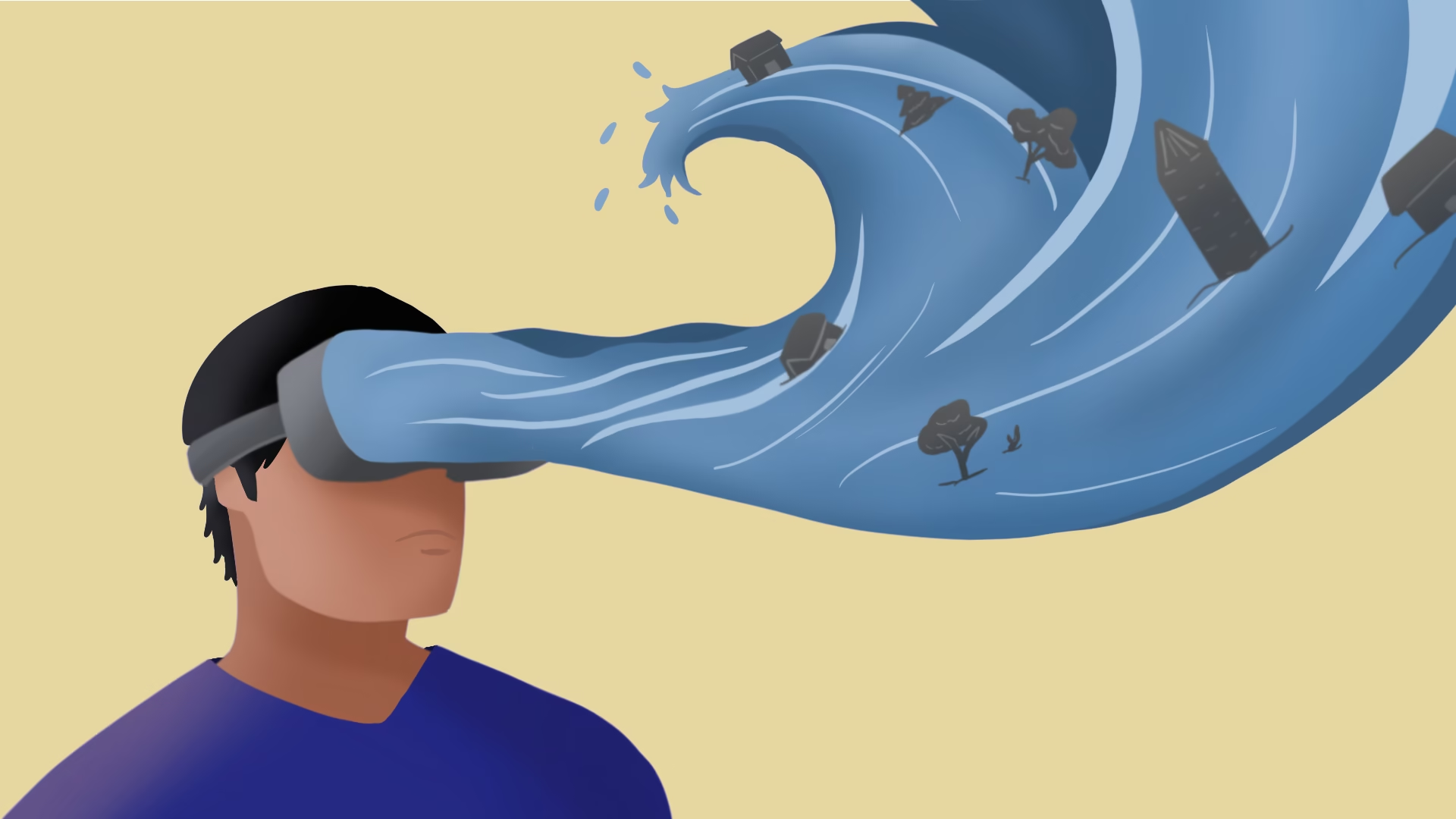
A woman removes her headset, her eyes misty. Moments ago, she had walked through a refugee camp, not in real life, but through a headset, guided by a 12-year-old girl named Sidra. In that moment, “refugee crisis” stopped being a headline. It became human.
Across the world, NGOs are using immersive technologies like virtual and augmented reality to build empathy, raise funds, and bring supporters closer to the communities they serve. These aren’t just films, they are emotional experiences that place viewers inside classrooms, clinics and crowded train stations.
The result? Higher donations, deeper understanding, and more meaningful connections. From gala events to street campaigns, immersive tech is fast becoming a powerful tool for fundraising and storytelling.
So how are NGOs using Virtual Reality (VR) to create real-world impact? Let’s step into five of the most compelling examples and see what happens when storytelling meets presence.
When VR Closes the Distance Between Crisis and Compassion
Immersive storytelling can do something traditional media often can’t: it removes the distance between them and us. For NGOs working in complex humanitarian zones, VR allows donors to step into the lives of displaced people, not just read about them.
Doctors Without Borders (Médecins Sans Frontières), a global medical humanitarian organisation active in over 70 countries, launched Forced From Home, a travelling 360° VR exhibition showcasing life in refugee camps across Greece, Lebanon, South Sudan, Iraq, and more. With six immersive films, dome projections and VR headsets, the experience brought refugee voices to the centre.
The result? Over 32,000 in-person attendees across major US cities, 220K+ online views, and a major uplift in awareness and donor trust. While direct fundraising data isn’t isolated, the campaign played a key role in reinforcing MSF’s €2.4 billion revenue base. And they weren’t the only ones who saw empathy turn into action, sometimes, even into millions.
When Presence Sparks Generosity: Turning VR into Real-Time Fundraising
Great storytelling moves hearts, but great immersive storytelling can open wallets in the moment. When donors feel physically present in the lives they’re changing, giving becomes personal, not transactional.
Charity: Water, a nonprofit dedicated to bringing safe drinking water to underserved communities, captured this with The Source — a 360° VR film following 13-year-old Selam in rural Ethiopia. Shown at fundraising galas and public installations, the experience let viewers walk with Selam as her village transformed through clean water access.
VR isn’t just moving donors, it’s helping them see how education can shape a child’s future, one headset at a time.
At a New York gala, one event raised $2.4 million, an 800% increase over previous years. At a mall exhibit, 12,494 activations translated into over $370,000 in implied donations. Combined, the VR campaign raised over $2.8 million and deepened donor connection. And VR isn’t just moving donors, it’s helping them see how education can shape a child’s future, one headset at a time.
When Emotion Drives Action: Education, Empathy, and $1.9 Million Raised
Sometimes, it takes just 90 seconds to move a room full of donors to tears and generosity. That’s the power of VR when it’s used to show not just what needs support, but why it matters.
Pencils of Promise (PoP), an education nonprofit building schools in Ghana, Guatemala, and Laos, premiered its Beginning VR film at a gala in New York. Guests entered a life-sized replica of a rural Ghanaian classroom, donned VR headsets, and watched the story of Toklokpo’s children unfold.
By placing donors inside the story, not just in front of it, PoP redefined what a fundraising moment can feel like.
The result? An emotional wave of giving. That night alone, PoP raised $1.9 million, significantly exceeding expectations. The film was later released on social media, reaching 1.6 million+ viewers and expanding awareness globally. By placing donors inside the story, not just in front of it, PoP redefined what a fundraising moment can feel like. And it didn’t stop there; the next film took that empathy into global policy rooms.
When Policy Makers Put on the Headset and Leave with a Pledge
Virtual reality isn’t just for individual donors; when used right, it can move governments, diplomats and high-level funders to act. It brings urgency into rooms where decisions are made.
UNICEF, the United Nations Children’s Fund, created Clouds Over Sidra, an 8-minute VR film that follows a 12-year-old Syrian refugee inside Jordan’s Za’atari camp. Co-produced with VRSE and the UN VR Lab, the film premiered at the World Economic Forum and was later screened in 30+ countries, including major UN and government donor conferences.
The results were staggering. At one pledging conference in Kuwait, commitments jumped from a projected $2.3 billion to $3.8 billion. Donation rates among public viewers doubled, from 1 in 12 to 1 in 6. With over 3.4 million YouTube views, the campaign set a new global standard.
And when empathy influences policy, the ripple effect reaches systems, not just stories. But what if empathy could change how we see someone on the street?
When VR Doesn’t Just Inform: It Changes How We Treat Each Other
Empathy-led VR isn’t just about distant causes. It can transform how we see the people we walk past every day. By simulating lived experiences, it doesn’t just explain, it shifts behaviour.
The National Autistic Society (UK), the country’s leading autism advocacy charity, launched Too Much Information, a VR campaign helping viewers experience sensory overload through the eyes of an 11-year-old autistic boy, Alex. The immersive film played online and in 15 public shopping centres.
Empathy-led VR isn’t just about distant causes. It can transform how we see the people we walk past every day.
The result? Over 56 million online views, 8,000 pledges for behavioural change, and a 17% increase in autism awareness. The campaign contributed over £300 million in public transport funding for accessibility and £2 million for awareness drives. It also earned praise for being co-created with autistic individuals, ensuring authenticity and impact. From donor pledges to policy change, immersive tech is proving one thing: when we feel what others feel, we act differently.
Immersive Tech, Lasting Impact
From gala halls to government summits, virtual reality is no longer just a storytelling tool; it’s an empathy engine. These five examples show how NGOs are using immersive tech not just to inform, but to connect, convert and catalyse real change.
Whether it’s walking through a refugee camp, sitting in a Ghanaian classroom, or experiencing a moment of sensory overwhelm, VR helps us cross the emotional distance that facts alone can’t bridge. It turns awareness into understanding, and understanding into action.
For organisations navigating a world of distracted attention and donor fatigue, immersive experiences offer a new way forward, one that’s intimate, memorable and deeply human.
So if you’re looking to inspire deeper trust, more meaningful engagement, or transformative giving, maybe the next step isn’t more data. Maybe it’s presence. You may not be planning a gala with VR headsets next month, but could you film a 360° walkthrough of your project site? Or host a virtual ‘day in the life’ with a field worker or community member? Think about one way your next campaign could bring supporters closer, not just to the outcome, but to the people and processes behind it.
Want more real-world examples like these, plus practical ideas on how your NGO can craft campaigns that move hearts, build trust, and deepen donor engagement? Subscribe to our newsletter. Each edition is packed with lessons on powerful storytelling, ethical communications and ways to turn your mission into real, measurable change.