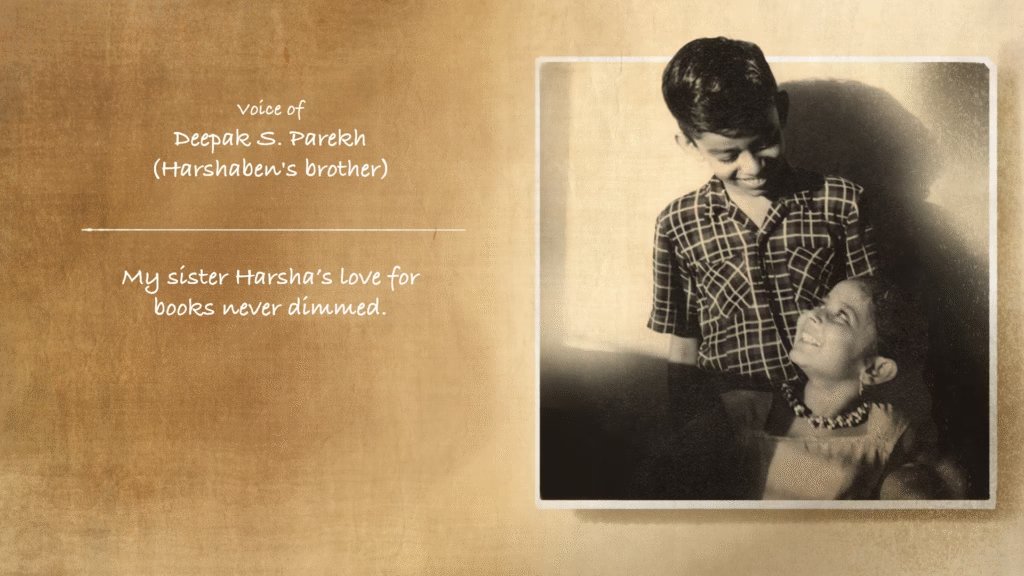
“My sister Harsha’s love for books never dimmed. She devoted her life to creating pathways for young readers,” says Deepak S. Parekh, former Chairman of Housing Development Finance Corporation (HDFC).
The film closes on these words: from a brother to his sister. And these words bring the audience back to the person whose legacy shaped the Harsha Parekh Librarian Awards. Instituted by the H.T. Parekh Foundation, the awards honour librarians working with children across India and recognise the quiet but lasting role they play in nurturing curiosity, confidence and a love for reading.
When the foundation approached us, the intention was not just to present the awards, but to gently help people understand why they matter.
We approached the film as a personal, reflective journey, using animation, narration, soft music and a slow visual rhythm to follow Harsha Parekh from childhood into her life’s work. So, let’s take a closer look at how the film took shape.
Understanding the Brief
At the heart of this project was a simple but meaningful challenge. The organisation did not want to create a film that merely announced an award. They wanted to explain why the Harsha Parekh Librarian Awards exist at all and why libraries and librarians deserve that kind of recognition.
The awards were instituted in honour of Harsha Parekh, an accomplished librarian and educator whose life was shaped by a deep love for books, reading and learning. The foundation wanted the audience to understand that this was not a symbolic gesture alone. It came from real life, a real set of beliefs and a lifelong commitment to the idea that libraries can change the way children grow, think and imagine. The film, therefore, had to convey the emotional legacy behind the awards and the social significance of libraries in general, and in a nation where many children grew up without access to books at all.
The film had to convey the emotional legacy behind the awards and the social significance of libraries in general and in a nation where many children grew up without access to books at all.
Also read: Where Nonprofit Stories Are Headed Next
The main creative idea grew directly out of that need. Instead of an outside narrator, the film would feel as though Harsha ji herself was leading the viewer through the story. They would be going on a journey with her, from her childhood to her adulthood, from a girl who discovered books to a librarian and educator who knew exactly how deeply reading could affect a life.
Writing the Script and Developing the Mood Board
Once the direction was clear, the script and visual mood had to grow together. The writing began from Harsha ji’s personal journey, so the film could feel intimate before it widened into a larger conversation about libraries, reading and access.
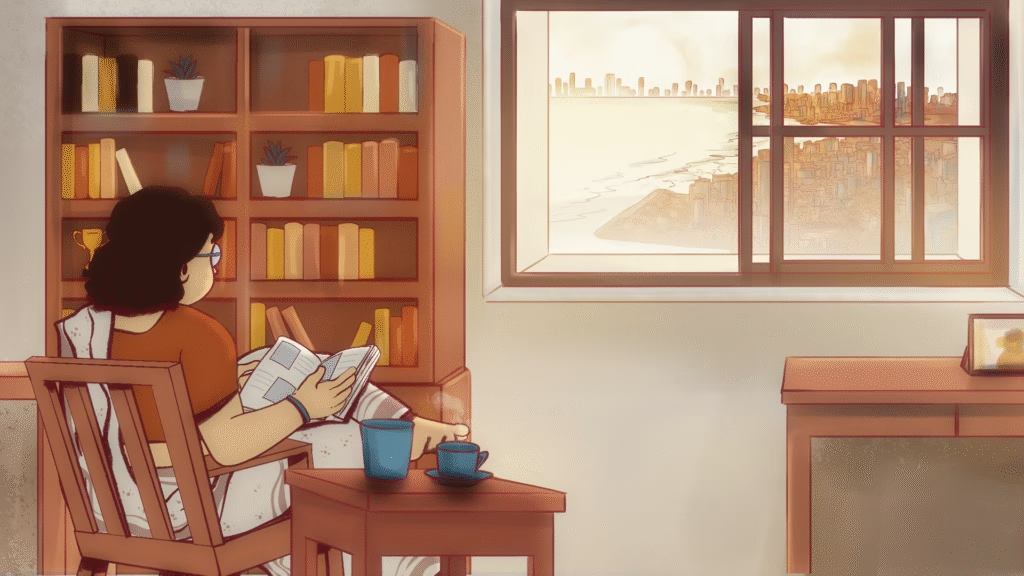
The mood board was developed alongside this thinking. We wanted the visuals to feel warm, slow, and reflective rather than formal or hurried. Using the foundation’s colour palette as a base, we built a world of warm reds, yellows and blues. We also incorporated retro tones and period-specific objects to reflect the era of Harsha ji’s childhood. This included details such as an old-style box television, vintage furniture and domestic interiors that helped situate the story in an earlier time. These elements also helped the film stay rooted in memory while still leaving space for imagination.
Also read: How We Reimagined a Bhojpuri Folk Song Through Animation
Symbolism and Design Choices
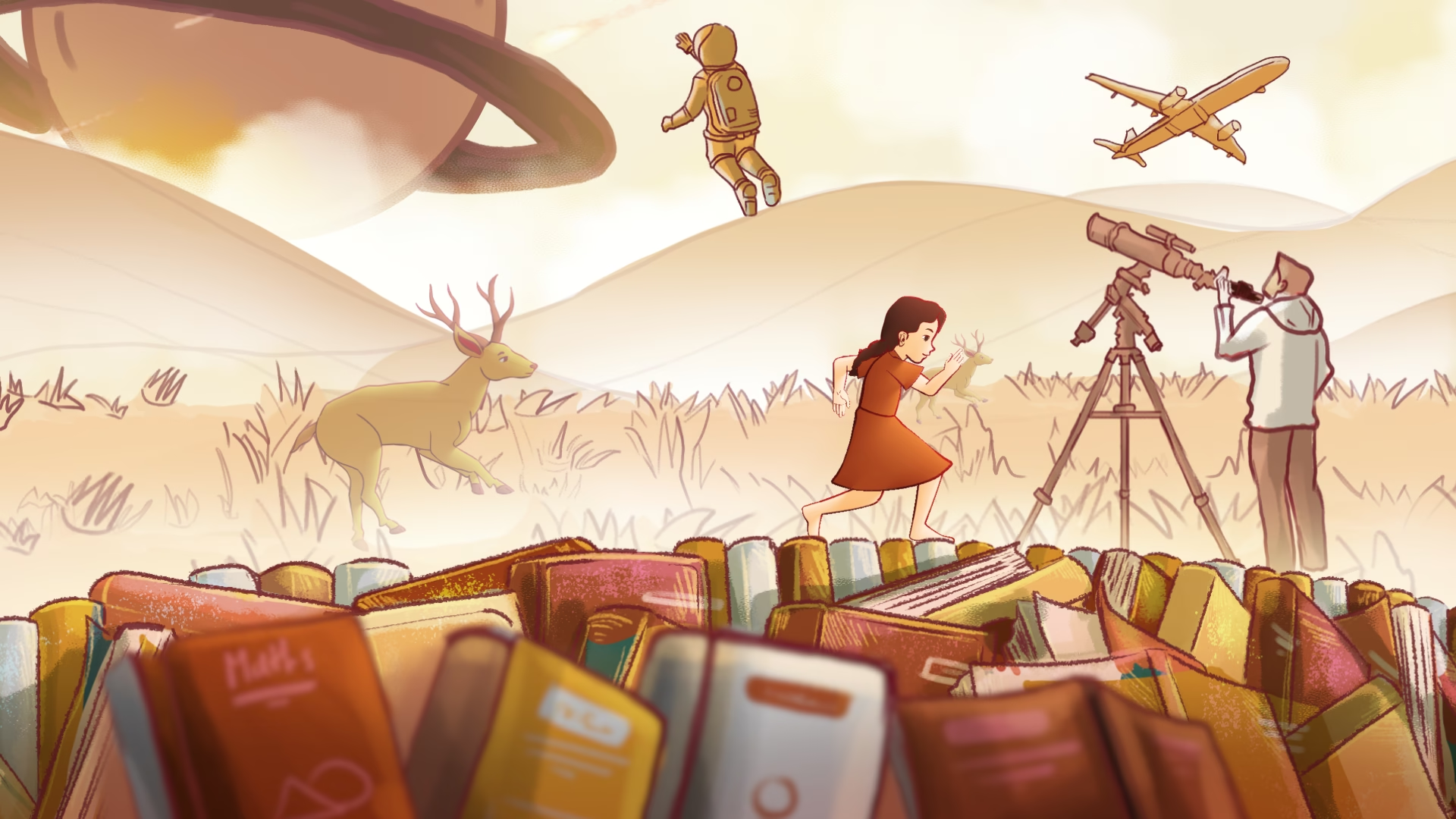
In this animated film, many of the themes are not stated directly. They are shown through symbolic moments. This can be seen when a child tries to reach for books inside a school bag, but she is unable to access them. That moment turns educational inequality into something physical; the barrier is not theoretical. It is felt in the child’s inability to reach what should have been within her grasp. When she dives through and emerges into a world of imagination, running through a landscape with a deer, astronauts, planets and other dreamlike elements, the film explores a powerful point: access to books does not only improves literacy. It opens inner worlds.
In this animated film, many of the themes are not stated directly. They are shown through symbolic moments.
Another element is the paper plane that flows out of the library and moves across villages with vehicles such as a bicycle, van, camels and a horse. The paper plane represents the spirit of books and stories and the various vehicles represent the ways by which librarians and library initiatives are reaching out to the children in the remote areas.
In the end, this project became much more than an animated award film. It became a way of showing how personal legacy, educational access, and visual storytelling can come together with real sensitivity. Through a slow rhythm, thoughtful symbolism, and carefully chosen animation choices, the film gave viewers a felt understanding of why libraries matter, why librarians deserve recognition and why Harsha Parekh’s legacy continues to resonate.
If your organisation is looking to shape a story with the same care, especially around learning, legacy, or the people who quietly open new worlds for others, our team would be glad to explore it with you.