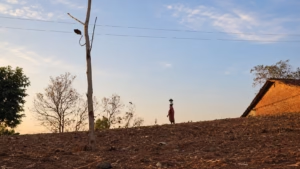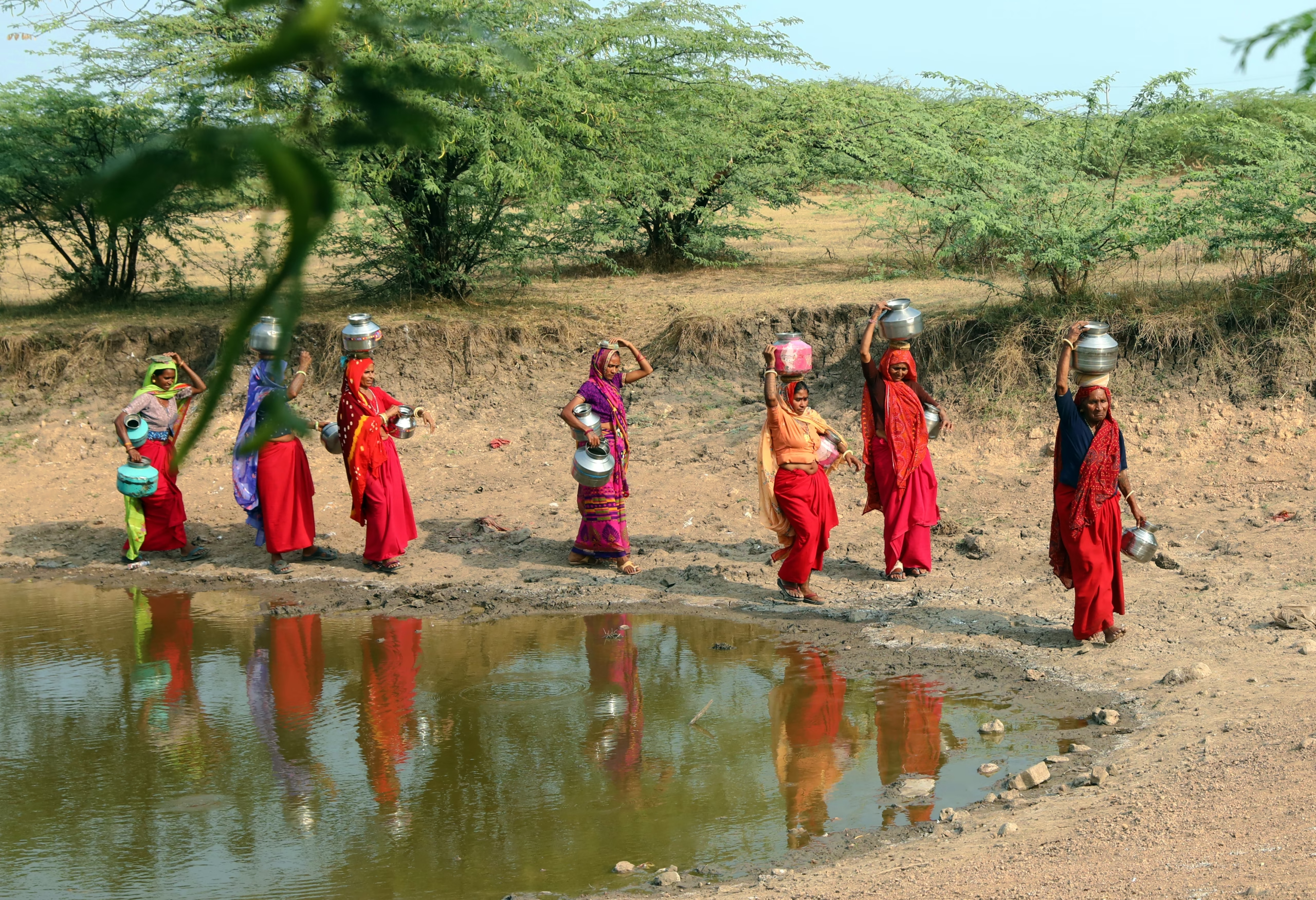
In Jetpur village, Dahod, Asmita Vadakkiya stood outside her home, the dry earth beneath her sandals, her hands slightly trembling. It was her first time being filmed. Nervous, she clutched her dupatta, but the words she spoke stayed long after.
“Now that we have water at home, I get more time to farm, care for my children, and feel present.”
Asmita’s story features in A Journey Towards Sustainable Water Access, a film by Collectives for Integrated Livelihoods Initiative (CInI) in collaboration with Simit Bhagat Studios. Importantly, this video didn’t feature an outsider’s voice. Instead, it centred the very people who led the transformation. Her story showed what happens when communities speak for themselves.
Why Stories Like Asmita’s Matter
Asmita is not alone. Across very different places, from tribal Gujarat to the Amazon rainforest, people are starting to hold on to their own stories. They are not just subjects in someone else’s report. They are stepping forward as storytellers.
These pieces are not neat journalistic features. They are first person stories, often rough, deeply personal and sometimes a little messy. Underneath them sits one strong idea: people who live with a problem every day are often the ones closest to its solution.
With participatory storytelling, people speak in their own words. Power shifts back, even a little, to communities who are often described by others yet rarely heard. When that happens, stories stop feeling like distant reports and start to land as close, human moments.
Let’s explore how organisations around the world are embracing this approach, and why participatory storytelling matters?
1. It Creates Emotional Connection
When people share their own stories, the feeling in their voice is usually genuine. Audiences connect quickly, without needing much explanation. Their words often carry both vulnerability and pride. Together, this reaches people in a way a polished, scripted narration almost never can.
In Bhopal, the Akshaya Patra Foundation runs a new centralised kitchen feeding 35,000 students in government schools every day. But instead of numbers, their video titled Akshaya Patra’s Bhopal Kitchen spotlights real people like Shivam, the delivery driver, who said: “We follow safety protocols at every school. We know this food matters, so we give our best every day.”
Then we meet Priyanshi, a young student from Surajnagar. “I love dal rice and kheer. One day, I will become a doctor,” she shares shyly.
The video humanises a massive operation through soft, personal stories. Also, it has received 1,164 views (as of April 29, 2025) on YouTube. Akshaya Patra Foundation has 31.5K subscribers, showing a steady, growing digital presence.
2. It Builds Trust and Credibility
When people speak directly, they invite trust. Their voices aren’t polished. But they’re real, and that’s what makes them powerful.
In Ecuador’s Amazon, young climate activists are still battling gas flaring, even after a 2021 court ruling banned the practice. One of them, Escarlette Vitte, speaks calmly into the camera in the video Gas flaring in the Amazon threatens human rights now and in the future: “The gas flare gives off smoke. We breathe that air. And it affects us.”
There’s no need to dramatise her pain. Her words do all the work. The video has received 1,201 views (as of April 29, 2025) on Amnesty International’s YouTube channel, which has a strong subscriber base of 135 K.
Hearing stories from those directly affected leaves little room for doubt; it turns abstract issues into lived realities.
3. It Encourages Ownership and Pride
When people tell their own stories, they feel proud. They’re not being spoken for; they are speaking for themselves. Additionally, storytelling affirms their role not as beneficiaries but as active agents of change.
In Saluka village, Nirod Baran Adak is rewriting what it means to grow old. Trained by HelpAge India, he now teaches others how to make organic compost and grow food.
“It works slowly, like homoeopathy,” says Nirod Baran Adak with a gentle smile in the video Meet this 79-year-old ecological warrior from West Bengal. “But it works. And for me, that’s enough.”
The video shows him lifting tools, working with soil, sharing wisdom, not as fragile, but as essential. It has resonated with viewers and appears on HelpAge India’s YouTube, which has 31.5K subscribers.
4. It Breaks Power Imbalances
Traditional videos often speak about people. Participatory storytelling, however, allows people to speak for themselves. Moreover, the camera becomes an observer, not a commander, documenting dignity rather than delivering judgment.
In a powerful 4-minute film titled Defy the Odds, the International Rescue Committee (IRC) shares stories from crisis zones where women rebuild their lives despite war, displacement, and hunger. Braa Nourin, a Sudanese refugee and now an IRC staffer, shares her resolve: “I survived war in Sudan. I will not die here from hunger. I am stronger than this.”
Each scene follows women teaching, leading, and healing, without commentary. The IRC has 21.8K subscribers, and this video has reached hundreds of viewers, circulating across humanitarian networks.
5. It Adds Relevant Context from the Ground
People in a community often know their own problems better than anyone else who comes in from outside. When they speak about what they see every day, their words carry the right context, a sense of urgency and sometimes even a quiet call to act. They also notice stories that others might skip over or read the wrong way, and that can make something complicated feel much clearer.
Video Volunteers is a community media organisation empowering marginalised voices to spotlight injustice and spark local change.
In one video story, Amol Lalzare, a Mumbai-based creator, documents the struggles of app-based drivers facing rising fuel costs. He says, “I spent ₹17.5 lakhs on my car. But sometimes, I earn just ₹8 per kilometre. That barely covers CNG.”
Other drivers echo him. One says the government supports auto drivers, but not them. Nilesh Rohidas Bhor, a transport union leader, adds: “If a man’s income isn’t secure, the country’s economy suffers too.”
The video has gained 6,428 views (as on April 29, 2025) and is hosted on Video Volunteers’ channel, which has 333K subscribers.
Participatory Storytelling: A New Way to Tell Stories
These aren’t just films. They work like small mirrors. In them you can see courage, grief, hope and quiet signs of progress, all told by people who live this every single day.
Participatory storytelling is not just a method anymore. It has started to feel like a movement. It rewrites who holds the mic and who gets heard. When communities become storytellers, the impact doesn’t fade when the credits roll. It begins there.
If you’re passionate about communications and storytelling in the development sector, don’t miss out on our insights in our newsletter.