Recently, I was scrolling through a food-delivery app and paused at a place called “Gen Z Café”. You can almost picture the neon sign when you read that name. For a second, it sounded clever. Then, a small voice inside my head asked, “What does that even mean?”
It was a reminder of how easily shiny words can push people away. The same thing is happening with “AI-powered” everything. The label arrives first, the meaning follows later, if at all.
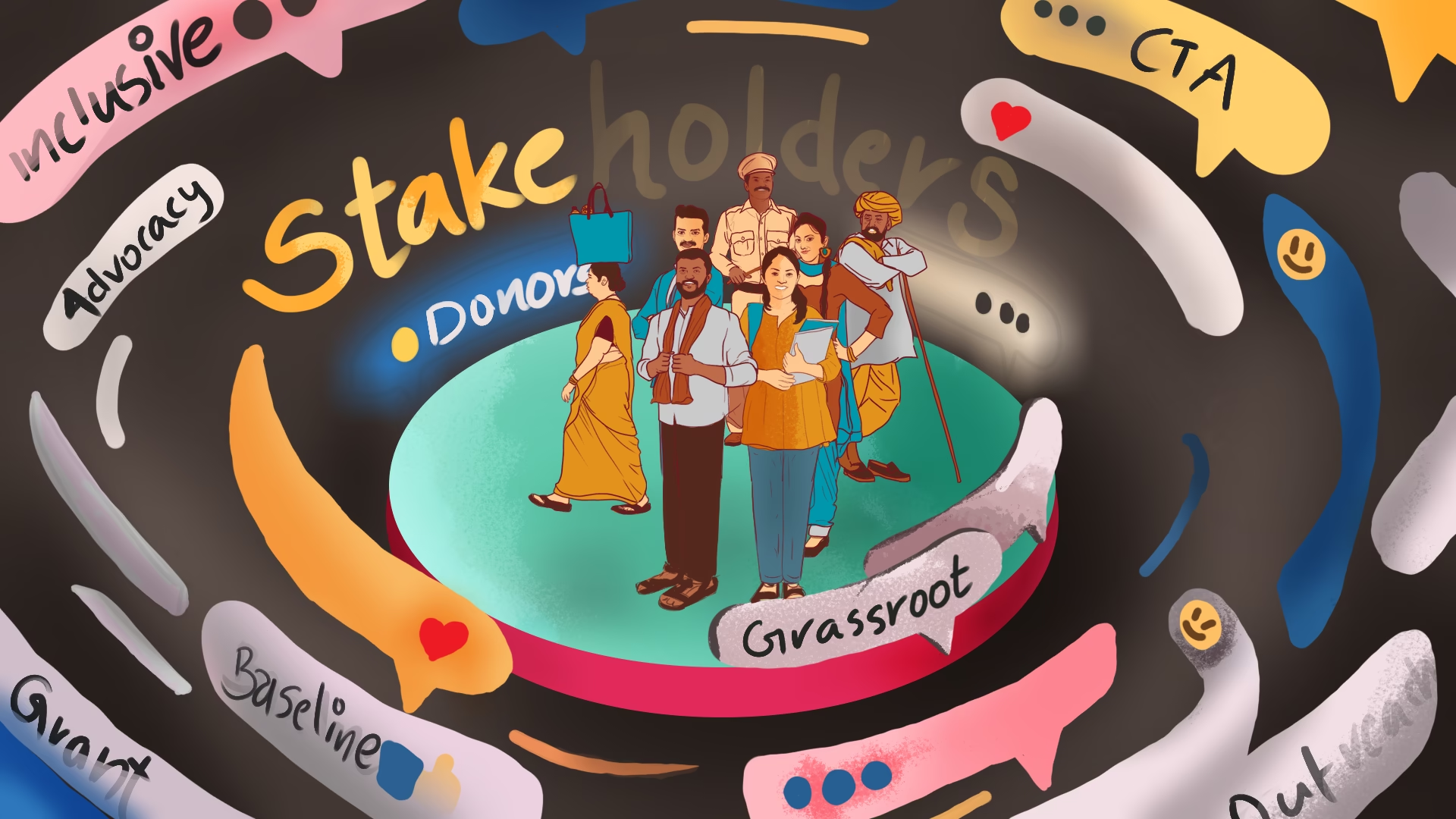
When organisations lean on fashionable language, audiences sense it. They hear effort, not truth. Donors, partners, and communities are not allergic to ambition. They are allergic to vagueness. If the words don’t show what you actually do, people move on. This is not about being anti-innovation. It is about keeping language anchored to the work, the people, and the promise you can keep.
The Lure of Trendy Terms, and Its Hidden Cost
In development spaces, there is pressure to sound current, tech-savvy, and future-ready. Terms like “impact”, “scalability”, “empowerment”, and “AI-enabled solutions” get used liberally. As journalist and editor Sarika Bansal notes:
“So much of the NGO jargon that we see purposely exists to tell people who holds power and who doesn’t.”
In another piece, she argues that jargon is “not inclusive language, but rather code to use around people just like you”, a habit that can push away the very audiences we hope to reach. That is the risk at the heart of buzzwords. Language becomes a badge, not a bridge. It signals an in-group and, in doing so, can make everyone else feel shut out or sceptical. Clarity does not dilute substance. It lets people in.
Also read: Story or Stereotype? Avoiding Poverty Porn in NGO Fundraising
What Fundraising Research Teaches Us About Readability and Persuasion
Evidence from fundraising research is remarkably consistent. In “Persuasion in Fundraising Letters: An Interdisciplinary Study” by Goering, Connor, Nagelhout, and Steinberg, controlled experiments compared direct-mail appeals that varied by rhetorical approach, layout, and readability. Letters that leaned on credibility and were easier to read generated the highest donations.
If your writing is clear and trustworthy, people respond. Dense, abstract language is where buzzwords tend to hide, and it often hurts results.
The lesson is straightforward. If your writing is clear and trustworthy, people respond. Dense, abstract language is where buzzwords tend to hide, and it often hurts results. A companion finding appears in Persuasive Techniques Used in Fundraising Messages (SAGE). In looking at 63 fund development packages, researchers determined that stories, vivid detail, concrete language, and emotional colour had far more impact than technical phrases and abstractions. In short, simplicity and trust beat trendiness and jargon.
Moral Framing, Choosing Which Language, Not Only Whether to Use Buzzwords
Clarity is the start, not the finish. The moral frame you choose also shapes response. In “The Effects of Moral Framing on Online Fundraising Outcomes: Evidence from GoFundMe Campaigns” (Ji Eun Kim and Libby Hemphill, 2025), analysis of more than 14,000 appeals showed that emphasising harm or unfairness can increase the number of donors and comments, yet it may lower the average donation per person. Loyalty framing, which appeals to shared identity, showed broadly positive associations.
The question isn’t just whether to drop a buzzword, but whether the moral frame beneath it still carries truth and emotion.
This matters because many buzzwords are moral signals gone stale. Words like “resilience” or “inclusion” were once powerful moral frames until repetition emptied them of story. To reclaim their meaning, NGOs need to attach such terms to real lives, real risks, and real choices. The question, then, isn’t just whether to drop a buzzword, but whether the moral frame beneath it still carries truth and emotion.
Real Voices, Critiques from Insiders in the Sector
Pushback from within the sector is telling. In “D understands: Devspeak: are the words we use doing more harm than good?” (BOND, 2021), Susannah Birkwood quotes Bansal:
“Development and NGO clichés … Terms like ‘giving voice to the voiceless’ … can feel condescending, while ‘capacity building’ is a term which is so vague as to be almost meaningless.”
In a conversation for WAF Magazine on storytelling and dignity, Bansal challenges the word “beneficiaries”, noting how it flattens agency and reinforces a giver-receiver split:
“When you hear the word ‘beneficiaries,’ … it also implies that that person isn’t doing anything in the process. It just takes away the agency from that person to take part in their destiny.”
Jargon isn’t just a rhetorical flaw; it reflects underlying power dynamics, assumptions, and blindspots.
At the same time, it’s worth recognising why jargon persists. Organisations often face pressure to sound credible to donors, signal alignment with global agendas, or fit limited space in proposals. Over time, these shortcuts become habits. The above-mentioned voices in this section from practitioners matter because they speak from lived experience: jargon isn’t just a rhetorical flaw; it reflects underlying power dynamics, assumptions, and blindspots.
What NGOs Can Do, Strategies for Speaking with Clarity without Losing Vision
It is not enough to scold buzzwords. Teams need workable habits. Here are practical approaches that keep meaning strong and language human.
a. Begin with your audience: Start by asking what your audience already understands and says. Test messages in small circles, from community members to board champions. Do not assume donors, communities, and policymakers share the same vocabulary. Borrow their phrasing where it fits.
b. Prefer concrete over abstract: Swap “We build resilience” for “We provided 300 farmers with drought-tolerant seeds and training so they could plant again after floods.” Use names, numbers, actions, and timelines. Abstractions fade. Specifics stick.
c. Lean on narrative and moral frames: Choose a frame that matches your work, whether harm, fairness, or shared identity. Anchor every frame in a real situation with tension and consequence. Keep dignity and agency at the centre, not hollow uplift.
d. Use readability checks and edits: Run copy through plain-language tools, then do a human pass. Cut filler, shorten long sentences, and replace fashionable labels with ordinary words. Keep the Goering et al. finding in view, because readability is not a nice-to-have, it is a performance driver.
e. Maintain integrity over trendiness: If a project uses AI, say exactly what it does and why it helps. Explain the task, the data, the safeguard, and the outcome. If the technology is incidental, do not label it for effect. Let purpose lead and let the tool take a supporting role.
f. Encourage internal reflection and guidelines: Create a simple style guide that names phrases you will avoid and offers better alternatives. Add a short checklist for proposals, reports, and web pages. Ask colleagues to flag jargon in each other’s drafts. Treat clarity as a shared craft, not an individual preference.
Clarity as a Moral Choice
Buzzwords promise energy and expertise, but when they drift too far from reality, they start building walls instead of bridges. They can displace the very people we mean to reach, gloss complex experience into slogans, and obscure inequities we ought to be naming.
Research backs this up: clear, credible language earns more trust than dense, jargon-filled messaging. Practitioners, too, remind us that clarity restores agency and dignity to the people behind every story.
So before you reach for that next catchy term, pause and ask: does this word simplify things or makes it complex to understand? Choose the one that brings people closer.
Subscribe to our newsletter for more stories, research, and tools on climate-aware impact.