Here’s something striking: the Stanford Graduate School of Business found that stories are remembered up to 22 times more than facts alone. Think about that for a moment. Numbers can inform us, yes, but stories stay. They shape how we feel, what we carry with us, and, more often than not, how we choose to act.
In one of our earlier pieces, How NGOs Drive Disaster Relief Efforts Using Digital Campaigns, we shared how a single voice note during the Assam floods travelled across phones and platforms until it became real relief on the ground. That blog was about urgency, empathy and how digital tools turned storytelling into survival.
Now, let’s turn to Purpose. Over the years, they’ve built a global reputation for using creativity and strategy to reframe the world’s biggest challenges, climate, equity, health, and democracy, and to do it in ways that people don’t just read, but remember. The question is: what can their campaigns teach us about storytelling that lasts? Let’s dive in.
Verified
When COVID-19 spread, so did misinformation. To counter it, the UN and Purpose launched Verified, a global crisis-comms program built on one small but powerful idea: “Pause before you share.” Backed by MIT research, this habit measurably reduced the spread of false headlines and set the tone for campaigns in more than 50 languages. Rather than leaning on heavy UN branding, Verified worked through doctors, youth leaders and micro-creators who could speak in their own voice, building trust where official channels often struggled.
Verified worked through doctors, youth leaders and micro-creators who could speak in their own voice, building trust where official channels often struggled.
From South Africa’s Zwakala movement to TikTok’s Team Halo, hyper-local pilots grew into national models, reaching 1.4 billion people worldwide. Funding from partners like IKEA Foundation (€2.48M), Luminate (US$2M), and Capgemini (€1M) made that scale possible. For the UN, it built a repeatable playbook for crisis communication. And for Purpose, it proved that the smallest actions, carried by trusted messengers, can move at the scale of billions.
LIVE + BREATHE
In South London, air pollution often felt like an abstract issue, until Purpose and artist-activist Love Ssega turned it into a matter of local pride. LIVE + BREATHE reframed clean air as protecting “the things people live and breathe for”: football, skating, music, and everyday joy. By celebrating culture before policy, the campaign sparked passion: 80% of viewers felt more strongly about clean air after seeing the hero film and nearly 40% said they’d contact a politician.
The initiative seeded a new non-profit structure that continues beyond Purpose’s incubation, showing how culture-first storytelling can anchor civic action in everyday life.
From poetry workshops to BMX events, the movement put trusted community voices at its centre, not outside experts. A free Southwark Park gathering drew hundreds, while music videos like Clean Air For The Ends carried the message across digital platforms. With £298,368 in funding from Impact on Urban Health, the initiative seeded a new non-profit structure that continues beyond Purpose’s incubation, showing how culture-first storytelling can anchor civic action in everyday life.
Together for Play
Play is often dismissed as leisure, but in Brazil, Colombia, Rwanda, and South Africa, it became the heart of a movement. With LEGO Foundation’s backing, Purpose helped launch Together for Play, a two-year, four-country effort to make playful learning a civic right. Rather than treat it as a classroom tactic, the campaign anchored play in the everyday lives of parents and children: football in a favela, traditional Rwandan games, radio stories in nine South African languages.
Rather than treat it as a classroom tactic, the campaign anchored play in the everyday lives of parents and children
The reach was enormous: 77.5 million caregivers engaged, 272 advocacy partners mobilised and policy shifts secured, from Colombian presidential commitments to Rwanda’s media sector producing original stories on play. Brazil saw new safe play spaces and 172+ media hits, while South Africa normalised play at home through 54 national radio shows. For LEGO, it proved that “learning through play” could shape culture and policy; for Purpose, it became a marquee case study in how joyful storytelling turns into systemic change.
Hands of Transition (Mãos da Transição)
In Brazil’s Cerrado, small farmers are often cast as victims of climate change or worse, as obstacles to progress. Hands of Transition flips that narrative. Co-created by Purpose with the IKEA Foundation and local partners, the movement puts smallholders at the centre of Brazil’s ecological transition. Through a documentary-style series, seven young farmers share their journeys into agroforestry and regenerative practices, showing regeneration not as theory but as livelihood, culture, and pride.
Through a documentary-style series, seven young farmers share their journeys into agroforestry and regenerative practices, showing regeneration not as theory but as livelihood, culture, and pride.
The work extends beyond screens. Six Cerrado-rooted organisations received micro-grants and campaign training, reaching over 2,000 people through events and advocacy. Together, they co-authored a policy letter ahead of COP30, winning traction: native crops like pequi and baru are now included in Brazil’s procurement lists, and CSOs gained seats in the Cerrado Working Group in Congress. For Purpose, it demonstrates how storytelling and systems change can move together when farmers themselves lead the conversation.
Two Billion Strong
What if a quarter of humanity saw climate action as part of their faith? Two Billion Strong asked that question, framing Muslims not as a side audience but as a decisive force. Built with IKEA Foundation support, the campaign drew on Quranic ideas of stewardship, “the earth is a mosque”, to make climate care feel inseparable from everyday belief.
By branding the community itself, not just the issue, the campaign turned identity into agency and conversation into mobilisation.
Rather than polished ads, it relied on trusted voices. Muslim creators and activists carried the message across Instagram and TikTok, reaching more than 300,000 followers, with posts driving up to a 16% lift in people likely to talk about climate with friends and family. A hero film, photo essays, a conversation toolkit, and a London event co-hosted with The Muslim Vibe deepened the reach, even leading to a meeting with an MP. By branding the community itself, not just the issue, the campaign turned identity into agency and conversation into mobilisation.
Launching the Global T1D Index
How do you turn a data model into a movement? With the Global T1D Index, Breakthrough T1D, and Purpose created a first-of-its-kind tool that doesn’t just show numbers; it tells stories. The interactive site pairs prevalence and mortality data with personal narratives and everyday metaphors, like “birthdays affected,” so statistics land emotionally.
When data is humanised, it becomes a lever for policy change.
To make the Index actionable, Purpose built a Campaign Guide with four intervention pathways: timely diagnosis, access to insulin, diabetes tech, and cures; each linked to projections of lives saved by 2040. Partners received brand guidelines, ready-to-use assets, and workshops to adapt campaigns nationally. At launch, major coalitions from IDF to Beyond Type 1 amplified the story, carrying it into media and policy briefs worldwide. No budget figures were disclosed, but the impact is clear: a shared brand, toolkit, and narrative now unify advocates globally, proving that when data is humanised, it becomes a lever for policy change.
Alli Serona
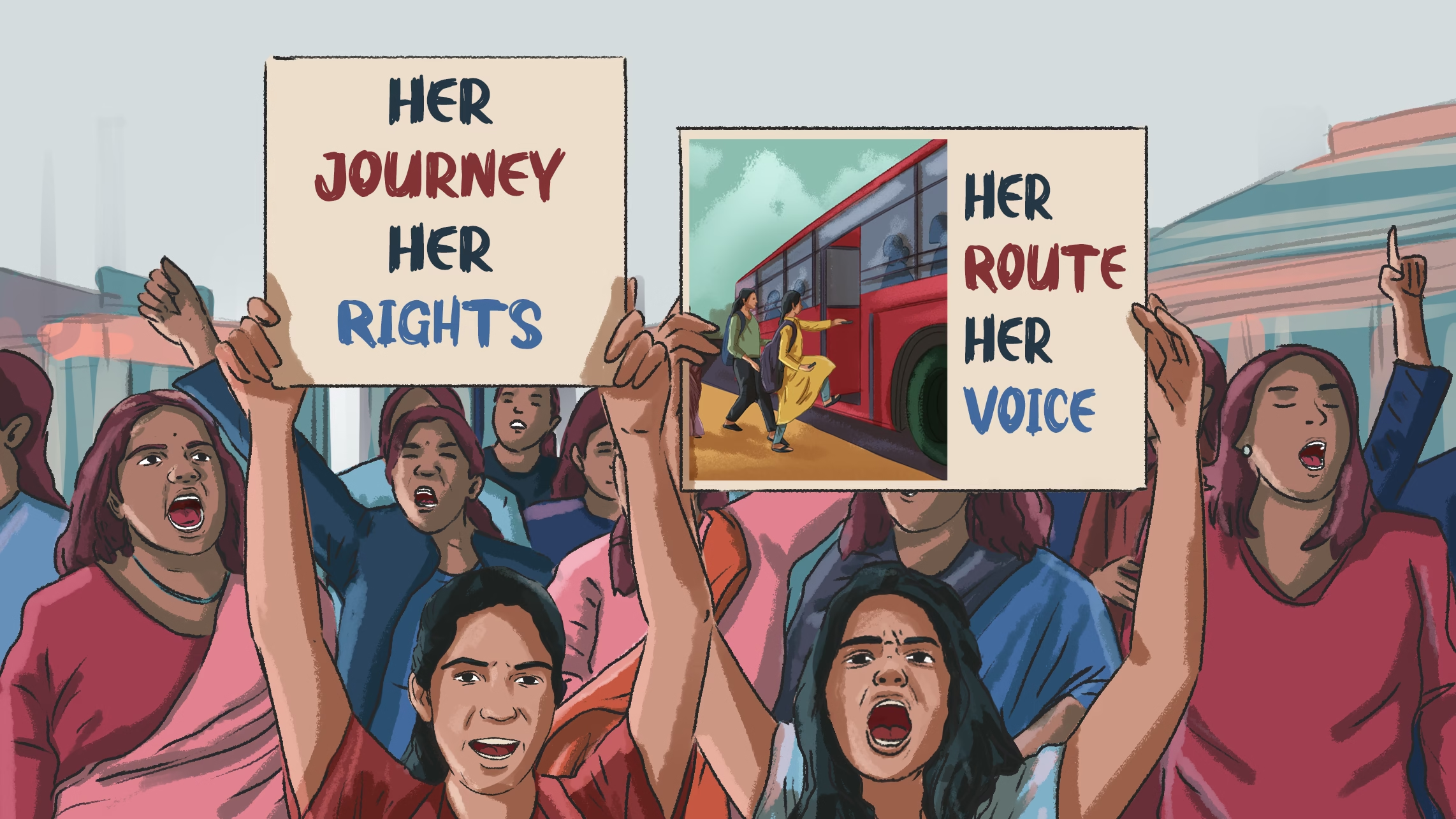
In Bengaluru, the daily bus ride became the centre of a movement. Alli Serona, co-created with Purpose and funded by Porticus, places women commuters, many from the informal sector, at the heart of conversations about safety, access, and dignity in public transport. Their stories shaped the agenda, carried through films, media features, and even a travelling bus-stop installation where residents could map problems, imagine better routes, and confront officials face to face.
By letting women lead, Alli Serona turned commutes into civic action and proved that storytelling on the street can redraw a city’s transport map.
The results are tangible. BMTC approved two new feeder routes, improving access for thousands of families. Over 200 women have been trained to speak to the press, petition agencies, and hold authorities accountable. Alongside civic skills, creative pieces like the Sweat & Concrete microsite reframed urban heat and mobility as public-health issues, widening the conversation. By letting women lead, Alli Serona turned commutes into civic action and proved that storytelling on the street can redraw a city’s transport map.
Not Just Small Talk
In Britain, weather is small talk, until it turns deadly. Not Just Small Talk, a campaign by Purpose and funded by the Wellcome Trust, reframes extreme heat as a public-health crisis already unfolding. Through first-hand testimonies, patients struggling in overheated wards, families caring for vulnerable relatives, workers fainting during heatwaves, the campaign humanises a threat often dismissed as “just hot weather.”
The campaign changes climate from talk about the weather to urgent action by turning casual conversation into a shared concern.
The storytelling doesn’t stop at empathy. Practical tips on personal safety or actions we can take as citizens that ask us to push MPs for heat adaptation. Age UK, Save the Children, and the British Red Cross are all trusted partners that add credibility to the campaign. The design of the campaign is also clever because it uses everyday weather talk as a way to get people to talk about how the heat is affecting their health. The campaign changes climate from talk about the weather to urgent action by turning casual conversation into a shared concern.
Putting a Stop to Oil Exploration in the Amazon
In April 2023, Brazil faced an important decision about the future of the Amazon: a proposal to drill for oil at the mouth of the Amazon River. Putting a Stop to Oil Exploration in the Amazon, led by Purpose with support from the IKEA Foundation and Aurora Trust, reframed the narrative. After all, the story is not oil = national pride; it is a future based on renewables and stewardship of the Amazon.
For Purpose, it proved that when local voices drive the story, even entrenched narratives can be turned and policy can follow.
The strategy was fast and layered. Ten influencers co-created content with six grassroots organisations, amplifying Indigenous and riverine testimonies through 56 digital pieces. Workshops in ten communities, public panels, and earned-media bursts pushed the issue from remote licensing offices into the national conversation. Within four months, the coalition generated more than 650,000 impressions and gave regulators the cover to act. IBAMA denied the drilling request. For Purpose, it proved that when local voices drive the story, even entrenched narratives can be turned and policy can follow.
Why These Stories Last
Looking across these campaigns, one thing is clear: Purpose doesn’t just run projects, it builds stories that live in people’s lives. Whether it’s asking millions to pause before sharing a headline, turning a child’s play into a political priority, or letting women commuters redraw a city’s bus map, the through-line is the same. Small moments, when told well, become movements.
The numbers, billions reached, policies shifted, lives made safer, are important. But what makes them possible is the way the stories are framed: identity before issue, local voices before logos, lived experience before abstract data. That’s what gives campaigns like Verified, LIVE + BREATHE, or Alli Serona their staying power, and why funders and partners keep backing them.
If you’re curious about how storytelling can shape change in your own work, we share more insights like these in our newsletter. Subscribe, and join the conversation.