Imagine a small village in the middle of a cholera scare. People are unsure, worried, trying to make sense of something they can’t see. Then someone brings out a short animated film and plays it for the community. A simple, bright little story where a young boy shows how cholera spreads and what everyone can do to stay safe. Suddenly the whole idea feels less mysterious and a little easier to act on. That is the kind of shift animation can create.
These days, nonprofits turn to animation a lot more often, especially when they need to explain things that are complicated or heavy. It helps with conversations about health, gender, migration, the environment and so much more. Animation is light on cost, easier to adapt and, when done well, surprisingly moving. In this blog, we look at why it works and walk through a few campaigns where animated storytelling travelled further than anything else the teams tried.
Successful Examples of Animated Content in Nonprofit Campaigns
1. The Story of Cholera – Global Health Media Project
We’ll begin with “The Story of Cholera,” an animated video that teaches people about a health problem. After cholera spread in Haiti in 2010, the Global Health Media Project made this video to show how cholera is spread between people and, most importantly, how to stop it.
The video tells the story of a small boy who joins forces with a health worker to save his father and teach the villagers about cholera prevention. Thanks to innovative animation, for the first time, people could actually see the germs which cause cholera. This makes it easy for them to understand how the disease works. With over 135 million views in 53 languages, The Story of Cholera has had a massive impact, especially in cholera-affected areas like Haiti and West Africa. This animation has become an essential educational tool in health campaigns around the world.
2. A Beautiful Animation of A Harrowing Story – BBC News
BBC News used animation to tell the story of Iyad Faroud Al Rousan, a Palestinian refugee. He left Syria in search of safety, but on the way to Europe by boat, he faced danger again. The animation uses calm, grey images that fit the heaviness of the story. You watch the moment the boat is attacked, then capsizes, leaving families scattered in the water.
By choosing animation, BBC News invites viewers into one man’s memory without showing graphic footage. You feel the fear and uncertainty. The style is simple, but the emotion is unmistakable. The film opened the door for many conversations about displacement, loss and the human side of migration.
3. Pigeon Studio – EveryAGE Counts Initiative
Ageism often hides in everyday behaviour. In Australia, the EveryAGE Counts campaign wanted people to notice it, think about it and change the way they treat older adults. Pigeon Studio created an animation using clean lines and gentle transitions. It shows people of different ages connected through small movements, almost like sketches coming alive.
The film may look minimal at first, but the message stays with you. It challenges stereotypes and encourages viewers to rethink how they talk about ageing. The campaign helped start honest discussions across communities, and the animation played a big part in making those conversations feel approachable.
4. Simit Bhagat Studios – A Powerful Animation of One Woman’s Courageous Battle Against Domestic Violence
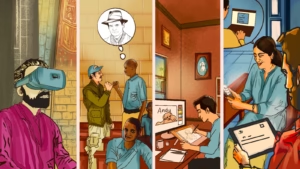
Some stories demand extra care. Domestic violence is one of them. SNEHA, a nonprofit in Mumbai, partnered with Simit Bhagat Studios to create an animated audio story about a woman called Shabana (name changed). She lived through years of abuse and slowly found her way out. The animation uses hand-drawn images placed alongside her voice, which makes the experience personal but also protects her identity.
The blend of illustration and voice adds depth without overwhelming the viewer. The film does not sensationalise the pain. It gives space to her strength and the support she receives. For many people watching it, the animation becomes a gentle but firm way to understand the complexities of domestic violence and why survivors need empathy, not judgment.
5. Autism Speaks – The World of Autism PSA
Autism Speaks created an animated PSA for parents and caregivers who might be noticing early signs of autism in children. The film uses a mix of 3D and stop-motion elements to show the world from a young boy’s perspective. You see how everyday sounds, textures and movements can become overwhelming.
The video has crossed more than 768,000 views on YouTube. It has reached families, teachers and health workers who needed a simple way to start conversations about early diagnosis. The gentle storytelling helps viewers understand what the child might be going through, and why early support matters.
Conclusion
Animated videos let nonprofits speak to people in a way that feels honest, not clinical. It turns complicated ideas into stories people can follow. It brings emotion without overwhelming. It teaches without feeling like a lecture. Whether the topic is public health, domestic violence, autism or ageism, animation creates room for understanding.
If you are exploring animation for your own work, we would be glad to help shape your message. Together, we can build something that stays true to your purpose and reaches the people who need it most.