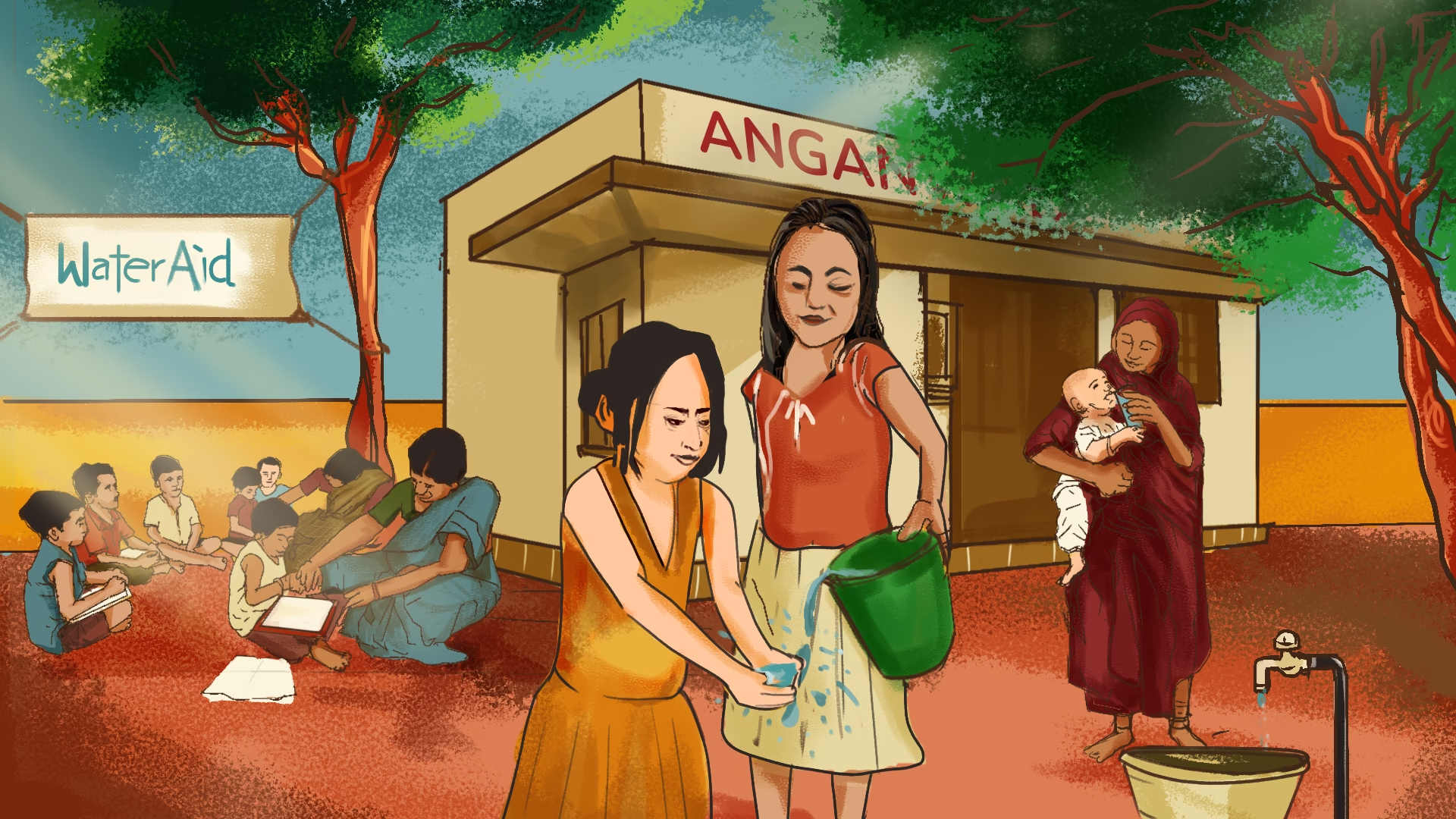
In Jai Bhuvaneshwari Nagar, a small Anganwadi once struggled with problems far bigger than its walls could hold. There was no running water. There were no toilets. Children fell ill more often, attendance kept slipping, and hygiene felt out of reach for families already juggling too much. Things shifted when WaterAid India helped install taps, toilets, and simple hygiene sessions for caregivers and children.
What started as bricks, pipes, and schedules became something deeper. Children began arriving cleaner to the school. Mothers washed hands before meals. Fewer fevers came home. Handwashing stopped being a rule and turned into a quiet ritual of care, moving from classroom to kitchen to courtyard.
Stories like this explain why WaterAid India matters. For years, the organisation has worked so that every person can count on clean water, decent toilets, and good hygiene. One of its most powerful tools is storytelling: the voices that pass from one person to another.
From folk songs and school plays to digital campaigns and national events, WaterAid India has shaped a communication web that makes sanitation everyone’s business. So let’s take a look at how WaterAid tells stories that move people to act.
From Field to Film: Stories That Travel
Open WaterAid India’s website and you step into a living archive. The Stories hub brings together case studies, photo essays, and short films that follow people as they build safer habits and stronger systems. The thread is uncomplicated. Sanitation appears as daily life, not a sterile number on a chart.
In From Open Drains to Dignity, women in Delhi’s informal settlements run community toilets through small user fees. A service turns into an enterprise that belongs to the neighbourhood. In A Mother’s Journey to Hygiene and Hope: The Story of Gujri Devi, a woman in Madhya Pradesh leads her village’s first hygiene drive after watching a nukkad natak organised with the One Drop Foundation. These pieces let people speak for themselves, which is why the message lasts longer than a slogan.
These pieces from the Stories Hub let people speak for themselves, which is why the message lasts longer than a slogan.
The visual stories stretch the circle wider. On WaterAid India’s YouTube channel, films like Across the Tracks: Steps Towards Clean India and Model Village Film meet thousands of viewers. They are short, grounded documentaries filmed where the change is happening. You hear neighbours, not a distant narrator, and you see routines as they are.
When Songs Become Messages
Music keeps showing up as a quiet powerhouse. In Singhaul, Belaganj, Gaya in Bihar, facilitators used a folk-style song, Faguniya Maange Sabuniya, which means Faguniya asks for soap, to nudge handwashing and hygiene. The song played alongside street shows, magic acts, and wall paintings. Families began to link sanitation with dignity at home, not with instructions handed down from outside.
When people sing, draw, or act out their own story, the idea moves from a lesson to an identity.
Another story, Song Sung Blue, follows three schoolgirls in Ghatgara village in Madhya Pradesh, Sakshi Parihar, Tina Ringnodiya, and Niharika Patel. After a WaterAid workshop, they wrote a song on water conservation and sang it at assembly. The class listened. The tune opened a line of questions about how water and hygiene connect. The story later appeared in WaterAid’s Heroes of Change series and showed how creativity helps a message settle into memory.
Culture carries what training alone cannot. When people sing, draw, or act out their own story, the idea moves from a lesson to an identity.
Campaigns That Connect Cities and Villages
Local outreach is not the only approach. WaterAid India also invites people in cities to step closer to the reality of water stress.
The Blue Mile, launched in Hyderabad in 2019, asked participants to run the miles that women and girls often walk for water. Those runs turned distance into conversation, with participants sharing their routes online. Blue Mile 2.0 widened the circle through schools and workplaces, linking fitness, awareness, and fundraising.
WaterAid’s campaigns are a good example of movement-based communication. People are asked to join in and share, not just watch.
On World Toilet Day, the #ShauchVichaar campaign used humour to shift a serious topic into public view. The call was simple. Think about life after the flush. Short videos, quick reels, and infographics explained why safe waste management matters as much as building toilets. A lighter tone opened a harder conversation.
This is movement-based communication. People are asked to join in and share, not just watch.
Communication Tools That Stay Close to the Ground
National campaigns raise attention, but habits usually change in quieter lanes. In villages and slums, WaterAid India teams lean on tools that are simple, local, and affordable.
In Singhaul, facilitators painted reminders on walls and carried colourful props during household visits. Posters in local languages sat alongside short radio spots and visual cue cards, so the same idea appeared in many small places. In other regions, weekly markets hosted puppet shows and nukkad nataks on twin-pit toilets or safe waste disposal. Messages are tested for clarity and ease as part of a behaviour-centred design approach. Communication is treated as a cycle of dialogue, performance, and reinforcement rather than a one-time event. Over time, familiarity grows, and ownership follows.
Communication is treated as a cycle of dialogue, performance, and reinforcement rather than a one-time event. Over time, familiarity grows, and ownership follows.
By WaterAid India’s count, these participatory efforts have helped more than 9.7 million people gain access to sanitation and 3.7 million people gain access to safe water. The change shows up in both hardware and habit. Toilets are used and maintained because people feel part of the system that built them.
Also read: How Water.org’s 2023 Annual Report Puts People Before Numbers
Raising Funds Through Storytelling
Storytelling supports fundraising too. On the donation page, the ask stays close to real outcomes, with contribution brackets tied to specific work. A gift of ₹500 can help build a pit latrine. ₹2,000 can support trials for wastewater management.
By linking a set amount to a clear result, WaterAid turns an abstract problem into a small, understandable story of change and makes people more willing to give.
Donors can see where their money goes and why it matters. This technique is known as ‘Tangible Impact Framing.’ By linking a set amount to a clear result, it turns an abstract problem into a small, understandable story of change and makes people more willing to give. The tone stays respectful. Donors are seen as partners. Photographs focus on participation, not pity.
Documenting Change, Not Just Delivering It
For WaterAid India, documentation is not an afterthought. It is part of governance. The communications team works like a small newsroom, collecting proof and stories that can also be used to persuade people. Each year, explainers and data visualisations show how sanitation coverage and faecal sludge management are moving across states. Lived experience sits next to evidence, creating a narrative that informs the public and nudges decision-makers.
In Chhattisgarh, WaterAid supported the Citizens’ WASH Forum, where Citizen Report Cards track toilet quality, usage, and inclusiveness. Findings do not remain in files. They move to local officials through press briefings, social media, and community meetings, where choices take shape. Communication becomes advocacy. Documentation becomes a civic tool that gives citizens a voice, prompts action, and helps progress stick.
The Culture of Change
Volume is not the secret here. Sincerity is. Whether you meet schoolgirls who write a song or women who manage a toilet block, every voice is treated as part of a shared path to dignity. Wall paintings, murals, puppet shows, and short films all support a single aim.
They help people recognise themselves in the change they are building. Communication is not decoration. It bridges awareness and ownership, and that bridge keeps the work alive after a project closes.
Subscribe to our newsletter for more stories, research, and tools on climate-aware impact.