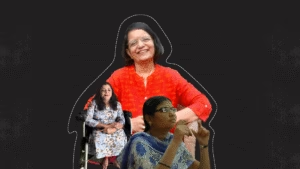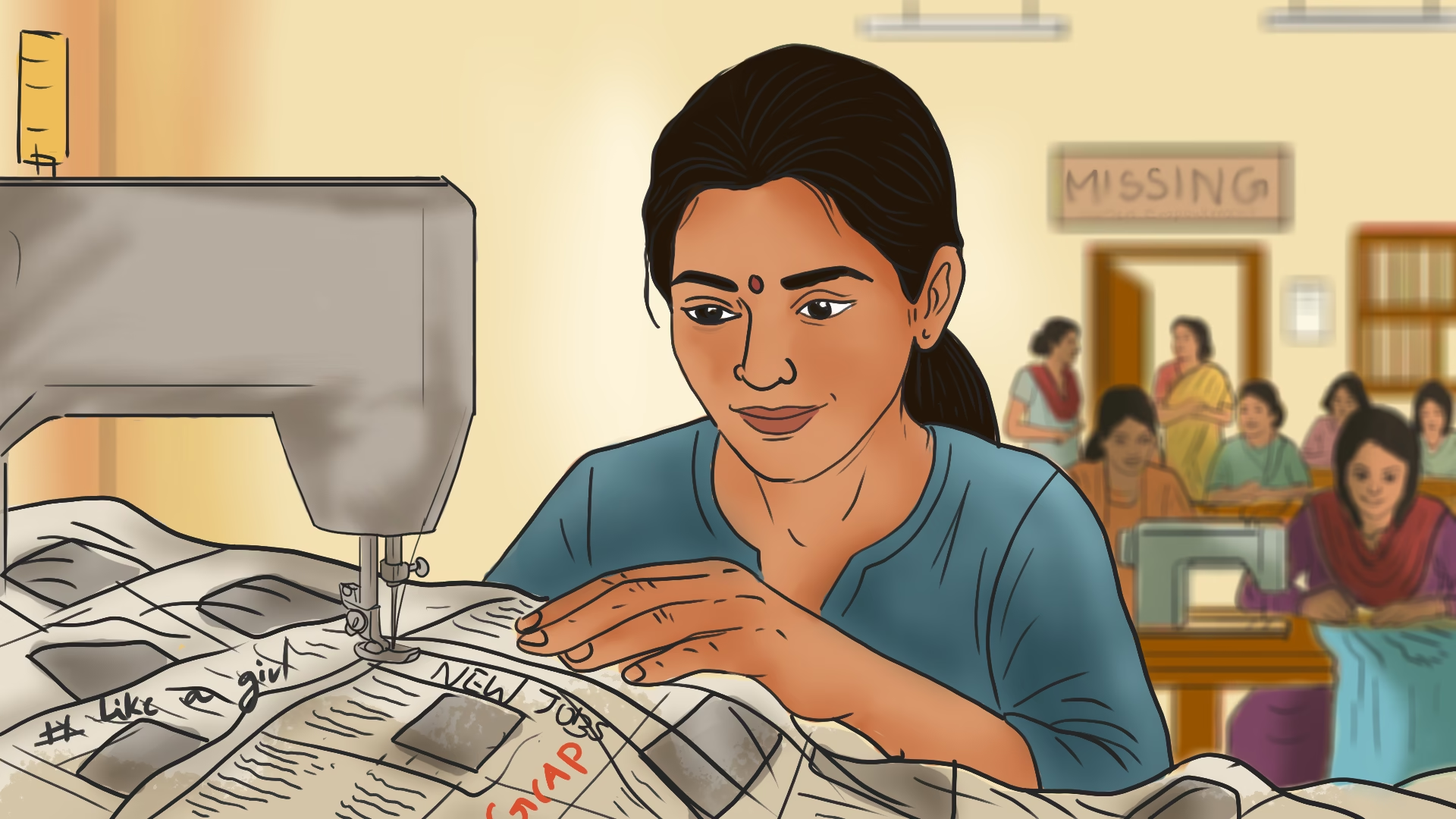
Ayshah was born in Kultali and pushed into marriage before she was ready. What followed were years of violence, fear and isolation. One night, her husband tied her up, set the house on fire and fled with their child. Neighbours saved her life, but rebuilding felt impossible until she found MISSING’s Women Empowerment Centre. There, she learned tailoring, made her own money, and began to heal. Today, the hum of her sewing machine fills a home once silenced by fear.
Ayshah’s story is a good example of why nonprofits are important. They stay beside people who have no one else, turning despair into resilience. For that work to travel beyond a room or a village, it has to be seen and heard. Communication campaigns carry real struggles to the world and turn attention into action.
Let’s look at five campaigns that did just that.
1. UNICEF India – Awaaz Do (Speak Up)
In 2010, when the Right to Education Act promised schooling for every child, UNICEF India realised that legislation alone wouldn’t bring change; voices would. So, it launched Awaaz Do, a digital call urging citizens to speak up for India’s 8 million out-of-school children.
Built around a simple but powerful idea, one voice can open a classroom door. The campaign turned awareness into participation. From blogs and Facebook pages to SMS drives and a website hub, people were invited to become “champions” for education. Priyanka Chopra’s video appeal and corporate partnerships expanded its reach far beyond metros.
Within a year, over 230,000 people had joined in, many organising local enrolment drives or helping a child return to school. At just ₹58 per sign-up, Awaaz Do became a model of low-cost digital mobilisation and a landmark in India’s communication-for-change history.
2. Global Call to Action Against Poverty – Stand Up Against Poverty
In October 2006, classrooms, temples, and town squares across the world shared one simple act where people stood up. From Nairobi to Tokyo, over approx. 23 million rose to their feet within 24 hours, demanding an end to poverty. That moment, verified by Guinness World Records, became a global ritual of solidarity.
With every pledge, chant, and photograph, citizens reminded leaders that poverty is not inevitable, and that sometimes, standing up together is the loudest way to be heard.
Led by the Global Call to Action Against Poverty (GCAP) and the UN Millennium Campaign, Stand Up Against Poverty transformed the distant language of “Millennium Development Goals” into something anyone could join. Each year, the wave grew: 43 million in 2007, 116 million in 2008, and 173 million in 2009 across 120 countries. It wasn’t a fundraiser; it was a wake-up call. With every pledge, chant, and photograph, citizens reminded leaders that poverty is not inevitable, and that sometimes, standing up together is the loudest way to be heard.
3. The Girl Effect – The Clock is Ticking
At a Clinton Global Initiative stage in 2010, the lights dimmed and a stark animation began to play. A girl appeared on screen, just twelve years old. As a whiteboard marker sketched her story, the voice-over warned, “We have a situation on our hands; the clock is ticking.” In a few short minutes, the film transformed cold data into urgency: showing how, without support, a girl’s life can spiral from early marriage to lost education and poverty, but how timely investment could change everything.
Created by the Nike Foundation’s Girl Effect movement, the film did more than advocate; it reframed global development. “Invest in girls” became both an economic argument and a moral one, reinforced by World Bank data and echoed on world stages. With over 2.7 million YouTube views and countless re-uploads, The Clock is Ticking helped spark a wave of funding and policy focus that still shapes how we talk about empowerment today, proving that sometimes, a simple story can start a global countdown for change.
Also read: 5 Creative Campaigns That Changed the World
4. Missing Link Trust – M.I.S.S.I.N.G.
It began with a silhouette, a black outline of a missing girl painted on city walls. Created by artist Leena Kejriwal, M.I.S.S.I.N.G. turned public spaces into reminders of India’s invisible daughters lost to trafficking. What started as street art became a full-fledged movement combining art, games, and technology to spark awareness and prevention.
M.I.S.S.I.N.G. shows how a single image can grow into a nationwide dialogue, one that doesn’t just tell stories of loss but helps rewrite them with hope.
The campaign expanded into the award-winning Missing: Game for a Cause, where players stepped into the story of a trafficked girl, and later into an interactive comic, school safety sessions, and Women Empowerment Centres in the Sundarbans. There, survivors like Ayshah stitch “Missing Bags” from reclaimed fabric in partnership with BIBA.
With over 500 women empowered, 100,000 bags produced, and ₹120 lakhs raised through India’s Social Stock Exchange, M.I.S.S.I.N.G. shows how a single image can grow into a nationwide dialogue, one that doesn’t just tell stories of loss but helps rewrite them with hope.
5. Always – #LikeAGirl
In 2014, a short social-experiment film asked a simple question, what does it mean to run, fight, or throw “like a girl”? Adults and boys acted it out with jokes and flailing arms, then the 10-year-old girls arrived, strong, focused, unfiltered. The contrast was unmistakable. Within weeks, #LikeAGirl had turned a casual insult into a rallying cry for confidence.
Created by Leo Burnett for Procter & Gamble’s Always brand, the film went viral with more than 76 million views and 4.4 billion impressions, then reached millions more as a Super Bowl XLIX spot. The campaign reframed puberty from a point of shame to one of strength, and public perception shifted. Moreover, 70% of women and 60% of men said it changed how they saw the phrase.
Winner of the Cannes PR Grand Prix, Glass Lion, and the Emmy for Outstanding Commercial, #LikeAGirl remains a study in purpose-led storytelling. A single, well-posed question reshaped both culture and brand.
When Stories Move the World
Across these campaigns, a simple lesson repeats. Communication works when people feel seen. A silhouette on a wall, a child speaking online or millions standing in a square can turn empathy into momentum. The campaigns that travelled furthest were not loud for the sake of it. They were sincere, and they built human connection that lasted.
For communicators and NGOs, the takeaway is clear. Start by listening. Find one emotional truth and carry it with consistency. When stories are anchored in authenticity and purpose, they build more than visibility. They build trust and they open the door to change.
Like this story, stay connected with us. Subscribe to our newsletter for more on storytelling, communications and the latest trends shaping the social-impact sector.