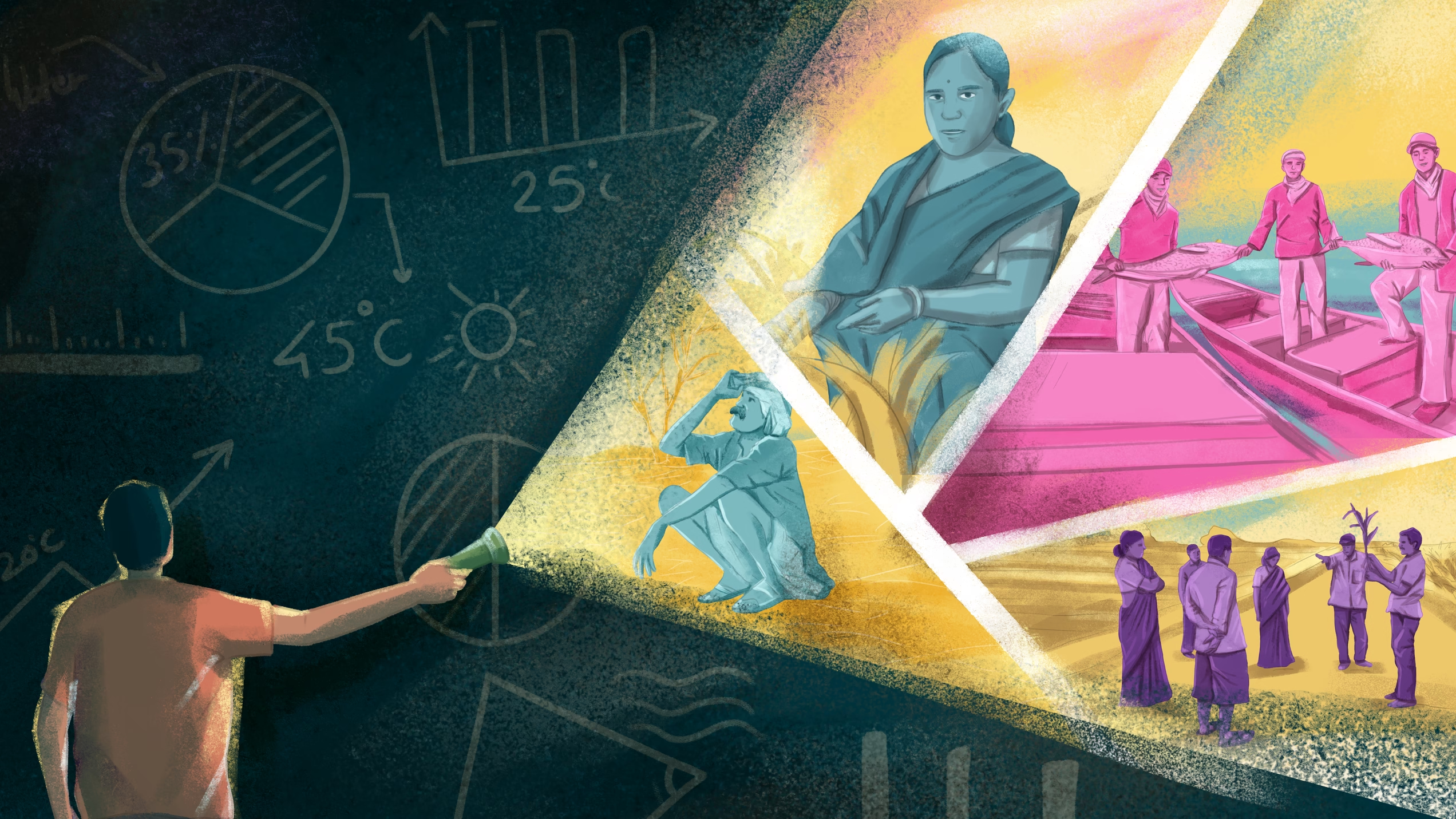
In Bundelkhand, a farmer says that he could once read the skies; now even the clouds have forgotten their rhythm. Stories like his, shared by journalist Roli Srivastava during our Stories of Change podcast, remind us that climate change is not distant; it is reshaping lives in the most intimate ways.
The world is getting warmer, and faster than we imagined. In the past two decades, nearly 90% of recorded disasters have been linked to weather, climate, or water extremes, according to the United Nations Office for Disaster Risk Reduction. Floods, heatwaves, and storms are no longer rare; they are everyday realities for millions.
Across the world, glaciers are melting faster, seas are rising higher, and seasons are shifting in ways we can no longer predict. These changes are not confined to one place or one people; they touch every corner of our lives. Facts tell us what is happening. Stories remind us why it matters. So let us explore how nonprofits can weave climate change into their missions with purpose and empathy.
Why Stories Outperform Data Alone
When we rely solely on charts and numbers, we risk losing people. Research shows that narratives, story arcs, personal voices, emotional journeys; are easier to process, more memorable, and more persuasive for general audiences than logical-scientific prose.
Health-based climate stories amplify this effect. Studies and reviews indicate that framing climate change as a public health issue evokes hope and concern more reliably than environmental or economic framings alone. In other words, when people see climate through bodily, immediate stakes; air quality, heat stress, disease; they become more open to action.
Narratives; story arcs, personal voices, emotional journeys; are easier to process, more memorable, and more persuasive for general audiences than logical-scientific prose.
But fear without a clear pathway backfires. Studies using the Extended Parallel Process Model find that fear appeals can provoke anxiety or paralysis unless paired with concrete, credible solutions. Without efficacy, people tune out or deny rather than act.
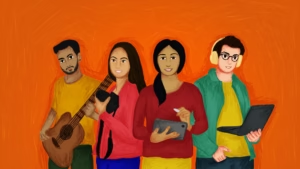
Visual storytelling also matters. The Climate Visuals project shows that people respond more strongly to images with real people in real places, local impacts, and everyday solutions, not abstract symbols like melting ice caps or distant glaciers.
So, storytelling wins: stories + emotional resonance + solution options + visual context = higher engagement than dry data alone.
Also read: Top 5 Community-Led Climate Initiatives in India You Need to Know About
Frameworks to Guide Stronger Narratives
To make your stories effective and strategic, organisations can use tested communication frameworks:
Audience segmentation (Britain Talks Climate): This UK research profiles seven public segments based on values (thrift, local pride, fairness). Even beyond the UK, this serves as a template: tailor frames to segments rather than one message for all.
Message & messenger testing (Yale Program on Climate Change Communication, YPCCC): Yale’s work shows that certain narrators (health professionals, faith leaders, local officials) and specific message framings perform better across audiences. Their open tools help map which voices work with which segment.
Climate Visuals’ 7 principles: Always show: real people, honest impacts, everyday actions, local environment, clear solutions, dignity, and a sense of possibility. Use this as your photo/video checklist.
Behavior-design toolkits (Rare + BIT): Rare’s Climate Change Needs Behavior Change and BIT’s playbook teach how to convert stories into actionable “choose-do-say” behaviors, how to test, and how to measure impact. These frameworks help avoid storytelling that is superficial or emotive but ineffective. Instead, they anchor narrative work in psychology, audience insight, and design.
Stories That Changed Global Conversations
Here are times when the story linked feeling to action:
- UNDP – Mission 1.5 / People’s Climate Vote
UNDP shifted citizens from spectators to participants through a mobile game that cast players as climate policymakers. By blending story, choice, and public polling, it joined development goals with climate action and created the world’s largest climate opinion dataset.
- Global Solutions Diary – Project Drawdown
Project Drawdown moved from the lab to lived life through the Global Solutions Diary, which features local innovators across many countries. Farmers, students, and community leaders describe their solutions, turning abstract science into personal experience and connecting data with everyday resilience.
- Swayam Shikshan Prayog (SSP) – Women-Led Climate Resilient Farming
SSP reframed drought and distress in Marathwada as women-led resilience. Farmers adopted mixed cropping, solar irrigation, and organic methods to steady incomes and soils. Their progress is a climate adaptation story recognised by platforms including the UNFCCC.
- The Climate Reality Project – 24 Hours of Reality
Climate Reality leaned on emotion by spending a full day with stories from communities facing hurricanes, droughts, and wildfires. From Staten Island to Durango, it showed how emissions turn into human cost and invited a wider public into empathy and action.
Rare reframed falling fish stocks as both a climate and a livelihood challenge. By supporting fishers to co-manage zones and adopt sustainable practices rooted in identity and pride, it connected conservation with survival and showed how culture-aware storytelling can scale change. These are more than inspiring vignettes. Each blend reaches outcomes and offers a pattern nonprofits can adapt.
How Nonprofits Can Embed Climate Narratives
Start with the person, end with the path. Begin with a lived moment, such as a farmer weighing erratic rain or a parent planning around rising heat, then point to steps like rainwater harvesting, reforestation, or crop diversity. Use a health lens to link climate to air quality, disease prevention, and well-being.
Avoid one-size-fits-all stories. Match frames to values: fairness for donors, stewardship for communities, pride and possibility for youth.
Avoid one-size-fits-all stories. Match frames to values: fairness for donors, stewardship for communities, pride and possibility for youth. Choose visuals that come from real lives and local action rather than stock imagery. Create participatory rituals such as community climate days that build ownership and yield data.
Finally, help communities find language for what they already observe and build partnerships beyond your sector. Collaborate with scientists, funders, and think tanks to connect climate to health, education, and livelihoods, turning stories into measurable, shared progress.
Turning Data into Dialogue
In an era where climate disruption is no longer distant, nonprofits must evolve: not only in what they do, but in how they tell what they do. The research is clear: stories + efficacy + visual grounding outperform raw data alone. The field case studies show narrative strategies can scale and yield results. And the frameworks offer guardrails to make your storytelling not just moving, but effective.
Use your proximity to communities to lift lived stories, integrate climate into mission, co-create local vocabulary, and collaborate across sectors. Your stories can move hearts; even more, they can move action.
Subscribe to our newsletter for more stories, research, and tools on climate-aware impact.