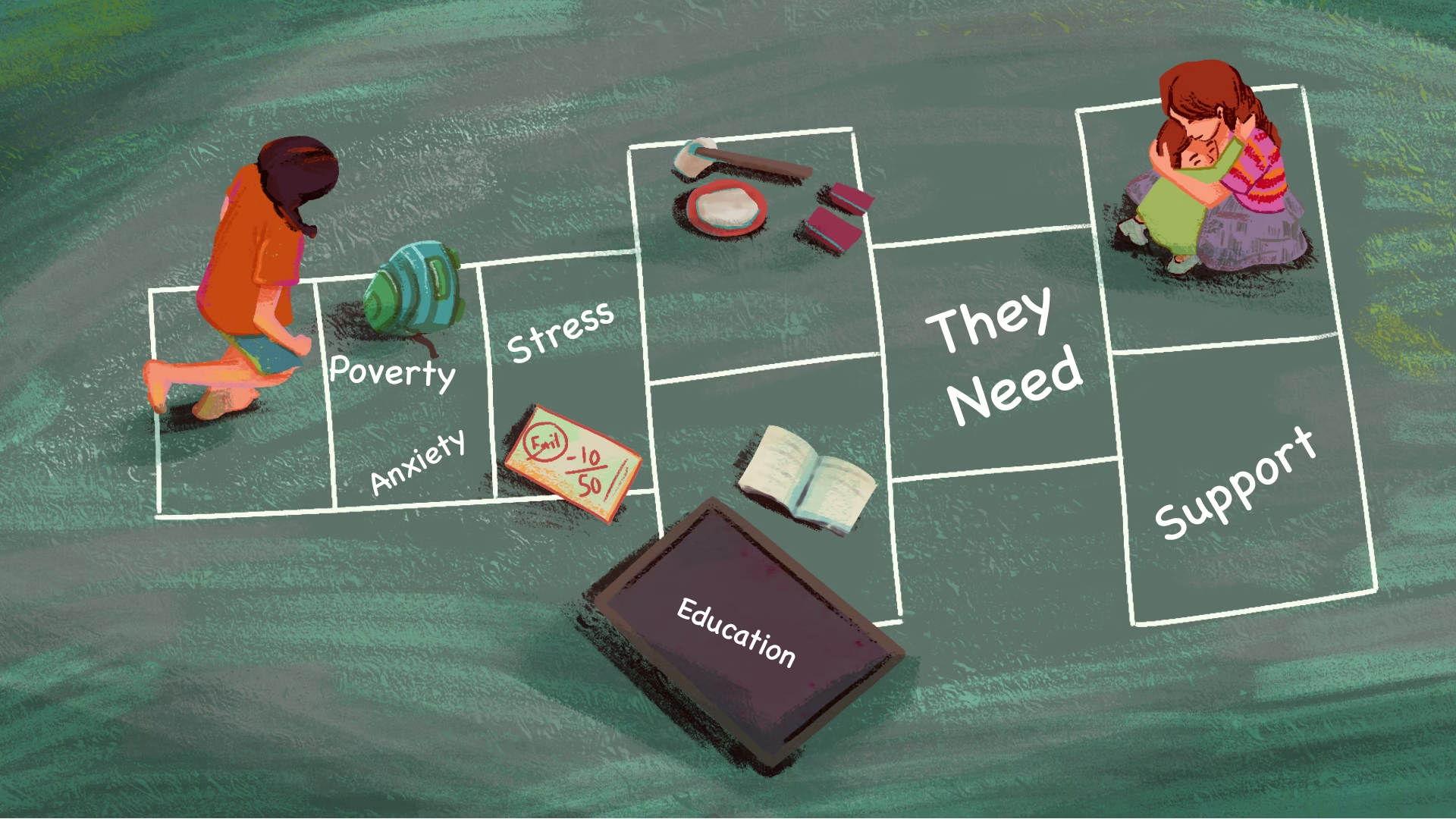
Sometimes, what a child carries cannot be seen.
Not the school bag on their shoulders; not the jumper; not the lunchbox. Something quieter than that. Worry. Anxiety. Trouble at home. The kind of heaviness that follows them into classrooms, onto buses, and back into bed at night. BBC Children in Need‘s The Heaviest Backpack campaign was built around this truth: that many children are carrying far more than adults realise. It gave form to something invisible, and in doing so, made it easier for the public to understand.
That instinct did not begin with The Heaviest Backpack campaign. It has been built over decades. The BBC’s first charity appeal in 1927 was modest by today’s standards: a short Christmas Day radio slot that simply asked listeners to give. Television arrived in 1955, when Harry Corbett and Sooty fronted the Children’s Hour Christmas Appeal, an early sign that the organisation understood children respond to characters, not just causes.
The format most people now recognise took shape in 1980 with the first full telethon, hosted by Terry Wogan, Sue Lawley, and Esther Rantzen. Since then, the appeal has grown through regional programming, Radio 2 fundraising, celebrity specials, and challenge-based broadcasts, while keeping the same core structure: help the public care, then help them act. For nonprofits trying to understand how communication can hold attention, build trust, and stay emotionally present throughout the year, there is much here to learn from.
A Report That Does More Than Record Impact
Many annual reports matter, but not all of them invite people in. They hold the numbers, the accountability, the outcomes, yet often feel distant from the lives those numbers represent. BBC Children in Need’s reports work differently. They still document grants, reach, and results, but they also read like public-facing communication. They explain not only what happened, but why it matters and how the organisation wants that work to be understood.
That difference matters. In its 2024 reporting, figures around stronger emotional wellbeing, better relationships, stronger self-belief, and improved essential skills were placed within the wider realities children and young people were living through. The charity reported £36.5 million in grants awarded, £88.5 million in total committed funding, and 543 new grants. These are significant figures, but what gives them force is the way they sit alongside issue framing, campaign context, and lived realities. The report does not stop at disclosure. It helps the reader make sense of what those outcomes mean.
Accountability and emotional clarity do not have to sit apart.
The 2025 report pushed this even further by showing storytelling as part of the campaign strategy itself. It brought together emotional stories, appeal films shaped by lived experiences across the UK, and a coordinated presence across BBC One, iPlayer, and social platforms. Storytelling was not treated as an extra layer added after the work was done. It was part of how the work was explained, connected, and brought into public view. For nonprofits, that is a useful reminder. Accountability and emotional clarity do not have to sit apart.
Stories That Are Easy to Enter, Hard to Forget
There is also something telling in the way BBC Children in Need organises its stories.
Its stories hub does not feel like a loose collection of updates. It feels considered. People can enter through issues such as mental health or poverty, or through BBC-linked routes such as the Appeal Show, Countryfile Ramble, Rickshaw, or Surprise Squad. That structure reflects an understanding that audiences do not all arrive in the same way. Some come because they care about a specific issue. Others arrive through a programme they already know. Either way, they are guided toward the same deeper message: support changes lives in practical, human ways.
The story examples themselves follow that same grounded tone. In Oasis Youth, for instance, support helps Bethany run a youth centre that offers training, mental health support, and essentials such as food. The language is not abstract. It does not overreach. It stays direct, clear, and rooted in daily life. That clarity is important. Strong nonprofit storytelling is often not about saying more. It is about helping people quickly understand what support means in someone’s actual life.
Accessibility is not only about readability. It is also about entry points. Stories are organised so that people can find them, follow them, and connect them back to a wider mission without getting lost in institutional language.
This is one reason the storytelling stays with the reader. Accessibility is not only about readability. It is also about entry points. Stories are organised so that people can find them, follow them, and connect them back to a wider mission without getting lost in institutional language. A story library, in that sense, is not only an archive. It is a way of shaping how the public comes to know the work.
Campaigns That Turn Feeling Into Action
A good campaign can move people. A stronger one can also guide them.
That is what makes BBC Children in Need’s mental health storytelling such a valuable example. The Heaviest Backpack gave the public a metaphor that was immediate and emotionally legible. The burden children carry became something people could almost imagine physically. But the campaign did not stop at recognition. In the charity’s 2024 reporting, 80 percent of surveyed people said the campaign helped them understand BBC Children in Need’s work, 77 percent said the work felt more important after seeing it, and more than 60 percent said they were more likely to support the charity after engaging with the campaign. Among families with younger children, that figure rose to more than three quarters. These are not small shifts. The campaign did more than attract attention. It clarified purpose.
A campaign can make people feel something, understand something, and do something. In many cases, it is strongest when it does all three.
Another striking example came through the charity’s partnership with McDonald’s UK. In one campaign, Pudsey’s familiar smile was removed from millions of Happy Meal boxes to communicate a simple but important message: children are not happy all the time, and that is okay to acknowledge. It was an unusually strong storytelling choice because it carried the campaign into everyday family life, not just charity channels or broadcast moments. The message appeared in a child’s physical world, at a restaurant counter, alongside a parent, making emotional communication feel immediate rather than distant.
There is a wider lesson in that. Nonprofit storytelling is often treated as though it must choose between emotional resonance and practical value. BBC Children in Need shows that it does not have to. A campaign can make people feel something, understand something, and do something. In many cases, it is strongest when it does all three.
Films That Travel Further Because They Begin With Real Lives
The film and broadcast side of this case is perhaps the most distinctive, not simply because of scale, but because of structure. On the surface, the telethon is an entertainment programme: comedians, musicians, celebrity challenges, presenters, and a running total on screen. Underneath that, though, sits a very deliberate storytelling machine. Its rhythm is consistent. A moment of spectacle is followed by something quieter and more real. A major performance gives way to a short film about a child or family. A playful celebrity segment is followed by a direct account of what a BBC Children in Need-funded project has meant in someone’s life.
That rhythm matters because it prevents emotion from becoming abstract. Entertainment holds attention, but story gives the appeal its moral centre. The telethon does not rely only on scale or sentiment. It moves viewers between energy and intimacy, between national performance and personal reality. That is one reason the format has lasted. The formula has evolved across decades, but the underlying logic has remained remarkably consistent.
Film becomes a bridge between public attention and material reality.
Even a smaller example such as A Film About Poverty reveals the same instinct. It linked a film directly to something painfully concrete: emergency essentials such as beds, mattresses, and washing machines for children and families living without them. That specificity matters. It keeps the story from drifting into vagueness. It reminds viewers that poverty is not abstract, and that support often begins with something as basic as a bed or a machine that lets clothes be washed. Film, in that sense, becomes a bridge between public attention and material reality.
Pudsey and the Emotional Language of the Brand
Most organisations with a mascot do not think carefully enough about what that mascot communicates. BBC Children in Need did. Pudsey Bear, created in 1985 by BBC designer Joanna Lane, gave the charity something warmer and more memorable than a flat logo. Named after Pudsey in West Yorkshire and marked by his distinctive bandaged eye, he carried care and recognisability into the public imagination.
What changed over time is just as revealing as his creation. Early versions of Pudsey leaned into the sad-eyed visual language common to many charity mascots of that era. Today’s Pudsey is cheerful, animated, and full of energy. That shift says something important about how BBC Children in Need wants the cause to be felt. The emotional register moved away from pity and closer to hope. Giving was no longer framed mainly through sadness, but through the possibility that children’s lives can genuinely improve.
What the Numbers Quietly Prove
There are, of course, hard numbers behind all of this.
In 2024, BBC Children in Need disbursed £36.5 million in grants, with a total of £88.5 million committed and 543 new grants awarded. The report also detailed some notable achievements: 132,000 children and young people reported feeling better emotionally, 137,000 cultivated improved relationships, and 110,000 developed greater self-belief, all thanks to the funded projects. By 2025, the charity had reached over 363,000 children and young people throughout the UK. The final funding figure of £57.4 million represented a £5 million increase compared to the prior year. The campaign also saw an uptick in viewership, donations, and conversion rates.
Numbers matter on their own. But what stands out is not only their scale. It is the way the organisation connects them back to stories, issues, and public understanding.
These numbers matter on their own. But what stands out is not only their scale. It is the way the organisation connects them back to stories, issues, and public understanding. The data does not sit apart from the emotional work. It is woven into it. That is why the communication feels like more than performance. It is not only saying, look how much we have done. It is showing what that support means and why it matters.
The Story Is the System
What makes BBC Children in Need such a strong case study is that storytelling does not sit in one corner of the organisation.
It is in the annual reports, where data is interpreted rather than merely displayed. In the stories hub, issue-led and programme-led entry points make the work easier to navigate. In campaigns that move from emotional recognition to practical action. It is in films that begin with real lives and travel across platforms without losing their human centre. It is even in local discovery tools that make a national charity feel present in someone’s own community.
BBC Children in Need does not use storytelling simply to describe its impact. It has built a story into the appeal, the mascot, the campaign, the film, and the public experience of giving itself. That is what makes the communication feel lasting. Not louder. Just deeper.
That is what other nonprofits can learn from this. Storytelling is not strongest when it is treated as one campaign, one polished film, or one team’s responsibility. It becomes more powerful when it is built as a system, when reports, pages, campaigns, and films all carry the same values and reinforce the same understanding. BBC Children in Need does not use storytelling simply to describe its impact. It has built a story into the appeal, the mascot, the campaign, the film, and the public experience of giving itself. That is what makes the communication feel lasting. Not louder. Just deeper.
If you’re passionate about communications and storytelling in the development sector, don’t miss out on our insights. Subscribe to our newsletter for the latest trends, tips, and stories on how visual storytelling is shaping social impact.