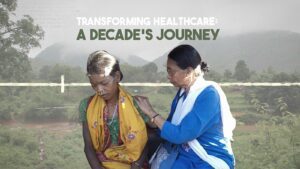
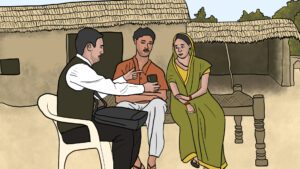
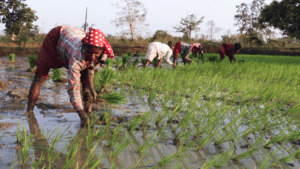
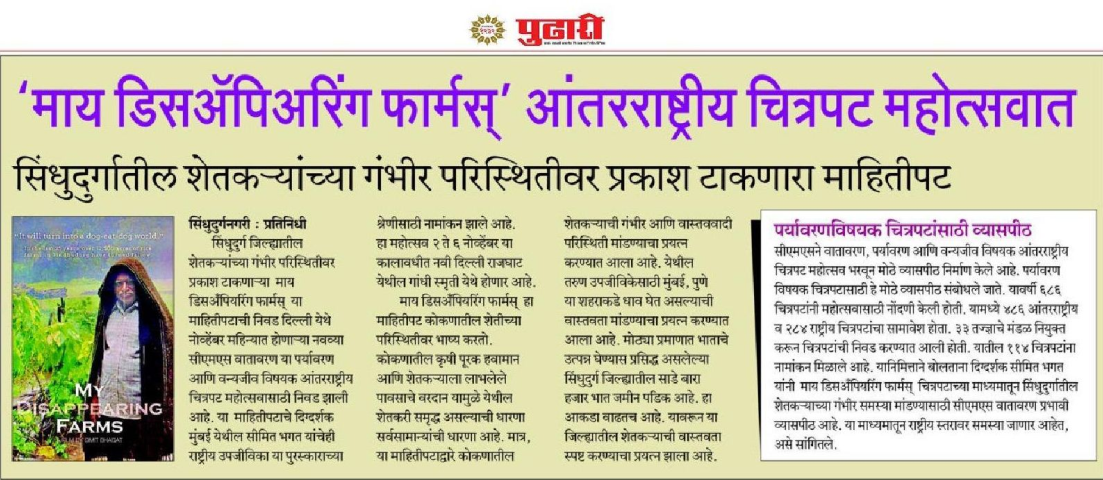
In Solan, nestled among the hills of Himachal Pradesh, 79-year-old Karnail Singh begins his day before sunrise. A small dairy shed has become the centre of his livelihood. Taking care of each cow means spending time, trusting, and quietly believing that life can get better even when it seems like there are fewer years ahead than behind. Work like his does not change overnight. It builds slowly through new skills, community support, and systems that allow people to stand stronger together.
This is the kind of progress Ambuja Foundation invests in. Rural development is rarely a single success story. It is many stories stitched into one picture. And that picture changes only when each piece is placed with intention.
So when Ambuja Foundation reached out to us for their third consecutive video annual report, we returned to that understanding. The print report already told the full story with care and detail. Our task was to translate its richness into a format that more people could grasp in a short time without losing the depth that makes the work meaningful.
Our Design Approach
We began by looking closely at the central idea behind this year’s theme: rural poverty is not one problem. It is a puzzle. Water, agriculture, health, education, women’s empowerment, and skilling. None of these stands alone. Solutions must connect.
The video needed to reflect this truth visually. Instead of moving topic by topic, we wanted the viewer to feel how each focus area supports the others. A strong system does not rely on one pillar. It rises because all of them fit together.
Also read: The Power of Annual Report Video
Bringing the Puzzle Metaphor Into Motion
The print report introduced puzzle pieces as a core element. We expanded that metaphor into movement. Each thematic area arrived on screen as a separate piece, with its own space, tone, and symbol. As the film progressed, the pieces drew closer, locked into place, and formed a complete view of Ambuja Foundation’s impact.
Integrated development is not just a concept. It has structure, rhythm, and direction.
This choice made the invisible visible. Integrated development is not just a concept. It has structure, rhythm, and direction. Every transition was designed to show that nothing happens alone.
Visual Language that Centres People
We kept the colour palette calm and consistent with Ambuja’s brand. Motion graphics were clean and confident, allowing the content to take the lead. Photographs were treated thoughtfully. Beneficiaries often appeared in colour against a muted background, so the viewer’s attention stayed with the people at the heart of the work. Even the smallest elements were designed with intention.
As the puzzle transitions zoom into each focus area, a unique icon appears to signal what the viewer is entering next. In agriculture and climate, for example, a rotating gear encircles a growing plant, a simple visual that brings together livelihood and ecology in a single frame. In skilling, a half-brain and half-bulb symbol captures both knowledge and opportunity. Each icon was chosen to showcase cues that helped viewers recognise themes before reading the text.
Each icon was chosen to showcase cues that helped viewers recognise themes before reading the text.
The decision to avoid a voiceover kept the video universal and accessible. The message did not depend on language. The story could be understood simply by watching.
Also read: Designing Impact: The Story Behind ARMMAN’s Annual Report
Designing With Empathy
At Simit Bhagat Studios, we believe design has a responsibility to listen. In rural development, every number is attached to a person, a household, or a decision that shaped a life. The video honours that connection. It avoids spectacle and centres people without romanticising struggle.
The journey continues piece by piece. The print report remains essential. The video companion makes it accessible. Together, they ensure Ambuja’s work is not only recorded but remembered.
For our team, this project offered the same quiet lesson it always does. Design can carry a story forward. It can deepen trust. It can prove that sometimes less is the clearest way to say more.
If you’re in the nonprofit or policy space and care about turning complex themes into compelling communication, our newsletter might speak to you. We share lessons like these, design reflections, and stories of impact that listen closely before they speak. Subscribe to stay connected to work that values both detail and dignity.