If you’re anything like millions of people in India, you know the small comfort of opening Netflix or Spotify and finding something new waiting. A favourite show drops, a fresh playlist lands, and it happens on cue every month. That rhythm explains a lot. India now counts 601 million OTT users, and 148 million of them pay monthly for streaming services. These platforms took entertainment and made it predictable, effortless and easy to keep.
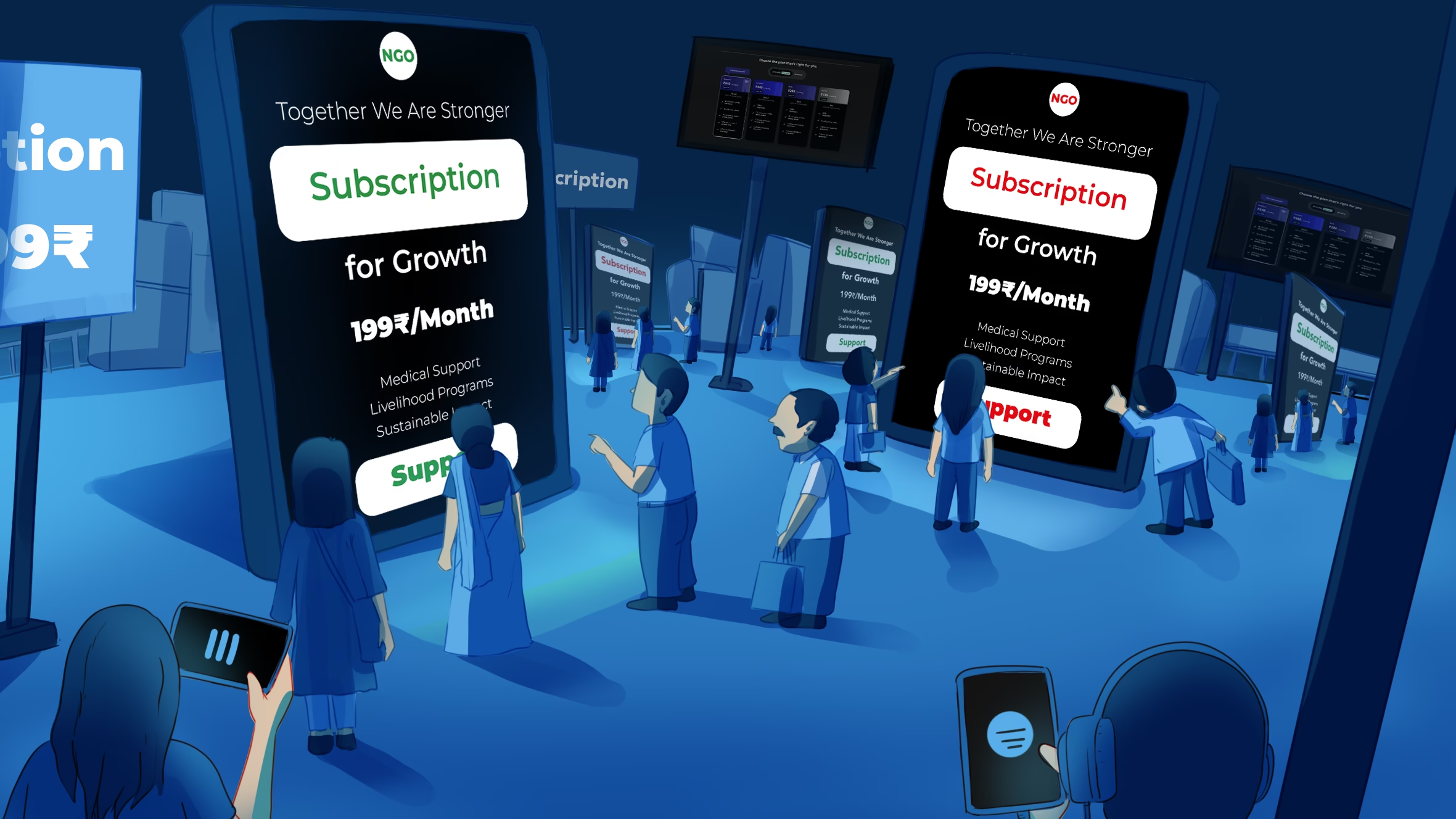
Something similar is taking shape in the nonprofit world. Many NGOs are moving beyond one-time gifts toward regular monthly giving or membership-style support. CAF India and allied research point to a steady shift toward digital, more structured giving, and e-mandates like eNACH and UPI Autopay make those contributions simple to set up and manage. The idea is familiar: remove friction, build a habit, and loyalty follows.
So why do subscription models thrive in a price-sensitive market? Psychology plays a part, so do local economics, and design choices matter more than people think. The challenge for nonprofits is to adapt those same levers so supporters not only sign up but also stay, month after month.
Why Subscriptions Stick in India
India’s market is famously careful about price, yet subscription services flourish. Netflix, often seen as premium, lowered the barrier with a ₹199 mobile-only plan that suits a country where 77% of streaming happens on phones. Spotify read the room too. It offers Student, Individual, Duo and Family tiers, and it supports prepaid, non-auto-renewal options that match local payment preferences. Add some of the cheapest mobile data in the world and the ease of UPI Autopay, and subscriptions slide into everyday life almost without notice.
People do not stay because a service feels luxurious. They stay because entry feels fair, the experience is smooth and the product fits the habits they already have.
What this really shows is simple. People do not stay because a service feels luxurious. They stay because entry feels fair, the experience is smooth and the product fits the habits they already have. Make those three things true and ongoing commitments stop feeling like a heavy lift.
On a side note, if you’re curious about how Gen Z approaches giving and what really motivates them to donate, you can read more about it here.
Psychology Behind Loyalty
The deeper engine here is human behaviour. Content matters, but design nudges keep people returning. Columbia University’s work on the endowed progress effect shows that motivation rises when we feel we have already started. Carnegie Mellon’s goal-gradient research adds that momentum builds as we approach a milestone. That is why a quiet prompt to continue watching works, and why a “Next Episode” / “Your Daily Mix” feels oddly compelling.
These cues turn use into a journey. They whisper that progress is happening, that each action counts and that quitting gives up a little headway. For any organisation that depends on loyalty, it is these small, steady signals that hold attention long after the first sign-up.
Donor Retention and the Subscription Advantage
Retention has long been the hard part of fundraising. New donor retention often sits in the teens, for example, around 16% for new online donors, while monthly givers are retained at around 77% year over year. Revenue from monthly giving has also grown faster than one-time donations, roughly 23% compared with 13%.
If that sounds familiar, it should. Streaming subscribers who settle into a routine rarely hit pause. Regularity becomes its own comfort, and cancelling feels like breaking a rhythm. Giving can work the same way when it is woven into ordinary days. The task is less about convincing people to begin and more about making it easy to keep going.
Designing a Donor Subscription Ladder
One useful structure is a simple ladder that recognises consistency. Imagine milestones that unfold at a gentle pace:
- 3 months: A short thank-you video and an impact snapshot.
- 6 months: An invitation to a live webinar with field staff.
- 12 months: Acknowledgement on an annual digital wall and a collection of stories.
- 24 months: A personal note from the community or a small-group dialogue with leadership.
Light touches come early, a sense of status arrives later and, over time, recognition feels lasting. Streaming services rely on playlists, recommendations and badges to make progress visible. Nonprofits can do the same with mission-tied moments that feel worth reaching.
Content as the Retention Engine
People stay because something meaningful keeps arriving. Netflix has invested in Indian originals and multiple language options. Spotify refreshes playlists daily so they feel personal. Both show that relevance and cadence matter as much as volume.
Instead of irregular newsletters, think of a monthly impact reel, short donor-only stories or local-language updates that echo the communities you serve.
That lesson transfers easily. Instead of irregular newsletters, think of a monthly impact reel, short donor-only stories or local-language updates that echo the communities you serve. India has some of the highest mobile data consumption globally, which means snackable, personal content is not only possible but expected. When supporters look forward to the next update the way they wait for a new season or playlist, giving becomes part of the same routine.
Final Thoughts: Turning Support into a Habit
The model that powers subscriptions rests on three simple ideas: easy entry, clear progress and a sense of ongoing meaning. Netflix and Spotify show that even in a competitive, cost-conscious market, habits can be built and loyalty can hold. Nonprofits already use monthly giving. What makes the difference is refining the experience with the same care, from a gentle ladder of milestones to seamless payments and regular, resonant storytelling.
Generosity can become a habit, just like streaming. When it does, it stops being a single act. It becomes a relationship that grows steadier with every month.
Subscribe to our newsletter for practical communication insights, grounded case studies and storytelling strategies that connect mission with measurable change. Whether you are building a pitch, a partnership or a movement, consider this your creative field kit.