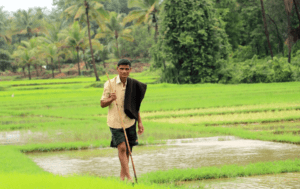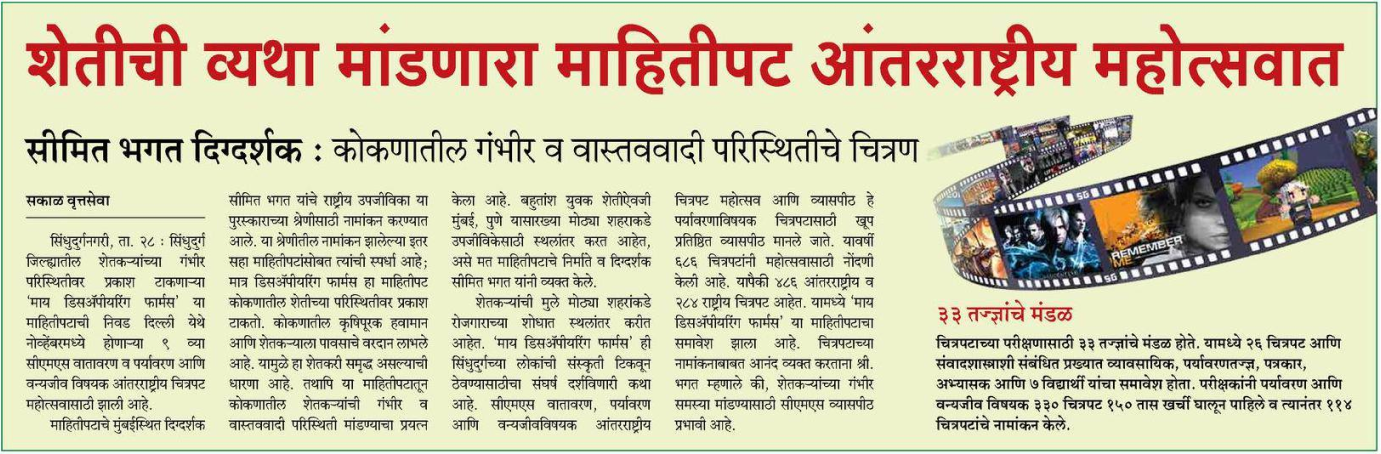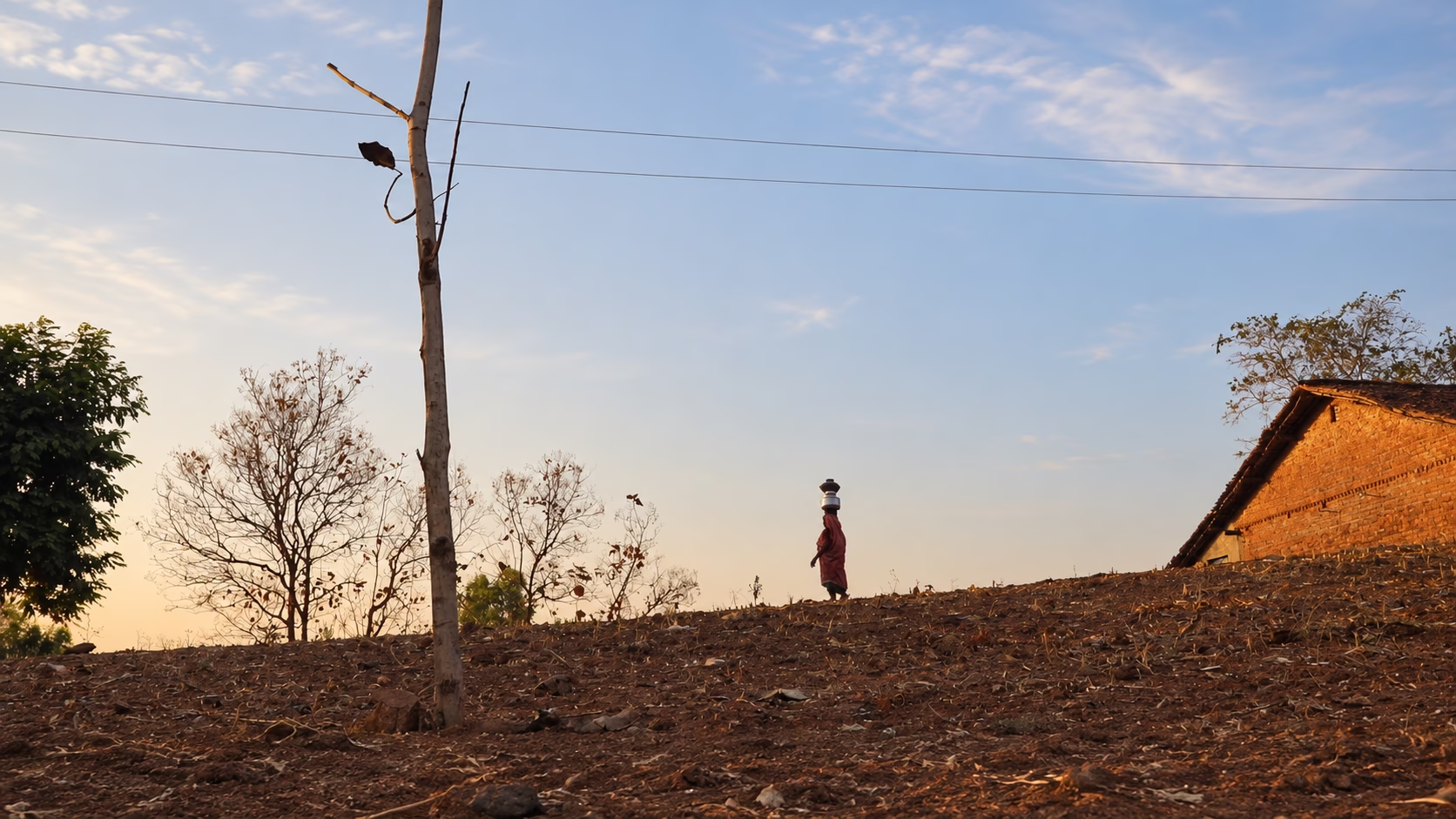
The sun hung low over Jetpur village, but it offered no relief. The air was thick, the ground dry, and the dust clung to every step. Women walked for hours with pots on their heads, each trip a test of patience and strength. Water wasn’t just something they needed. It was something they fought for, every single day.
We tried to show this in our film, A Journey Towards Sustainable Water Access, made with CInI. But more than that, we wanted the women to tell their own stories. The video didn’t centre on empty pots. It gave space to voices that are often unheard: women who finally felt the quiet joy of turning on a tap inside their home. And that’s why stories like these matter. They don’t come from outside observers. They come from people who walk the walk, who carry the pots, who live the reality.
The numbers are big, and that is part of the problem. According to the WHO/UNICEF Joint Monitoring Programme’s 2025 report, 2.1 billion people lack safely managed drinking water, 106 million still drink straight from rivers, lakes and other surface sources, and 3.4 billion lack safely managed sanitation.
India shows both the progress and the gap. Under the Jal Jeevan Mission, rural households with tap connections rose from 3.23 crore (16.71%) in August 2019 to 15.89 crore (82.09%) by 18 July 2026, according to the Ministry of Jal Shakti. But the ministry’s own Functionality Assessment of Household Tap Connections (National Report 2024, surveyed July to October 2024) found a functionality rate of about 76%, based on whether water met the mission’s standards for quantity, quality and regularity. A tap is a number. Whether water flows from it every morning is a story, and only the people at the tap can tell it.
Around the world, organisations are using storytelling to shift the water conversation from numbers and charts to lived experience. Here are just a few ways they’re doing it and what others can learn from them.
1. Use Modern Technology to Create Immersive Storytelling
charity: water is showing how technology can bring people closer to something they may never have personally faced: life without access to clean water.
They’ve gone beyond traditional campaigns. In 2016, charity: water released The Source, a nine-minute virtual reality film about Selam, a 13-year-old girl in Ethiopia who gets clean water for the first time. You don’t just see the struggle, you’re there, standing in it. Thanks to an undisclosed philanthropist, a $30 donation would be unlocked every time someone watched the film. Their Experience Lab in Tennessee does something similar. Through a 4-D simulation called The Waterwalk, people carry heavy water cans and walk a short, but telling distance. It’s just a few minutes. But it leaves a mark.
Let people see what’s happening. Let them feel it. Let them believe it’s possible to be part of the change.
And it’s not just about awareness. charity: water is deeply focused on transparency. They map funded wells with GPS coordinates, offer real-time data dashboards, and let donors track progress firsthand. In FY2025, public donations funded more than 22,000 water projects across 20 countries, bringing clean water to 1.41 million people for the first time. That kind of support doesn’t happen by chance. People trust them because their storytelling is honest, grounded, and incredibly real. For organisations just starting out, this is a simple takeaway: Let people see what’s happening. Let them feel it. Let them believe it’s possible to be part of the change.
2. Empower Voices to Drive Change through Digital Storytelling
WaterAid knows that the most powerful stories don’t need translation. They come directly from the people living them.
WaterAid Cambodia’s Saart Cheanich campaign trains young people to run their own creative water, sanitation and hygiene campaigns. In its first year at Bonn Phum, the country’s biggest festival, volunteers took hygiene messages straight to festival crowds. “I can communicate key messages to the attendees in Bonn Phum, including handwashing with soap, using latrine, and drinking safe water,” said Leakhena, a volunteer from Kampong Chhnang. Globally, WaterAid’s #Youth4WASH brought young leaders together to write a manifesto at the 9th World Water Forum.
The most powerful stories don’t need translation. They come directly from the people living them.
And this work has real ripple effects. WaterAid’s storytelling has influenced major decisions like the declarations at the AfricaSan conference and helped shape national hand hygiene plans. These stories aren’t just changing minds. They’re changing habits.
In 2025, creators MrBeast and Mark Rober went further with #TeamWater and raised “over $40 million in just 31 days to bring clean water to 2 million people worldwide for decades to come”, with YouTube and Google matching the first $2 million.
In Ghodaghaguri, Mayurbhanj district, Odisha, three women, Jashoda, Rashmi Rekha Mohanta and Jayanti Mohanta, went door to door explaining the benefits of piped water until the village agreed to build a system with Gram Vikas. Gram Vikas tells their story in their words, not as a donor success story.
3. Use Visual Storytelling to Spotlight Overlooked Voices
Some stories are easier to show than tell. And some are easier to feel when drawn in colour.
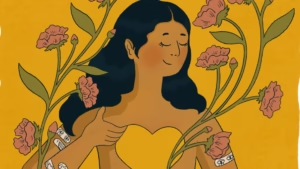
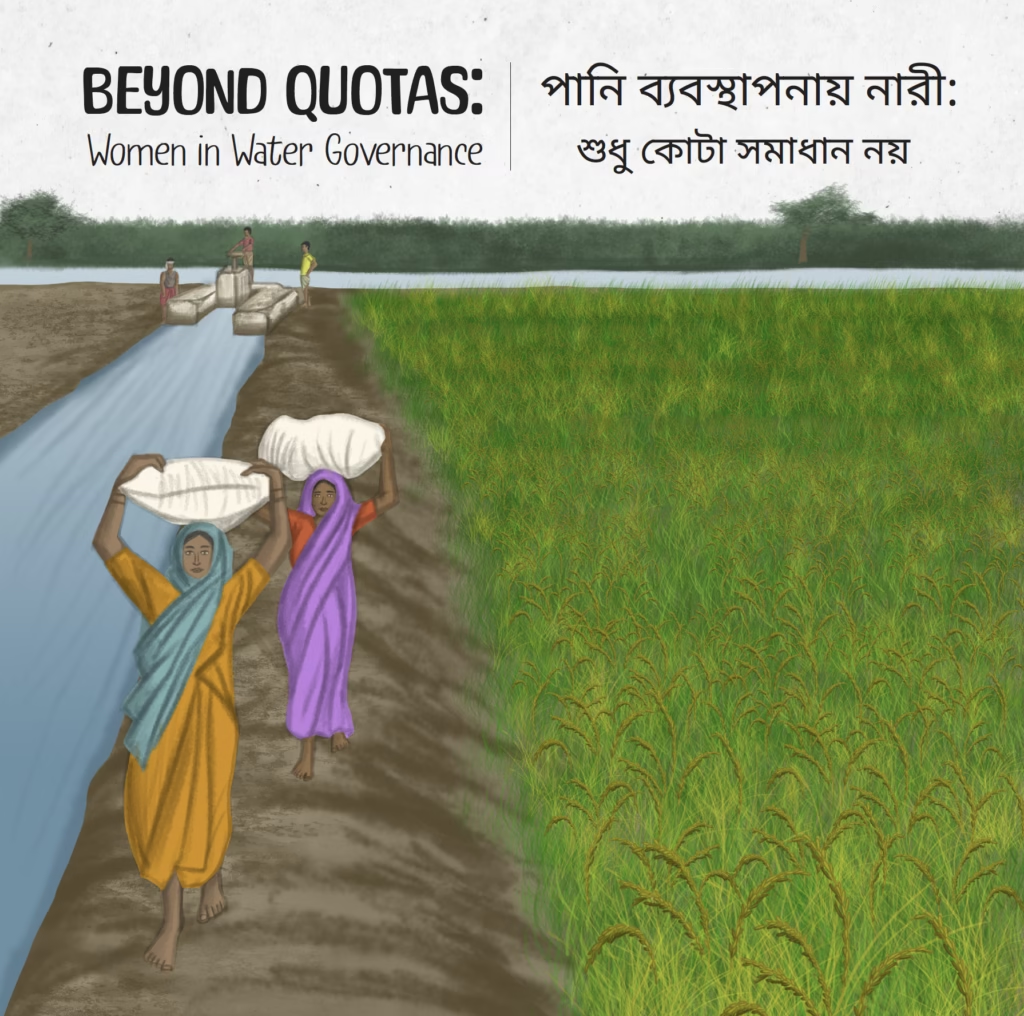
That’s what the Beyond Quotas: Women in Water Governance illustrated storybook set out to do. Created by the International Rice Research Institute (IRRI) and us, this 12-page book brought data to life through stories of women in Bangladesh managing water access systems while also caring for families, homes, and everything in between.
Visuals are often the best bridge between complex research and everyday life.
The illustrations did more than explain, they connected. Policymakers saw the realities that reports alone couldn’t convey. Community members recognised themselves in the drawings. Suddenly, “governance” didn’t feel like a distant word. It felt familiar.
This kind of storytelling doesn’t just humanise. It sticks. It reaches people who might otherwise feel left out. And it reminds us that visuals are often the best bridge between complex research and everyday life.
4. Pair Financial Solutions with Storytelling to Drive Change
Water.org has found a powerful combination: financial tools + human stories = long-lasting change.
Their WaterCredit programme helps families take small loans for taps and toilets. Mong, from Kampot Province in Cambodia, used one to build a bathroom and rainwater catchment at home. “Our daughters were always at risk of unwanted attacks at night,” she explained, describing life before. Ester in Kenya used her water tank to grow her rental business. Or Neni in Indonesia, whose new toilet allowed her to open a snack shop. These aren’t extraordinary tales, they’re everyday ones. That’s why they matter. They show what dignity looks like, and how a little support can unlock it.
Financial tools + human stories = long-lasting change.
Safe Water Network India runs “iJal” water stations, often operated by women. Mamatha Pesara, an operator and ASHA worker at the iJal Madhavapuram station in Telangana, runs the station and teaches neighbours about safe water and hygiene. Telling the operator’s story turns a water ATM into a local enterprise people trust.
Water.org has reached more than 95 million people, 9.9 million in 2025 alone, and that 98% of WaterCredit loans are repaid (Water.org, 2026). In an endline evaluation in two Indian states, water-loan recipients cut collection time by an average of 55 minutes per round trip. Safe Water Network India has served 1,269,509 people through 342 iJal stations, according to a Honeywell-commissioned impact assessment.
5. Make Learning Fun: Empower Students as WASH Storytellers
Splash puts the power of storytelling in the hands of the youngest voices and it’s making all the difference.
At Watgunj GSFP School in Kolkata, a Splash-supported Child Cabinet received hygiene training, ran soap drives, surveyed sanitation problems in their neighbourhood and hosted World Toilet Day events with local authorities. Families nearby began building toilets (Splash 2023 Impact Report).
These cabinets aren’t just about teaching and training. They’re about creating. Students write songs, perform skits, and take photos to tell hygiene stories in their own way. It’s playful. It’s peer-led. And it’s working.
Children start to see themselves not just as learners, but as leaders. They bring their new habits home, and families start to follow their example. Change moves outward, classroom to community.
Storytelling, when handed to those who live it, can spark lasting behaviour change.
In Bahir Dar, Ethiopia, Splash and its partners wrote a government-endorsed teachers’ Playbook “filled with stories, local examples and engaging exercises” for student hygiene clubs.
By the end of 2024, Splash’s Project WISE Phase I had reached 537 schools serving 650,000 students in Addis Ababa and Bahir Dar (Splash). Evaluations found handwashing with soap rose from 25% to 90% and was still at that level 18 months later (Splash, 2025). In 2023, Splash received $5,371,866 in contributions and grants. In June 2025, it received a $40 million investment to reach 1.2 million students in Malawi, Tanzania and Zambia. This is the kind of work that shows how storytelling, when handed to those who live it, can spark lasting behaviour change.
Behind every water access project is a human story. A grandmother turning on a tap for the first time. A child skipping the walk to the well and going to school instead. A mother finding enough time in the day to start something new.
From Jetpur to Kampot, Mayurbhanj to Bahir Dar, these stories are everywhere. What makes them powerful is the way they’re told: real voices, honest visuals, and numbers that hold up.
Whether it’s through VR, song, sketch, or social media, these stories remind us that clean water access isn’t just about infrastructure. It’s about identity, dignity and possibility.
And if you’re working in the development space or just care deeply about how stories can drive change, there’s so much more to explore. Sign up for our newsletter to stay connected with ideas, insights, and honest stories about how communication is shaping social impact.