It began with a small idea. In 2010, Joel Gascoigne wondered if scheduling tweets could be simpler. Instead of building a full app, he put up a two-page site that explained the concept and asked for emails. Within days, people signed up. A few even clicked on mock paid plans. Seven weeks later, that tiny experiment turned into Buffer, a product that now helps more than 180,000 creators and businesses.
Buffer’s story is not only about software. It is about testing before perfecting, and letting curiosity lead until confidence catches up. MVP thinking, at its core, is the habit of starting small and learning fast. It treats progress as something you find by listening first, not by launching loud.
MVP thinking is the habit of starting small and learning fast. It treats progress as something you find by listening first, not by launching loud.
That mindset does not belong to startups alone. When the work is human and the stakes are real, beginning small often reveals what matters most. So let’s look at how non-profits around the world can carry that same spirit into their pilots.
Start with What You Have, Not What You Hope For
Innovation rarely begins with a perfect plan. It usually starts with a question and whatever tools are within reach. In 2013, Tony Xu and a few friends noticed something small and telling in restaurants near Stanford. Clipboards sat full of undelivered orders.
They did not have an app or funding. They had a Google Voice number, a car, and an hour. They threw up a simple site called Palo Alto Delivery, uploaded eight menus as PDFs, and waited. Forty-five minutes later, someone ordered pad thai. For six months, they delivered meals themselves and learned logistics one handoff at a time.
Progress often starts not with more resources, but with sharper intent.
That scrappy test became DoorDash. Today, the company serves millions of customers and operates in dozens of countries. The early constraint turned into an advantage. It is a quiet reminder that progress often starts not with more resources, but with sharper intent.
Also read: How India’s Social Stock Exchange is Revolutionising Social Financing
Show, Not Tell. Let People See the Promise Before It Exists
Sometimes the best way to test an idea is to show it, not ship it. In 2007, Drew Houston kept forgetting his USB drive. He began building what would become Dropbox, but the prototype was rough and full of bugs. Instead of launching, he recorded a short video that walked through how the product would work in everyday life.
The video was simple. It showed a file being edited on one computer and appearing moments later on another. Posted on Hacker News, it struck a nerve. The beta waitlist jumped from 5,000 to 75,000 in a day. That clip gave investors confidence and helped future users feel the value long before the product was truly ready.
When people can see what you are trying to make, they can believe in it before you finish building it.
Sometimes clarity is the real innovation. When people can see what you are trying to make, they can believe in it before you finish building it.
Build Slow, Stay Profitable, and Let Clarity Shape the Scale
When Zomato began in 2008, it was not a delivery giant. It was a small site that scanned menus in Gurgaon so office workers did not have to queue for the pantry folder at lunchtime. Deepinder Goyal and his co-founder bootstrapped for about two and a half years. Revenue from restaurant listings kept the lights on long before they raised outside capital. By the time Info Edge invested, older cities were already cash-flow positive within three months.
Over the years, Foodiebay became Zomato and grew into a brand worth billions. The tone stayed steady. Survival first. Speed only when the signal is strong. Even after the acquisition of Blinkit and expansion into more than 25 countries, Deepinder often repeats a simple line — “Survival is my only continuous effort.”
Endurance can outlast ambition. When the foundation is sound, momentum tends to keep its shape.
It is a useful way to think about growth. Endurance can outlast ambition. When the foundation is sound, momentum tends to keep its shape.
Also read: Top Social Media Pages for the Social Sector: Where Strategy Meets Storytelling
Test Early, Learn Fast, and Build Only What People Need
When Joel Gascoigne started Buffer in 2010, he did not build a full product. He made a two-page prototype. The first page explained the idea. The second asked for an email. Signups came in. Then he added a pricing step to see whether anyone would consider paying. People clicked.
Encouraged, he built a minimal version in his evenings and launched seven weeks later. Four days after that, he had his first paying customer. Within months, Buffer had 500 active users and a 4 percent conversion to paid plans. Those numbers were not enormous, but they were honest. They proved the need.
What matters is not how big you start. What matters is how soon you start learning.
By validating demand before writing too much code, Joel saved time and earned trust. What matters is not how big you start. What matters is how soon you start learning.
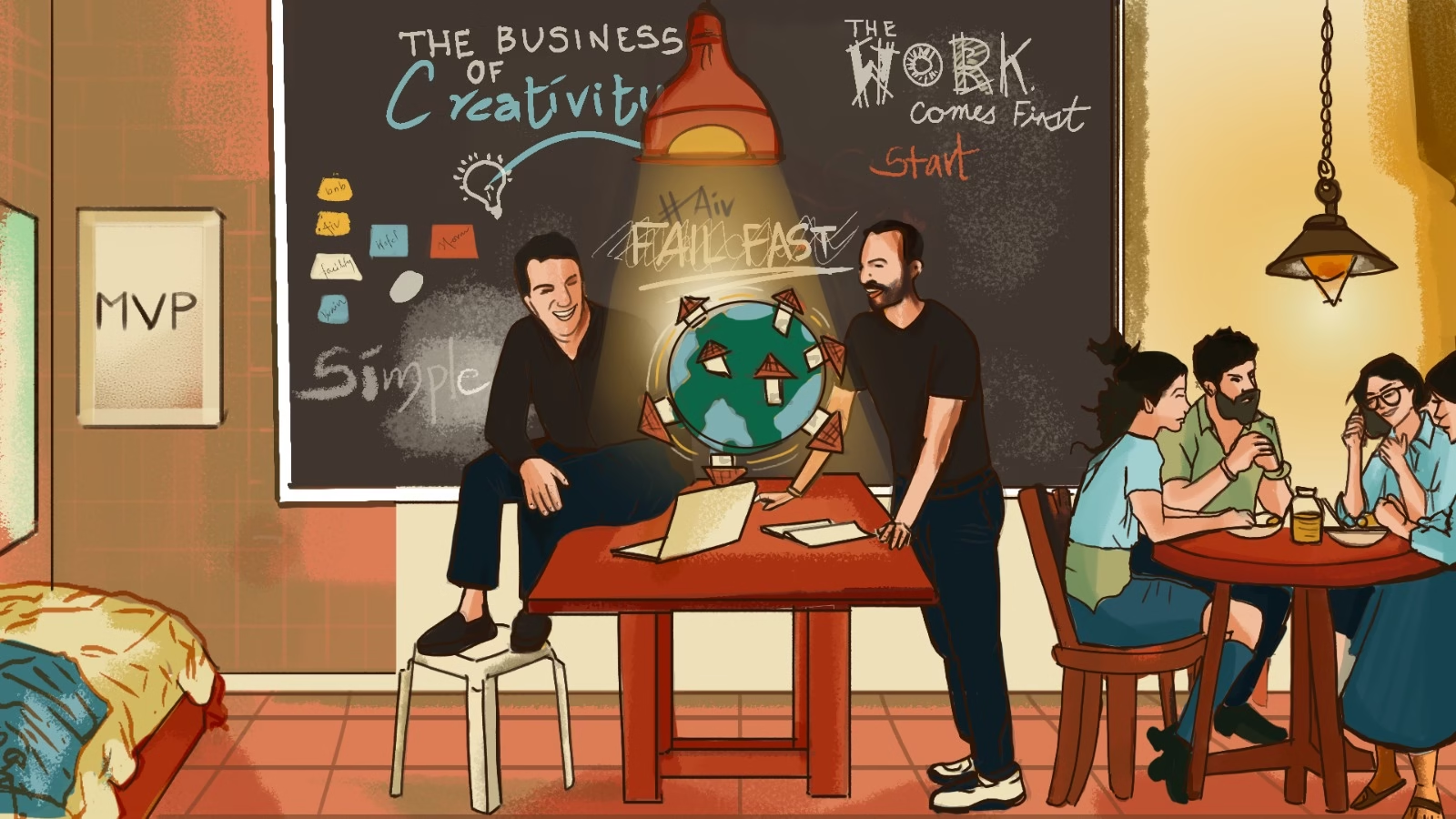
When Ideas Fall Flat, Reinvent the Air Mattress
In 2007, two designers in San Francisco could not make rent. A design conference had filled every hotel. Brian Chesky and Joe Gebbia bought three air mattresses, offered breakfast, and hosted three guests at 80 dollars each. That tiny act became the seed of Air Bed and Breakfast.
The first launches failed. Investors said no. The site went unnoticed. To keep going, they sold novelty cereal boxes called Obama O’s and raised 30,000 dollars by hand. Each setback sharpened the edge of the idea. In 2009, Y Combinator backed them. Sequoia invested 600,000 dollars. The name became Airbnb. Four years later, the platform had one million nights booked across 89 countries and a valuation above one billion dollars.
Sometimes reinvention is resilience with a different coat on.
What began as a way to pay rent became a new way to travel. Sometimes reinvention is resilience with a different coat on.
From Ideas to Impact: What Stories of Building Teach Us
Most organisations begin in the fog. There is half-written code, an air mattress on a loft floor, and a sketch in a notebook. The ones that last are not always the ones with the most money or the loudest launch. They are the ones who choose to keep learning when things do not work.
Dropbox had a video that made people feel the magic. Buffer had a seven-week sprint that kept only what was necessary. Zomato spent years practicing discipline before spending. Airbnb knocked on doors, took photos, and kept going when the answer was no. Each story began with a question rather than certainty. Each one shows that innovation can hide inside ordinary persistence.
For non-profits, the shape of the work is different, but the rhythm can be the same. You do not need a grand programme to begin. You need the smallest honest version that lets you listen.
If these stories resonate, stay close. Subscribe to our newsletter for practical notes on storytelling, design, and building pilots that grow from careful learning. We share what works, what does not, and the quiet moves that help good ideas travel farther than their first draft.